
Views: 222 Author: Wendy Publish Time: 2025-03-12 Origin: Site


Content Menu
>> Motorized Touchscreen Display Applications
● Key Technologies Behind Motorized Touchscreens
● Motorized Touchscreen Display Design Considerations
>> Integration with Other Technologies
● Future Trends in Touchscreen Technology
>> Flexible and Foldable Displays
>> Haptic Feedback Advancements
>> Self-Cleaning and Anti-Microbial Surfaces
>> Transparent Displays and AR Integration
● Frequently Asked Questions (FAQ)
>> 1. What are the primary advantages of using motorized touchscreen displays?
>> 2. How do motorized touchscreen displays improve user experience?
>> 3. What are the common applications of motorized touchscreen displays?
>> 4. How do environmental factors affect motorized touchscreen displays?
>> 5. Can motorized touchscreen displays be integrated with other technologies?
In recent years, touchscreen technology has become increasingly prevalent in various sectors, including consumer electronics, industrial automation, and public services. Among these technologies, motorized touchscreen displays have emerged as a significant innovation, offering enhanced functionality and user experience. This article aims to delve into the concept of motorized touchscreen displays, exploring their design, functionality, and applications.
A motorized touchscreen display combines the intuitive interaction of a touchscreen with the mechanical flexibility of a motorized system. This integration allows the display to adjust its position or orientation automatically, enhancing user accessibility and interaction. Such displays are particularly useful in environments where the screen needs to be adjusted frequently, such as in retail kiosks, medical facilities, or educational settings.
The core components of a motorized touchscreen display include a touchscreen panel, a motorized mechanism, and a control system. The touchscreen panel can be based on various technologies, such as capacitive, resistive, or infrared, each offering different advantages in terms of sensitivity, durability, and cost. The motorized mechanism, typically driven by electric motors, enables the screen to move vertically, horizontally, or even rotate, depending on the design requirements. The control system, often integrated with software, manages the movement of the screen based on user input or predefined settings.
Motorized touchscreen displays are versatile and can be applied across multiple industries. In retail, they enhance customer engagement by providing interactive product information and allowing for dynamic display adjustments to capture customer attention. In healthcare, these displays facilitate easier access to patient data and medical equipment controls, improving efficiency and reducing errors. Additionally, in educational settings, motorized touchscreens can be adjusted to accommodate different teaching methods and student interactions.

Capacitive touchscreens are widely used in motorized displays due to their high sensitivity and support for multi-touch gestures. They operate by detecting changes in capacitance when a conductive object, such as a finger, comes into contact with the screen. This technology is prevalent in smartphones and tablets but is also integrated into motorized displays for enhanced user interaction.
Resistive touchscreens, on the other hand, rely on pressure to register touch inputs. They are more durable and can be used with gloves or styluses, making them suitable for industrial or harsh environments. However, they lack the multi-touch capability and sensitivity of capacitive screens.
Infrared touchscreens use an array of LEDs and sensors to detect touch inputs by interrupting light beams. This technology allows for contactless interaction and is often used in public kiosks or interactive displays where durability and ease of cleaning are crucial.
When designing a motorized touchscreen display, several factors must be considered to ensure optimal performance and user experience. These include the choice of touchscreen technology, motor specifications, control system integration, and environmental factors such as dust, moisture, and temperature fluctuations.
Environmental conditions can significantly impact the performance of motorized touchscreen displays. For instance, in outdoor applications, the display must be resistant to weather conditions such as rain or extreme temperatures. In indoor settings, factors like dust accumulation and humidity can affect the touchscreen's sensitivity and motor operation.
Motorized touchscreen displays can be integrated with various technologies to enhance their functionality. For example, combining them with voice assistants or gesture recognition systems can provide a more immersive user experience. Additionally, integrating these displays with IoT devices can enable remote monitoring and control, further expanding their applications.

Looking ahead, several trends are expected to shape the future of touchscreen technology, including the integration of AI, advancements in durability, and the adoption of flexible and foldable displays.
The integration of artificial intelligence (AI) with touch technology is creating smarter, more personalized user experiences. AI-powered touchscreens can analyze user behavior, predict preferences, and streamline interactions for greater efficiency. This trend is particularly evident in smart retail and meeting systems, where AI-enabled touchscreens enhance customer engagement and team productivity[1].
Manufacturers are focusing on developing antibacterial, dustproof, and waterproof materials to meet the growing demand for durable and hygienic public-facing devices. This is crucial in environments like healthcare and foodservice, where maintaining cleanliness is paramount[1].
Flexible and foldable touchscreens are gaining traction, offering new possibilities for device design and functionality. These displays can transform into different form factors, enabling multi-tasking, enhanced gaming experiences, and more immersive content consumption[2][7].
Haptic feedback technology is becoming more sophisticated, allowing for more nuanced and realistic tactile sensations. This could lead to a more immersive and engaging user experience, especially in gaming, virtual reality, and augmented reality applications[2].
Advancements in sensors and machine learning algorithms are enabling touchscreens to support more complex and precise gestural controls. Users might perform gestures in the air above the screen without physically touching it, allowing for a touchless interaction experience[2].
Future touchscreens may incorporate additional sensory inputs, such as temperature and pressure sensors, to detect different levels of force and provide more context-aware interactions[2].
In response to hygiene concerns, touchscreen displays could be equipped with self-cleaning or anti-microbial coatings, ensuring a more sanitary user experience, especially in public and shared environments[2].
Transparent displays and augmented reality (AR) integration are expanding the application scenarios of touchscreens. For instance, transparent touchscreens can be integrated into storefront displays, allowing customers to view detailed product information while still seeing the physical products behind the screen[1].
Motorized touchscreen displays represent a significant advancement in interactive technology, offering enhanced user experience and versatility across multiple applications. By combining the intuitive interaction of touchscreens with the mechanical flexibility of motorized systems, these displays cater to diverse needs in retail, healthcare, education, and beyond. As technology continues to evolve, the integration of motorized touchscreen displays with other innovative systems will further expand their potential and applications.
The future of touchscreen technology is promising, with trends like AI integration, enhanced durability, and flexible displays set to redefine user experiences. As these technologies mature, we can expect to see even more innovative applications of motorized touchscreen displays in various industries.
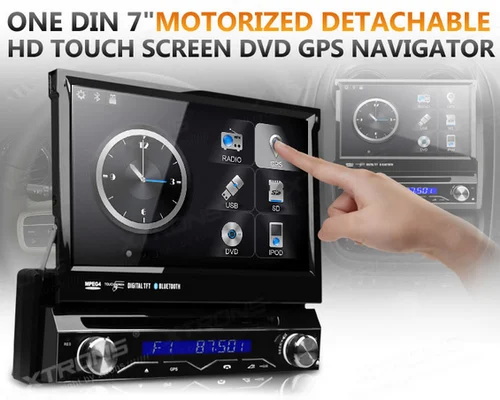
Motorized touchscreen displays offer enhanced user accessibility and interaction by allowing the screen to adjust its position automatically. This feature is particularly beneficial in environments where the screen needs frequent adjustments, such as in retail or educational settings.
By providing adjustable screen positions, motorized touchscreen displays enhance user comfort and accessibility. This is especially important in applications where users may need to interact with the screen from different angles or distances.
Motorized touchscreen displays are used in various sectors, including retail for interactive kiosks, healthcare for patient data management, and education for dynamic teaching tools. Their versatility and adaptability make them suitable for environments requiring flexible screen positioning.
Environmental factors such as dust, moisture, and temperature fluctuations can impact the performance of motorized touchscreen displays. In outdoor applications, the displays must be designed to withstand weather conditions, while indoor settings require protection against dust and humidity.
Yes, motorized touchscreen displays can be integrated with various technologies like voice assistants, gesture recognition systems, and IoT devices. This integration enhances their functionality by providing a more immersive user experience and enabling remote monitoring and control.
[1] https://www.linkedin.com/pulse/five-key-trends-touchscreen-technology-2025-serina-kh1vc
[2] https://touchscreenlearning.com/2023/07/27/what-does-the-future-of-touchscreen-technology-look-like/
[3] https://docs.connect.panasonic.com/prodisplays/casestudies/
[4] https://www.theinsightpartners.com/reports/touch-screen-display-market
[5] https://cad-journal.net/files/vol_22/CAD_22(1)_2025_136-149.pdf
[6] https://www.lookdigitalsignage.com/blog/top-ces-2025-highlights-digital-signage-industry
[7] https://www.marketsandmarketsblog.com/touchscreen-display-market-trends-growth-and-future-outlook-2025-2029.html
[8] https://www.fortec.uk/News-Case-Studies/Case-Studies/
[9] https://www.sphericalinsights.com/reports/touch-screen-display-market
[10] https://www.reshine-display.com/how-does-apple-s-capacitive-touch-screen-improve-user-experience.html
[11] https://www.livescience.com/technology/exciting-bizarre-incredible-technologies-weve-seen-at-ces-2025
[12] https://www.adipanel.com/post/touch-screens-and-future-market-trends-what-to-know-about-projected-growth-in-touch-screen-tech
[13] https://www.aiscreen.io/blog/retail/digital-signage-retail-examples/
[14] https://www.coherentmarketinsights.com/industry-reports/automotive-smart-display-market
[15] https://nento.com/touch-screen-software-revolutionizing-user-interaction/
[16] https://www.youtube.com/watch?v=1MGZH0XR1Bg
[17] https://www.industrysearch.com.au/buying-guide/innovations-and-future-trends-in-industrial-touch-screen-monitors-for-industrial-use/f/24935
[18] https://touchscreen.nl/en/touch-screen-case-study
[19] https://growthmarketreports.com/report/touch-screen-display-market-global-industry-analysis
[20] https://dl.acm.org/doi/10.1145/3613905.3650835