
Views: 222 Author: Wendy Publish Time: 2025-12-28 Origin: Site


Content Menu
● Why Japan for Custom Touch Screen Projects?
● Key Application Segments for Custom Touch Screen Displays
● Overview of Leading Japanese Custom Touch Screen Suppliers
● Japan Display Inc. (JDI) – Advanced Display Core for Custom Touch Screen Solutions
● DMC Co., Ltd. – Industrial Touch Panel Specialist
● Tianma Japan – Projected Capacitive Custom Touch Screen Panels
● Mitsubishi Electric – Industrial TFT‑LCD with Rugged Touch Options
● JAE (Japan Aviation Electronics) – Public Terminal Touch Panel Monitors
● Densitron – Complete HMI Platforms with Custom Touch Screen Integration
● Typical Custom Touch Screen Specifications and Options
● Working with Japanese Custom Touch Screen Suppliers as an Overseas Buyer
● Practical Tips for Selecting the Right Custom Touch Screen Partner in Japan
● FAQ – Custom Touch Screen Displays in Japan
>> 1. What is a Custom Touch Screen display?
>> 2. Which industries in Japan most commonly use Custom Touch Screen solutions?
>> 3. What technologies are popular for Custom Touch Screen projects in Japan?
>> 4. How long does it take to develop a Custom Touch Screen solution with a Japanese supplier?
Japan has become a key innovation hub for Custom Touch Screen displays serving industrial, transportation, medical, and smart retail projects across Asia and the world. Global OEMs, system integrators, and device brands increasingly look to Japanese Custom Touch Screen manufacturers and suppliers for high reliability, long life cycles, and advanced human–machine interface (HMI) engineering.[1]

Japanese Custom Touch Screen suppliers are widely recognized for rigorous quality standards, long‑term product support, and strong engineering capabilities in complex HMI projects. Many of these companies have decades of experience in displays, touch panels, and industrial electronics, which makes them dependable partners for mission‑critical Custom Touch Screen applications.[1]
Japanese manufacturers also tend to emphasize close design collaboration, offering technical support from concept to mass production so that each Custom Touch Screen solution fits mechanical and environmental requirements precisely. This collaborative approach is especially valuable for overseas OEMs that need to minimize project risk and shorten time‑to‑market for new HMI platforms based on Custom Touch Screen technology.[1]
Custom Touch Screen projects in Japan typically focus on several high‑value application segments that demand robust performance and long lifecycles. In each of these markets, Japanese suppliers offer tailored Custom Touch Screen specifications such as brightness, durability, and multi‑touch capability.[1]
- Industrial automation and smart factories: Custom Touch Screen panel PCs and operator terminals are integrated into production lines, robotics cells, and monitoring systems to visualize data and support intuitive machine control.[1]
- Transportation and public terminals: Ticket machines, information kiosks, and passenger information systems use Custom Touch Screen front panels that withstand heavy daily usage and frequent cleaning.[1]
- Medical and healthcare: Custom Touch Screen monitors in imaging systems, diagnostic devices, and operating rooms require high resolution, precise touch accuracy, and easy‑to‑sanitize surfaces.[1]
- Retail, signage, and hospitality: Interactive kiosks, digital signage, and self‑service checkouts rely on engaging Custom Touch Screen interfaces that offer smooth multi‑touch gestures and attractive visuals.[1]
As digitalization accelerates in Japan and globally, the demand for reliable and customizable HMI grows, pushing Custom Touch Screen suppliers to innovate in optical bonding, coatings, and controller firmware. The combination of advanced display technology and robust touch performance is a core reason why buyers repeatedly select Japanese partners for Custom Touch Screen projects.[1]
Japan hosts several influential companies that contribute to the Custom Touch Screen ecosystem from different angles, including LCD manufacturing, touch sensor design, industrial modules, and complete HMI systems. Some firms focus on core display cells, while others specialize in integrating touch, computing, and mechanical design into turnkey Custom Touch Screen units.[1]
This ecosystem gives buyers flexibility: they may work directly with a display manufacturer, a touch panel specialist, or a solution provider that bundles everything into a single Custom Touch Screen platform. By understanding each company's strengths, project owners can select the right partner that matches their technical needs, quantities, and budget for Custom Touch Screen development.[1]
Japan Display Inc. is a world‑class developer of high‑performance TFT‑LCD and next‑generation display technology used widely in automotive, mobile, and industrial fields. These display modules often form the core component in premium Custom Touch Screen devices that require high pixel density, wide viewing angles, and low power consumption.[1]
JDI's expertise is particularly valuable for Custom Touch Screen projects where image quality and long‑term stability are critical, such as automotive instrument clusters, central infotainment systems, or professional handheld terminals. By combining JDI's display modules with appropriately designed touch layers and cover glass, OEMs can build thin, attractive Custom Touch Screen interfaces tailored to their mechanical designs.[1]
For demanding applications, buyers can work with integrators who pair JDI panels with capacitive or resistive touch sensors to create complete Custom Touch Screen assemblies. This modular approach allows fine‑tuning of optical bonding, coatings, and controller tuning to deliver the exact user experience required in the end device's HMI.[2]
DMC is known as a specialist in industrial touch sensors and modules, offering both resistive and capacitive technologies designed for harsh environments. The company provides Custom Touch Screen panels that can be engineered to specific dimensions, shapes, and mounting conditions, making them suitable for factory machinery, panel PCs, and embedded control systems.[2]
A major advantage of DMC for Custom Touch Screen projects is its willingness to adapt to unique requirements such as operation with gloves, stylus pens, or in high‑EMI environments. Through firmware and controller tuning, DMC can optimize the Custom Touch Screen response to maintain accuracy and stability even under challenging conditions.[2]
DMC also offers integration services that combine the touch sensor with cover glass, printing, and sealing structures, which simplifies the mechanical design process for OEMs. This level of customization enables project owners to create branded, robust front panels that turn standard displays into complete Custom Touch Screen user interfaces.[2]
Tianma has a strong presence in display technology, and Tianma Japan focuses on factory‑installed projected capacitive touch panels for industrial and professional markets. By integrating the touch sensor and controller with the display module at the manufacturing stage, Tianma Japan delivers ready‑to‑use Custom Touch Screen units that reduce integration effort for OEMs.[3]
Projected capacitive Custom Touch Screen technology from Tianma supports multi‑touch gestures, high transparency, and excellent durability, which are essential for modern HMIs where users expect smartphone‑like responsiveness. These modules can be adapted for thicker cover glass, allowing rugged front panels that still support accurate touch input.[3]
For buyers, the advantage is simplified design: instead of sourcing display and touch components separately, they can obtain a pre‑validated Custom Touch Screen module from Tianma Japan with defined electrical and mechanical characteristics. This approach shortens development time and reduces the risk of incompatibilities between the display and the Custom Touch Screen controller.[3]
Mitsubishi Electric has developed industrial TFT‑LCD modules that are often combined with projected capacitive touch sensors to create rugged Custom Touch Screen products. These modules are designed for long operating life, wide temperature ranges, and stable performance in demanding industrial settings.[4]
One notable feature of Mitsubishi Electric solutions is the ability to support relatively thick cover glass, which provides enhanced resistance to impacts, scratches, and aggressive cleaning procedures. When combined with suitable projected capacitive technology, the resulting Custom Touch Screen can remain sensitive while maintaining mechanical robustness.[4]
Such characteristics make Mitsubishi Electric‑based Custom Touch Screen panels particularly suitable for outdoor terminals, factory control stations, and heavy equipment dashboards. OEMs can rely on long‑term availability, which is crucial for industrial machines that may remain in service for many years.[4]
JAE, originally known for connectors and electronic components, also offers touch panel monitor solutions used extensively in public terminals such as ticket vending machines and information kiosks. These systems must endure constant public use and potential misuse, so the focus is on reliability, durability, and clear visibility under varied lighting conditions.[5]
By integrating touch sensors with displays and protective glass into full monitors, JAE provides plug‑and‑play Custom Touch Screen units for transportation operators and public service providers. These units can be engineered to meet transport‑sector standards, including resistance to vandalism and protection against environmental factors.[5]
For overseas buyers designing public kiosks or ticketing devices, working with a company experienced in real‑world deployments such as JAE can reduce the learning curve. Their proven track record in Japanese rail and public infrastructure systems gives confidence that Custom Touch Screen monitors will survive heavy daily usage.[5]
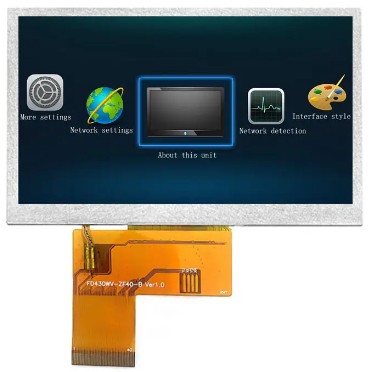
Densitron operates globally with strong capabilities in display technology, touch integration, and HMI design, and it has a solid presence in professional markets including broadcast and industrial control. Rather than only supplying panels, Densitron often provides complete hardware platforms that combine displays, Custom Touch Screen interfaces, processing, and control surfaces.[6]
In broadcast studios, for example, Densitron designs control surfaces where multiple Custom Touch Screen panels display meters, faders, and control widgets that adapt dynamically to workflow. This creates a rich, context‑sensitive user experience that would be difficult to achieve with conventional button‑based panels.[6]
For OEMs, the benefit is a reduction in integration complexity, because a large part of the HMI hardware and firmware is pre‑engineered and validated. Custom Touch Screen configurations can be tailored to the specific layout, branding, and functionality the application requires, while still leveraging Densitron's existing building blocks.[6]
Although each Custom Touch Screen project is unique, certain specification ranges and configuration options appear frequently among Japanese and Asia‑Pacific suppliers. Understanding these typical parameters helps buyers prepare realistic requirements and identify suitable partners.[7]
- Size range: Many suppliers support Custom Touch Screen sizes from small 2.4‑inch modules for handhelds up to 21‑inch or larger panels for kiosks and industrial HMIs.[7]
- Resolution and aspect ratio: WQVGA, WVGA, WXGA, Full HD, and custom resolutions are available, with both landscape and portrait‑oriented Custom Touch Screen designs.[7]
- Touch technology: Projected capacitive Custom Touch Screen is dominant for multi‑touch, while resistive technology remains popular for simple, low‑cost, or glove‑focused applications.[2][3]
- Mechanical customization: Suppliers can customize cover glass thickness, edge shapes, printing, and mounting holes to ensure the Custom Touch Screen fits perfectly into the enclosure.[4][2]
- Environmental performance: High brightness, wide temperature range, anti‑glare coatings, and IP‑rated sealing are available for outdoor or harsh environments where the Custom Touch Screen must remain readable and responsive.[7][4]
These modular options enable a wide variety of finished products, from compact medical instruments with small Custom Touch Screen interfaces to large outdoor ticket kiosks operated by thousands of users each day.[8]
For overseas OEMs, system integrators, and distributors, collaboration with Japanese Custom Touch Screen suppliers usually follows a structured process. It is important to prepare clear documentation and maintain open technical communication to ensure a smooth project flow.[8]
1. Requirements and concept definition
Buyers share application descriptions, mechanical drawings, preferred display size and resolution, interface (such as LVDS, eDP, HDMI), and key Custom Touch Screen requirements such as glove operation or water rejection.[8]
At this stage, suppliers may propose existing platforms that can be adapted, or they may suggest a fully customized Custom Touch Screen stack when off‑the‑shelf options are insufficient.[8]
2. Design proposal and quotation
The supplier reviews the requirements and prepares a proposal describing the Custom Touch Screen structure, cover glass, controller, and expected performance together with a cost and lead‑time estimate.[8]
Design iterations may follow as both sides refine parameters such as brightness, touch sensitivity, connector type, and any optional features like optical bonding or anti‑fingerprint coating on the Custom Touch Screen surface.[8]
3. Prototyping and validation
After approval, the supplier produces engineering samples or a small pilot run of the Custom Touch Screen module for functional testing, mechanical fit checks, and environmental validation.[8]
OEM labs may perform drop tests, vibration tests, EMC tests, and usability evaluations, while the supplier fine‑tunes controller firmware and mechanical details to optimize the Custom Touch Screen experience.[8]
4. Mass production and lifecycle support
Once prototypes pass, mass production begins under agreed quality standards and shipment schedules, and the supplier may offer buffer stock or forecast‑based production for smooth deliveries.[8]
Long‑term support is particularly important in industrial and medical segments, where Custom Touch Screen components must remain available for many years to avoid costly redesigns.[8]
By following this structured approach, overseas companies can leverage Japanese know‑how while keeping Custom Touch Screen projects on budget and on schedule.[8]
Choosing the best partner requires more than just comparing prices; buyers should evaluate technical depth, communication style, and long‑term compatibility with their roadmap. Because Custom Touch Screen projects often span several years, the strategic fit between buyer and supplier is crucial.[8]
- Match industry experience: A supplier with proven installations in the same sector—whether industrial, transportation, medical, or broadcast—will better understand specific Custom Touch Screen requirements and certifications.[5][6]
- Review certification coverage: Check for quality management and industry‑specific approvals that support your own compliance, especially in automotive and medical Custom Touch Screen applications.[8][4]
- Assess engineering and language support: For overseas buyers, the ability to communicate technical details in English and provide fast feedback on Custom Touch Screen design questions is essential.[9]
- Clarify lifecycle and change management: Ask about component end‑of‑life policies, second sources, and notification processes so that Custom Touch Screen design changes do not disrupt your production unexpectedly.[9]
When these factors are considered early, the chosen Japanese partner can become a long‑term collaborator, supporting multiple generations of Custom Touch Screen products and helping expand into new markets.[9]
Japan hosts a robust ecosystem of companies that specialize in displays, touch technology, and integrated HMI platforms, making it an attractive destination for Custom Touch Screen sourcing. From advanced TFT‑LCD cores and industrial touch sensors to rugged modules and complete control surfaces, Japanese suppliers provide solutions that meet demanding requirements across industrial, transportation, medical, retail, and broadcast markets.[1][6][2][4][5]
By carefully defining project needs, comparing supplier strengths, and following a structured development process, overseas OEMs and system integrators can successfully implement Custom Touch Screen interfaces that offer excellent reliability, performance, and user experience over long product lifecycles. With the right Japanese partner, Custom Touch Screen projects can evolve from basic HMIs into strategic differentiators that support digital transformation in multiple industries.[9]
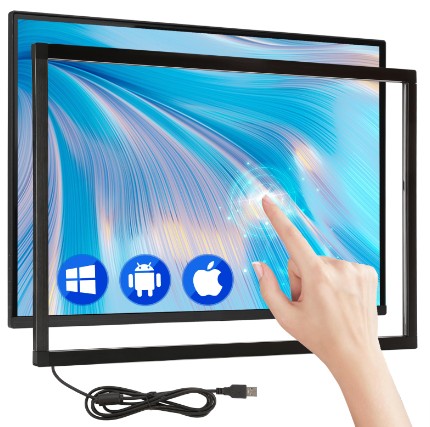
A Custom Touch Screen display is a tailored HMI solution in which a display module is combined with a touch sensor, cover glass, and controller to meet specific mechanical and performance requirements. Unlike standard modules, Custom Touch Screen designs are engineered for a particular device, taking into account enclosure design, user interaction style, and environmental conditions.[9]
Custom Touch Screen solutions in Japan are widely used in industrial automation, transportation ticketing and kiosks, medical devices, broadcast control rooms, and interactive retail systems. These industries require reliable 24/7 operation, clear readability, and precise input, making Custom Touch Screen technology an ideal option for their HMIs.[1][3][6][4][5]
Projected capacitive Custom Touch Screen technology is currently the most popular choice due to its support for multi‑touch, high transparency, and compatibility with thicker cover glass. Resistive Custom Touch Screen panels are also used in some industrial or cost‑sensitive applications where single‑touch operation and extreme robustness remain more important than gesture support.[7][3][2][4]
Typical Custom Touch Screen projects may require several weeks for specification alignment and design, followed by a few months for sample production, testing, and validation before mass production. More complex designs for medical or safety‑critical industries can extend timelines due to additional regulatory and environmental testing requirements.[9]
Buyers should prepare desired display size, resolution, brightness, interface type, operating temperature range, and any special Custom Touch Screen needs such as glove operation, water rejection, or impact resistance. Providing mechanical drawings, target certifications, and expected annual volume helps Japanese suppliers propose suitable Custom Touch Screen designs and realistic lead times from the beginning.[9]
[1](https://www.j-display.com/en/)
[2](https://www.dush.co.jp/english/product/)
[3](https://www.tianma.co.jp/en/technology/technology_trend_4.html)
[4](https://www.mitsubishielectric.com/en/pr/pdf/2018/1212.pdf)
[5](https://www.jae.com/en/uis/market/tp-monitor/)
[6](https://www.densitron.com)
[7](https://irontech-group.com/en/industrial-panel-pc/)
[8](https://www.shinden.co.jp/english/products/category/lcd.html)
[9](https://www.perplexity.ai/search/67390fc1-7e25-4d5b-92a0-a4b3d3be2faf)