
Views: 222 Author: Wendy Publish Time: 2025-12-18 Origin: Site


Content Menu
● Why 2.4 Inch TFT Display Is So Popular
● Core Features of 2.4 Inch TFT Display Modules
● Top 10 2.4 Inch TFT Display Manufacturers in China
>> 1. Kingtech Group Co., Ltd.
>> 2. Shenzhen AV‑Display Co., Ltd.
>> 3. Shenzhen SLS Industrial Co., Ltd. (PANASYS)
>> 4. Sunul Electronic Co., Ltd.
>> 5. CNK Electronics (CNK LCD)
>> 6. Rocktech Displays (RK024 Series)
>> 7. Hunan Future Electronics Technology Co., Ltd.
>> 8. RXTPLCD and Other Compact TFT Specialists
>> 9. OEM/ODM Factories on Major B2B Platforms
>> 10. International Brands Using Chinese 2.4 Inch TFT Display Modules
● Key Applications of 2.4 Inch TFT Display
● How to Choose a 2.4 Inch TFT Display Manufacturer in China
● Best Practices for Integrating a 2.4 Inch TFT Display
● FAQ About 2.4 Inch TFT Display
>> 1. What are the main advantages of a 2.4 Inch TFT Display?
>> 2. Which interfaces are commonly used for 2.4 Inch TFT Display modules?
>> 3. Can a 2.4 Inch TFT Display be used outdoors?
>> 4. What customization options are available for 2.4 Inch TFT Display modules?
>> 5. How should overseas buyers evaluate Chinese 2.4 Inch TFT Display suppliers?
China is one of the most important global centers for 2.4 Inch TFT Display modules, supplying compact, high‑brightness screens for industrial, medical, automotive, IoT and consumer electronics projects worldwide. For overseas OEMs and engineers, choosing the right 2.4 Inch TFT Display manufacturer in China means securing stable quality, long‑term availability and flexible customization at competitive cost.This guide introduces 10 representative 2.4 Inch TFT Display manufacturers and module suppliers in China, explains key technical features, shows how visual demonstrations can present products, and offers practical selection tips for global buyers.
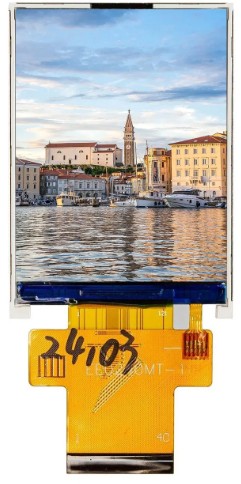
The 2.4 Inch TFT Display typically offers a 240×320 pixel QVGA resolution with vivid colors and fast response times, making it ideal for compact HMIs, handheld devices and small control panels. Its small outline size allows engineers to design portable, battery‑powered equipment without sacrificing visual performance or readability.In many embedded projects, the 2.4 Inch TFT Display hits a “sweet spot” between information density and mechanical constraints. It is large enough to show icons, text, graphs and simple images, yet small enough to fit into pocket instruments, wearable gadgets and narrow front panels. Because the 2.4 Inch TFT Display is widely adopted, there is a rich ecosystem of driver ICs, open‑source libraries and reference designs.
Most standard 2.4 Inch TFT Display modules from Chinese manufacturers feature a diagonal size of 2.4 inches, 240×320 QVGA resolution and a color depth ranging from 65K to 262K. Brightness typically ranges from about 250 nits for indoor usage up to 600 nits or more for sunlight‑readable or industrial versions, often with white LED backlights and dedicated current‑limiting circuits.Common driver ICs for a 2.4 Inch TFT Display include ILI9341, ST7789, GC9307 and other compatible controllers that support SPI, 8080‑parallel and sometimes RGB interfaces. These controllers are widely supported by MCUs such as STM32, ESP32, NXP Kinetis, Renesas and even Arduino‑class boards. Many 2.4 Inch TFT Display modules are available in economical TN technology, but IPS 2.4 Inch TFT Display options are increasingly popular for full‑view angles and better color reproduction.Chinese manufacturers also supply 2.4 Inch TFT Display modules with resistive or capacitive touch panels, cover lenses with printing, and mechanical frames that make integration into plastic or metal housings easier. Extended temperature ranges (for example, ‑20 ℃ to +70 ℃ or wider) and long‑life LED backlights are offered for industrial or automotive applications.
Below is a list of 10 notable 2.4 Inch TFT Display manufacturers and suppliers in China (presented in a logical order, with Kingtech highlighted first). These companies offer standard and custom 2.4 Inch TFT Display modules for different application fields and project sizes.
Kingtech Group is a professional TFT LCD display module supplier in China, focusing on small and medium‑size screens from about 1.2″ to 10.4″, including a wide range of 2.4 Inch TFT Display modules. Founded in Shenzhen, Kingtech has accumulated experience in serving industrial control, medical, smart home and IoT customers across global markets.For a 2.4 Inch TFT Display, Kingtech can provide IPS or TN panels, various brightness levels and customized mechanical structures to match customer housings and bezel designs. The company supports interfaces such as SPI, MCU and RGB, as well as optional resistive and capacitive touch. Kingtech offers engineering support, including mechanical drawings, 3D models and sample tuning, so buyers can integrate a 2.4 Inch TFT Display efficiently into their products.Kingtech's strengths include stable supply, clear communication in English and project‑oriented customization for 2.4 Inch TFT Display solutions. This makes the company attractive for long‑term industrial projects, medical devices and smart control systems where reliability is more important than one‑time spot buys.
Shenzhen AV‑Display is a well‑known Chinese TFT LCD display manufacturer with strong capabilities in color TFT modules, capacitive touch screens and monochrome displays. Its portfolio covers many small sizes, including 2.4 Inch TFT Display modules for industrial control, home automation, portable instruments and medical HMI devices.AV‑Display places emphasis on quality management, often serving segments that require strict reliability, and this makes its 2.4 Inch TFT Display modules suitable for projects that need long product lifecycles. Engineers can obtain detailed datasheets, mechanical drawings and application notes to speed up design‑in. The company can also customize backlight brightness, FPC layouts and touch panel structures around a chosen 2.4 Inch TFT Display platform.
Shenzhen SLS Industrial, often known under the PANASYS brand, is a custom display specialist with more than a decade of experience in TFT LCD modules from sub‑1‑inch up to larger industrial sizes. Its catalog includes 2.4 Inch TFT Display modules with QVGA 240×320 resolution, MCU/SPI interface and optional resistive or capacitive touch for embedded systems.SLS focuses on engineering support and customization. For a 2.4 Inch TFT Display, it can modify FPC routing, adjust backlight brightness, change the viewing direction and adapt the mechanical structure to fit customer housings. SLS also offers complete HMI assemblies—combining 2.4 Inch TFT Display modules, PCBs and plastic parts—which is useful for buyers wanting more than just a bare LCD panel.
Sunul Electronic is a Chinese TFT LCD manufacturer serving industrial, automotive and outdoor digital products. The company offers small‑size displays including 2.4 Inch TFT Display modules with high brightness and wide viewing angles, suited for sunlight‑readable handheld devices and field instruments.Sunul's 2.4 Inch TFT Display products are typically designed for continuous operation, with robust LED backlights and wide operating temperature ranges. The company's experience in automotive and industrial markets means that its 2.4 Inch TFT Display modules can meet stricter regulations and durability expectations. Buyers looking for higher‑reliability solutions for outdoor HMIs, EV chargers or industrial tools may find Sunul an appropriate partner.
CNK Electronics is a professional supplier focused on small‑ and medium‑size TFT modules, including 2.4 inch TFT and 2.4 Inch TFT Display Module products. Their 2.4 Inch TFT Display modules use different controller ICs, support standard SPI/MCU interfaces and offer touch or non‑touch variants for POS terminals, smart meters, medical devices and handheld testers.CNK highlights competitive pricing, flexible MOQs and responsive after‑sales service, which is attractive for small and medium OEMs launching new devices with a 2.4 Inch TFT Display. The company can change FPC length, add shielding layers, customize glass shapes or print logos on cover lenses according to buyer needs. This combination of customization and affordability makes CNK a practical choice for cost‑sensitive projects.
Rocktech offers industrial‑grade IPS TFT LCD modules, such as the 2.4 inch RK024‑series, targeting automation, medical devices, intelligent chargers, dashboards and smart home controllers. These 2.4 Inch TFT Display modules feature wide viewing angles, high brightness and robust structures suitable for continuous operation and harsh industrial environments.Rocktech's 2.4 Inch TFT Display modules are supported by detailed technical documents and long‑term supply commitments, which are critical for industrial and automotive buyers. The company can provide custom backlight designs, different connector solutions and support for special environmental requirements. Manufacturers who need a long‑life 2.4 Inch TFT Display with strong after‑sales engineering support can consider Rocktech.
Hunan Future Electronics positions itself as a reputable manufacturer and factory supplier of small TFT LCD modules, including 2.4 Inch TFT Display products. The company focuses on thin, compact modules with good color reproduction that target consumer electronics, IoT devices and small industrial terminals.Future Electronics typically offers customization services such as alternative FPC lengths, different backlight brightness levels and interface configurations, allowing the same 2.4 Inch TFT Display to be adapted to multiple end products. For buyers, this means faster adaptation from prototype to mass production, using a 2.4 Inch TFT Display platform that can be tuned rather than completely redesigned.
Several Chinese manufacturers specialize in compact TFT modules, and RXTPLCD is one example offering 2.4 Inch TFT LCD modules with SPI or MCU interfaces. These 2.4 Inch TFT Display modules are usually built around popular driver ICs and standard pinouts, which are widely supported in open‑source libraries and demo code for embedded platforms.Suppliers in this niche commonly provide low minimum order quantities, rapid sample shipment and short lead times. This profile makes them ideal partners for companies at the prototyping or small‑batch stage of 2.4 Inch TFT Display projects. As demand grows, many can scale production while keeping the same electrical and mechanical design, helping reduce the risk of redesign.
On large B2B marketplaces, numerous OEM and ODM factories list 2.4 Inch TFT Display modules for global buyers. These suppliers offer 2.4 Inch TFT Display modules with 240×320 resolution, SPI and MCU interfaces, brightness options and optional touch panels, often with very competitive prices.Many of these factories can supply not only the bare 2.4 Inch TFT Display, but also driver boards, adapter boards, custom housings and full HMI assemblies. Buyers can choose between off‑the‑shelf 2.4 Inch TFT Display modules for quick integration or fully customized solutions with branding, interface changes and mechanical modifications. For price‑sensitive projects with high volume, these OEM/ODM factories can be an efficient sourcing route.
A number of international brands and module distributors source their 2.4 Inch TFT Display modules from Chinese factories and then rebrand or integrate them into ready‑to‑use kits. These kits often combine a 2.4 Inch TFT Display with breakout boards, connectors and firmware examples, making them popular among engineers, educators and hobbyists.For professional B2B purchasing, it is often more cost‑effective to cooperate directly with the original Chinese 2.4 Inch TFT Display manufacturers while still referring to the documentation provided by these international brands. This approach allows engineers to prototype quickly using branded kits, then shift to direct sourcing from the underlying Chinese factories when moving to mass production.
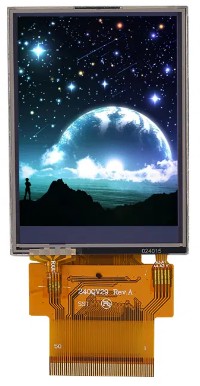
The 2.4 Inch TFT Display is widely used in handheld industrial terminals, inventory scanners, data loggers and portable testers because of its compact size and readable graphics. Many service technicians rely on handheld devices where a 2.4 Inch TFT Display shows menus, waveforms, temperature data or test results in real time.In consumer electronics, the 2.4 Inch TFT Display appears in entry‑level smartphones, portable media players, DIY electronics kits, remote controls, fitness devices and compact game consoles. The small size keeps devices pocket‑friendly, while the QVGA resolution delivers adequate detail for icons, texts and simple animations.In home appliances and IoT, a 2.4 Inch TFT Display often serves as the main HMI for kitchen appliances, smart thermostats, alarm panels, EV charging piles and compact POS terminals. When combined with a capacitive or resistive touch panel, the 2.4 Inch TFT Display can replace mechanical buttons, offering attractive and flexible user interfaces.
When selecting a Chinese 2.4 Inch TFT Display manufacturer, buyers should start with technical fit: interface type, operating voltage, brightness, viewing angle, color depth, touch function and operating temperature. A 2.4 Inch TFT Display for outdoor or industrial use must offer higher brightness, wide viewing angles and extended temperature ranges compared with indoor consumer versions.Next, buyers should evaluate quality and reliability. ISO‑certified factories, traceable raw materials, well‑documented inspection procedures and references from automotive or industrial customers are strong indicators that a 2.4 Inch TFT Display manufacturer can support demanding projects. Sample testing is crucial: engineers should check backlight uniformity, pixel defects, color consistency and performance at temperature extremes.Commercial aspects also matter. Minimum order quantity, tooling or customization fees, lead time for samples and mass production, warranty terms and logistics options all influence the total cost of a 2.4 Inch TFT Display project. Buyers should verify whether the supplier can guarantee long‑term availability of the 2.4 Inch TFT Display (for example, five to seven years for industrial applications) and whether any second‑source panels or drop‑in replacements are available.Finally, communication and engineering support are important soft factors. A responsive engineering team that understands schematic diagrams, EMI constraints, UI requirements and mechanical drawings can shorten development time and reduce risk. Good suppliers provide reference schematics, code examples, 3D models and design guidelines for integrating a 2.4 Inch TFT Display into new products.
To achieve stable performance, designers should pay attention to backlight driving, power supply decoupling, signal integrity and mechanical fixation of the 2.4 Inch TFT Display. Using proper constant‑current drivers for the LED backlight, separating analog and digital grounds where appropriate, and following the manufacturer's recommendations for FPC bending radius can prevent early failures.On the firmware side, properly initializing the 2.4 Inch TFT Display controller, setting correct timing parameters and implementing efficient screen‑refresh strategies (partial updates, double buffering) will improve GUI responsiveness. Many Chinese manufacturers provide sample code for popular MCUs, and adapting these examples saves time compared with starting from scratch.For touch‑enabled 2.4 Inch TFT Display modules, designers should carefully route I2C or SPI lines for the touch controller, add ESD protection, and consider the impact of cover‑lens thickness on sensitivity. In harsh environments, mechanical sealing, gasket design and, if needed, optical bonding between the 2.4 Inch TFT Display and cover lens help prevent condensation and improve sunlight readability.
The 2.4 Inch TFT Display has become a key building block for compact HMIs, handheld instruments and smart consumer devices thanks to its balance of size, resolution, brightness and cost. China hosts a dense ecosystem of 2.4 Inch TFT Display manufacturers—from large integrated panel producers to specialized module factories and flexible OEM/ODM suppliers—capable of serving industrial, medical, automotive and IoT markets worldwide.By carefully comparing specifications, certifications, customization options, commercial terms and engineering support, overseas buyers can select reliable Chinese partners for long‑term 2.4 Inch TFT Display projects. Well‑structured integration practices, combined with clear communication and realistic qualification tests, ensure that each 2.4 Inch TFT Display performs consistently in the field. For brands that want to differentiate their products with intuitive, colorful interfaces, working with capable Chinese 2.4 Inch TFT Display manufacturers is a practical and competitive strategy.
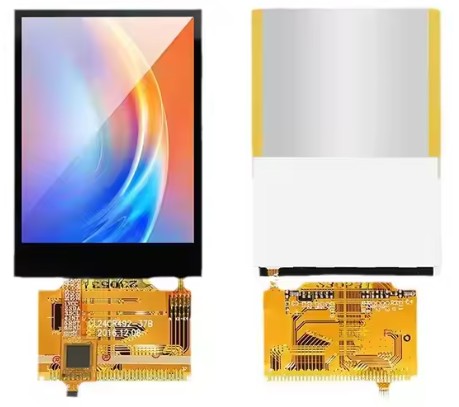
A 2.4 Inch TFT Display provides a compact 240×320 QVGA resolution with vivid colors, good contrast and fast response times suitable for text, icons, animations and simple images. It offers an excellent balance between screen area and device size, making it ideal for handheld terminals, HMIs and smart devices where space is limited but clear graphics are required.
Most 2.4 Inch TFT Display modules support interfaces such as SPI, 8080‑parallel MCU and, in some cases, RGB. They are usually driven by controller ICs like ILI9341, ST7789, GC9307 or compatible chips that work well with popular microcontrollers and development boards. This broad compatibility makes a 2.4 Inch TFT Display easy to integrate into existing electronic platforms.
Yes, a 2.4 Inch TFT Display can be used outdoors if the module is specified with higher brightness, suitable polarizers and an adequate operating temperature range. Many Chinese manufacturers offer sunlight‑readable 2.4 Inch TFT Display modules with 300–600 nits or higher brightness for EV chargers, outdoor kiosks and field terminals. Designers should also consider anti‑glare treatments and environmental sealing for outdoor use.
Common customization options include FPC length and pinout, choice of TN or IPS panel, brightness and backlight configuration, resistive or capacitive touch panels, cover‑lens shape and printing, and mechanical frames. Some 2.4 Inch TFT Display manufacturers can also adjust viewing direction, temperature range and backlight lifetime, as well as supply complete HMI assemblies with PCBs and housings.
Overseas buyers should review datasheets, quality certifications, production capabilities and references from similar projects. Testing samples of a 2.4 Inch TFT Display for pixel defects, color uniformity, viewing angle and performance at temperature extremes is essential. Buyers should also compare MOQs, lead times, long‑term availability and communication quality to ensure that the chosen Chinese 2.4 Inch TFT Display manufacturer can support mass production and future product upgrades.