
Views: 222 Author: Wendy Publish Time: 2025-12-24 Origin: Site


Content Menu
● Understanding the 2.8 TFT Display
● Key Applications of 2.8 TFT Display Modules
● Top 10 2.8 TFT Display Manufacturers in China
>> Chenghao Optoelectronic (Chenghao LCD)
>> AVDISPLAY Small‑Size Division
>> Other Specialized Small‑Size TFT Display Makers
● How to Choose the Right 2.8 TFT Display Manufacturer
● Typical Specifications of a 2.8 TFT Display
● Integration Tips for 2.8 TFT Display in OEM Projects
>> (1) What is a 2.8 TFT Display?
>> (2) How do I choose the right resolution and interface for my 2.8 TFT Display?
>> (3) Can a 2.8 TFT Display work in outdoor or harsh environments?
>> (4) What customization options are available for 2.8 TFT Display modules?
>> (5) How should I start cooperation with a Chinese 2.8 TFT Display manufacturer?
China has become one of the world's most competitive hubs for TFT Display production, especially for small‑ and medium‑size modules such as 2.8‑inch panels widely used in handheld devices, instruments, and smart home products. For overseas buyers, understanding the key 2.8 TFT Display manufacturers in China helps secure stable quality, fast delivery, and cost‑effective customized solutions.[1]

A 2.8 TFT Display (2.8‑inch diagonal) offers an excellent balance between compact size and sufficient viewing area for human–machine interfaces, wearable devices, meters, and portable terminals. These 2.8‑inch TFT Display modules are commonly available in resolutions such as 240×320 (QVGA) and 480×640, with options for resistive or capacitive touch, as well as high‑brightness versions for outdoor use.[2]
Key characteristics of a typical 2.8 TFT Display include:[2]
- Thin‑film transistor active‑matrix structure for fast response and stable image quality.
- Support for 16‑bit or 24‑bit color depth, delivering vivid and sharp graphics.
- Multiple interface choices (SPI, 8080/6800 MCU, RGB, and sometimes MIPI) to match mainstream MCUs and application processors.
- Optional IPS TFT Display technology for wide viewing angles and better contrast.
Because of these features, 2.8 TFT Display modules are widely used in industrial controllers, medical handheld devices, payment terminals, smart home wall panels, and test instruments. The mature ecosystem around TFT Display drivers, FPC designs, and standard mechanical sizes also lowers development risk for global OEMs.[2]
A 2.8 TFT Display can serve a broad range of applications where space is limited but information density and clarity are still important. Many Chinese manufacturers design their 2.8‑inch TFT Display products specifically for these typical use cases.[2]
Common application fields include:[2]
- Industrial HMI: Compact controllers, PLC panels, and handheld programming terminals using ruggedized 2.8 TFT Display modules.
- Medical and laboratory devices: Portable analyzers, patient monitors, and diagnostic instruments that require clear color TFT Display indicators.
- Smart home and IoT: Wall switches, thermostats, and smart intercom systems adopting 2.8‑inch TFT Display panels with touch.
- Consumer and handheld: POS terminals, GPS devices, gaming handhelds, and wearables where a small but readable TFT Display is needed.
- Automotive and e‑mobility: Small auxiliary instrument panels, chargers, and onboard diagnostic tools with 2.8‑inch color TFT Display modules.
For each of these segments, Chinese 2.8 TFT Display manufacturers can customize brightness, viewing angle, interface, touch type, and cover lens design to match the final product. This makes the 2.8‑inch TFT Display a highly flexible platform for both low‑volume specialized devices and high‑volume consumer products.[2]
The following 10 suppliers are representative examples of Chinese companies capable of supporting 2.8 TFT Display needs through standard and custom solutions. They have experience with small and medium TFT Display modules, industrial and consumer markets, and OEM/ODM cooperation.[3]
Kingtech focuses on small and medium‑size TFT Display modules, typically from around 1.2‑inch up to 10‑inch, and is a strong partner for 2.8 TFT Display projects in consumer and industrial fields. With a complete product portfolio and ISO‑certified factories, Kingtech offers both standard 2.8‑inch TFT Display modules and customized designs with special interface or mechanical requirements.[3]
Key strengths for 2.8 TFT Display buyers include:[3]
- Wide range of small TFT Display modules suitable for handheld and smart home markets.
- Capability to provide IPS 2.8‑inch TFT Display panels with high brightness for outdoor environments.
- Support for integrated touch solutions, cover lenses, and driver boards to shorten design cycles.
AV‑Display is a specialized color TFT Display and LCD module manufacturer serving industrial, medical, automotive, and consumer customers. The company's portfolio includes many small and mid‑size TFT Display modules, including 2.x‑inch and 3.x‑inch formats suitable for HMI and embedded systems.[4]
For 2.8 TFT Display applications, AV‑Display can offer:[4]
- High‑reliability TFT Display modules designed for long‑term industrial supply.
- Options for capacitive touch, optical bonding, and anti‑glare or anti‑reflection surface treatments.
- Engineering support for custom FPC layouts, interfaces, and backlight structures.
PANASYS, under SLS Industrial, focuses on custom small and medium TFT Display modules and system integration. The company has multiple COG bonding lines and experience in industrial, medical, and automotive TFT Display applications, including typical 2.8‑inch formats.[5]
Highlights for 2.8 TFT Display projects include:[5]
- Strong customization capability for TFT Display parameters such as brightness, contrast, and viewing angle.
- Support for adding resistive or capacitive touch screens and cover glass designs.
- Long‑term commitment to mass‑production stability and lifecycle management of TFT Display solutions.
Sunul Electronic is a professional TFT Display supplier focusing on high‑brightness and sunlight‑readable LCD modules for industrial and outdoor terminals. A 2.8 TFT Display from Sunul can be specified with enhanced luminance, wide temperature range, and robust backlight design for harsh environments.[3]
Advantages for demanding 2.8 TFT Display applications:[3]
- Emphasis on outdoor‑capable TFT Display solutions with high brightness and wide temperature operation.
- Experience in transportation, outdoor kiosks, and field devices where 2.8‑inch modules are common.
- Capability to customize backlight, polarizer, and mechanical structure to meet project requirements.
XIANHENG (XH Panel) is known as a display solution provider and system integrator, working closely with leading TFT Display panel makers in China. The company offers complete TFT Display module solutions including small 2.8‑inch displays with optional touch, controllers, and firmware support for industrial and commercial devices.[6]
For 2.8 TFT Display buyers, XIANHENG provides:[6]
- Access to a broad ecosystem of TFT Display panels, drivers, and touch components.
- Engineering services to match the 2.8‑inch TFT Display to a specific platform and software stack.
- Guidance on mechanical design, EMC, and reliability testing for finished devices.
Chenghao LCD focuses on small LCD and TFT Display modules, with a significant share of its catalogue dedicated to sizes below 5‑inch. This makes it an attractive partner for 2.8 TFT Display based handheld, industrial, and consumer devices.[2]
Key features of working with Chenghao on a 2.8 TFT Display:[2]
- Multiple standard 2.x‑inch and 3.x‑inch TFT Display options with different interfaces.
- Customization of FPC, backlight, and touch panels for unique product ID and branding.
- Support for low‑to‑medium volume orders, ideal for niche equipment using 2.8‑inch TFT Display modules.
Topway Display is a solutions‑oriented TFT Display company that provides not only bare TFT modules but also smart display solutions with integrated controllers and GUI tools. For a 2.8 TFT Display application, Topway can offer standard or “smart” modules with built‑in driver boards and serial interfaces.[7]
Benefits when choosing Topway for 2.8 TFT Display projects:[7]
- Reduced firmware workload thanks to smart TFT Display modules with pre‑integrated command sets.
- Rapid prototyping using demo kits and development tools specifically for small TFT Display HMIs.
- Long‑term supply support for industrial and medical product lifecycles.
DWIN is widely known for HMI modules and intelligent TFT Display solutions combining LCD, touch, and powerful controllers. For many embedded projects, a 2.8 TFT Display module from DWIN can come as a complete HMI subsystem, simplifying software development and certification.[4]
Reasons to consider DWIN for 2.8 TFT Display:[4]
- Availability of integrated HMI modules based on 2.8‑inch TFT Display with serial communication.
- Graphic design tools and libraries that allow quick screen layout and UI animation.
- Comprehensive technical documentation and reference projects for industrial users.
Within the broader AV‑Display ecosystem, there is a strong focus on small‑size TFT Display modules for handhelds, wearables, and compact HMIs. 2.8 TFT Display products in this category often support low power consumption and thin mechanical structures for space‑constrained designs.[4]
Typical strengths for 2.8 TFT Display modules:[4]
- Thin and light modules compatible with compact enclosures and sleek product designs.
- Integration of capacitive touch and cover lens printing to support brand customization.
- Flexible MOQ and supply arrangements for both pilot runs and mass production of TFT Display products.
Besides the better‑known brands above, China has many specialized small‑size TFT Display makers and module assemblers that focus heavily on 2.8‑inch and similar sizes. These companies often provide highly flexible customization, short lead times, and competitive pricing for 2.8 TFT Display orders in the thousands or tens of thousands of units.[3]
Such manufacturers can help with:[3]
- Quick adaptation of 2.8‑inch TFT Display parameters (brightness, pinout, FPC shape) to match existing designs.
- Customized touch and cover glass combinations, including logo printing and special coatings.
- Fast engineering samples and iterative improvements during the NPI phase of a 2.8 TFT Display project.
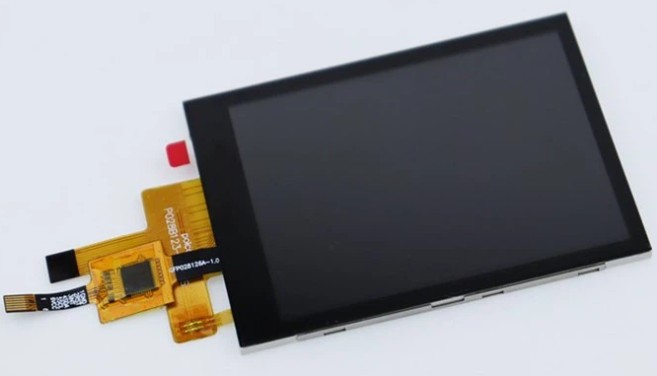
Selecting the right 2.8 TFT Display partner in China involves more than just comparing prices. Overseas buyers should evaluate technical, quality, and commercial factors to ensure long‑term success of their TFT Display programs.[2]
Important criteria include:[2]
- Technical capability: Experience with 2.8‑inch TFT Display resolution, interface, brightness, and touch integration similar to your project.
- Quality system: ISO certifications, reliability test capabilities (temperature, humidity, ESD, vibration), and production traceability for TFT Display modules.
- Engineering support: Ability to offer reference schematics, timing parameters, and layout guidance for 2.8 TFT Display interfaces.
- Supply security: Capacity, material planning, and lifecycle management to keep the same TFT Display or a fully compatible alternative available for many years.
- Communication and service: Response speed, English communication, and willingness to support custom 2.8‑inch TFT Display designs.
While specifications vary by manufacturer, many 2.8 TFT Display modules share similar parameter ranges. Understanding these helps engineers create a realistic requirement list before contacting Chinese TFT Display suppliers.[2]
Typical 2.8 TFT Display parameters:[2]
- Size: 2.8‑inch diagonal active area.
- Resolution: 240×320 (standard QVGA) or 480×640 for higher‑end models.
- Brightness: 200–350 cd/m² for indoor use; 500–1000 cd/m² or more for outdoor/sunlight‑readable TFT Display versions.
- Viewing angle: TN or IPS, with IPS offering much wider angles and better color consistency.
- Interface: SPI or MCU (8/16‑bit) for lower cost, RGB or MIPI for higher performance 2.8 TFT Display modules.
- Touch options: 4‑wire/5‑wire resistive touch or multi‑point capacitive touch; some modules are display‑only TFT Display without touch.
- Operating temperature: Often from −20 °C to +70 °C, with industrial‑grade variants extending to −30 °C or +80 °C.
When contacting suppliers, provide a clear specification sheet covering these key TFT Display parameters, as it helps manufacturers quickly propose suitable 2.8‑inch modules or feasible customization paths.[2]
A successful 2.8 TFT Display project also depends on how well the module is integrated into the hardware, firmware, and mechanical design. Good communication with Chinese TFT Display manufacturers during the early engineering phase can eliminate costly redesigns.[2]
Practical tips include:[2]
- Share block diagrams and MCU/SoC information so the supplier can recommend appropriate TFT Display interface timing and voltage levels.
- Confirm backlight driving method (constant current vs. constant voltage) and connector type early in the 2.8 TFT Display design.
- Request recommended initialization code and sample drivers from the manufacturer's FAEs.
- Carry out mechanical stack‑up reviews, including tolerance analysis, to avoid stress on the 2.8‑inch TFT Display glass and FPC.
- Plan for EMC and ESD testing, as TFT Display FPC and backlight lines can affect system‑level performance.
China's ecosystem of 2.8 TFT Display manufacturers offers overseas buyers a powerful combination of cost competitiveness, customization capability, and mature supply chains. By partnering with experienced TFT Display suppliers—such as Kingtech, AV‑Display, PANASYS, Chenghao LCD, DWIN, and other specialized small‑size makers—OEMs can develop compact, visually attractive, and reliable devices for industrial, medical, IoT, and consumer markets.[3]
A well‑planned 2.8 TFT Display project begins with clear specifications, careful supplier selection, and close engineering collaboration throughout prototyping and mass production. With these steps, global buyers can leverage China's strengths in TFT Display technology to build competitive products and long‑term partnerships.[2]
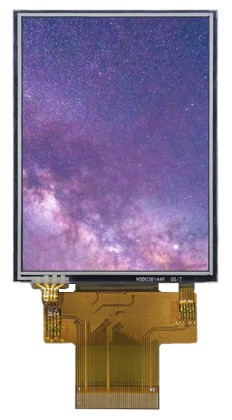
A 2.8 TFT Display is a small color flat‑panel display with a 2.8‑inch diagonal size using thin‑film transistor technology for active‑matrix addressing. It typically offers QVGA or higher resolution and is widely used in handheld, industrial, and IoT devices that require compact yet clear visual interfaces.[2]
Choosing the right resolution and interface depends on the UI complexity, processor capability, and cost targets of your product. 240×320 with SPI or MCU interface is suitable for simpler graphics, while higher resolutions with RGB or MIPI help when the 2.8‑inch TFT Display needs smoother animations and detailed images.[2]
Yes, many Chinese manufacturers provide 2.8 TFT Display modules with high brightness, wide temperature range, and enhanced backlight design for outdoor or industrial use. For harsh environments, buyers should request specifications such as operating temperature range, humidity resistance, and sunlight‑readable luminance for the selected TFT Display.[3]
Typical customization options include brightness level, viewing angle technology (TN or IPS), touch type, FPC shape, connector type, and cover lens printing. Some suppliers also offer custom mechanical frames, optical bonding, and firmware support to create a fully tailored 2.8‑inch TFT Display solution.[2]
To start cooperation, prepare a clear requirement sheet with target resolution, brightness, interface, touch type, operating temperature, and annual volume for your 2.8 TFT Display. Then share drawings, photos, or samples of any existing TFT Display so the supplier can propose a compatible standard module or a cost‑effective custom design.[3]
[1](https://www.perplexity.ai/search/148df180-b6bf-4883-969e-a922500318eb)
[2](https://www.perplexity.ai/search/4ed7b9ee-ba60-480d-9282-d0657ce65648)
[3](https://www.perplexity.ai/search/c9fb2641-1dab-4400-b888-b5ed1f7e0410)
[4](https://www.perplexity.ai/search/5249aa58-622f-476e-af29-39617274e0e8)
[5](https://www.perplexity.ai/search/ccf91d55-a3eb-4b59-a286-f617ba1fafd9)
[6](https://www.perplexity.ai/search/31d3a6e7-d914-4eb8-ae54-cbf0ce6f47e2)
[7](https://www.perplexity.ai/search/257e06cf-3df5-4ebb-84ec-9eea4ecc6fad)