
Views: 222 Author: Wendy Publish Time: 2025-12-11 Origin: Site


Content Menu
● Understanding Industrial TFT Displays
● Why China Leads in Industrial TFT Displays
● Key Selection Factors for Industrial TFT Displays
● Top 10 Industrial TFT Display Manufacturers in China
>> 2. TCL CSOT (China Star Optoelectronics Technology)
>> 4. TIANMA
>> 5. AU Optronics (AUO) – China Operations
>> 6. Visionox
>> 7. InfoVision Optoelectronics (IVO)
>> 9. Specialized Industrial Module Makers
>> 10. Emerging Niche Suppliers
● Typical Industrial Applications for TFT Displays
● Customization Options for Industrial TFT Displays
● Quality and Reliability Considerations
● How Overseas Buyers Can Work with Chinese Manufacturers
● Benefits of Using Chinese Industrial TFT Displays
● FAQ
>> 1. What is the main difference between an Industrial TFT Display and a consumer display?
>> 2. How can I choose the right size and resolution for an Industrial TFT Display?
>> 3. Are high‑brightness Industrial TFT Displays necessary for indoor applications?
>> 4. What is the typical lifetime of an Industrial TFT Display backlight?
>> 5. Can Chinese manufacturers support custom interfaces and housings for Industrial TFT Displays?
China has become the global center for Industrial TFT Display development and manufacturing, supplying high‑performance display solutions to automation, medical, transportation, and energy industries worldwide. Industrial TFT Display modules Manufacturers combine durability, clarity, and intelligent interfaces, enabling advanced human–machine interaction in harsh and mission‑critical environments.

Industrial TFT Display technology is based on thin‑film transistor liquid crystal displays that are optimized for long life, higher reliability, and extended temperature ranges. Compared with consumer displays, an Industrial TFT Display is engineered to withstand vibration, shock, electromagnetic interference, and continuous 24/7 operation. An Industrial TFT Display also supports features such as high brightness, wide viewing angles, and optional touch panels to meet the requirements of industrial control systems.
Whether integrated into PLC panels, embedded controllers, or industrial HMIs, an Industrial TFT Display provides stable optical performance and consistent color reproduction. In many projects, the Industrial TFT Display becomes the primary interface between operators and complex processes, so long‑term availability and component continuity are critical factors.
China's dominance in Industrial TFT Display manufacturing comes from a combination of large‑scale panel production, complete upstream and downstream supply chains, and strong investment in automation. Chinese manufacturers operate high‑generation LCD fabs and advanced module assembly lines, which reduce costs and shorten lead times. Many global brands source their Industrial TFT Display modules or semi‑finished panels from Chinese factories and then integrate them into their own systems.
In addition, local manufacturers in China offer flexible customization services for Industrial TFT Display projects. This includes tailored sizes, customized interfaces (LVDS, MIPI, RGB, SPI), different brightness levels, optical bonding, touch integration, and rugged mechanical designs. As a result, overseas buyers can obtain a complete Industrial TFT Display solution from one supplier, instead of coordinating multiple vendors.
When choosing an Industrial TFT Display for a project, engineers should evaluate several technical and commercial factors:
- Size and resolution: Diagonal sizes range from under 2 inches for handheld devices to over 21 inches for operator panels, with resolutions from simple QVGA to Full HD or higher. The Industrial TFT Display must match the viewing distance and data density of the application.
- Brightness and viewing angle: Outdoor or high‑ambient‑light environments require high‑brightness Industrial TFT Display modules, often 800–1500 nits or more, with wide viewing angles to ensure readability from different positions.
- Operating temperature: Many Industrial TFT Display modules support wide temperature ranges, for example from −20°C or −30°C up to +70°C or +85°C, which is essential for factory floors, vehicles, and outdoor systems.
- Interface and controller: The Industrial TFT Display must be compatible with the host system, whether it uses MCU‑driven RGB, LVDS, MIPI DSI, or other interfaces. Some modules integrate onboard controllers or embedded systems to simplify design.
- Touch options: Capacitive touch is popular for modern HMIs, but resistive touch is still requested in gloved or wet environments. The selected Industrial TFT Display should align with the expected interaction mode.
- Reliability and lifecycle: Industrial projects often run for 5–10 years or longer, so long‑term availability and stable supply of the chosen Industrial TFT Display series are essential.
Having a clear requirement list helps narrow down the best Industrial TFT Display manufacturer in China for a specific project.
China hosts many capable suppliers, but a core group of companies has built strong reputations in the Industrial TFT Display field. The following sections highlight ten representative manufacturers, focusing on their strengths in industrial applications.
BOE is one of the world's largest panel manufacturers and an important supplier of Industrial TFT Display products. Its portfolio ranges from small industrial modules to large, high‑resolution panels used in control rooms, medical devices, and automotive clusters. BOE invests heavily in new technologies such as high‑brightness backlights, low‑power driving schemes, and advanced polarizer structures, all of which improve Industrial TFT Display performance in demanding environments.
For overseas customers, BOE offers stable supply, a wide product roadmap, and strong technical documentation. This makes BOE suitable for long‑term industrial projects that require reliable Industrial TFT Display solutions at scale.
TCL CSOT operates multiple high‑generation production lines and has become a major exporter of TFT‑LCD and next‑generation displays. While the company is well known in TV and IT markets, it also supports the industrial segment with high‑quality panels used in HMIs, digital signage, and in‑vehicle systems.
The Industrial TFT Display offerings from TCL CSOT focus on high contrast, energy efficiency, and consistent optical performance. Partnerships with module integrators allow foreign buyers to convert CSOT panels into complete Industrial TFT Display assemblies with touch and cover glass.
HKC is recognized for its high‑volume capacity and competitive pricing in TFT‑LCD panels. Originally focused on TV and monitor panels, HKC has expanded into commercial and industrial domains. Many system integrators assemble HKC panels into rugged housings to create Industrial TFT Display devices for kiosks, POS terminals, and industrial control systems.
Because of its scale, HKC can supply large batches of panels, which benefits customers who need thousands of Industrial TFT Display units. For cost‑sensitive projects, HKC‑based modules are often considered alongside other Chinese alternatives.
TIANMA specializes in small and medium‑sized modules, making it highly relevant for Industrial TFT Display applications such as handheld instruments, medical devices, automotive dashboards, and industrial HMIs. The company is known for advanced technologies in IPS, LTPS, and high‑brightness modules.
For industrial customers, TIANMA emphasizes long‑term availability and reliability. Many popular Industrial TFT Display modules from TIANMA remain in production for years, which protects customers from frequent redesigns. Custom backlight and touch options are also available.
Although AUO is originally a Taiwanese company, it operates significant manufacturing capacity in mainland China and serves many local and global customers. AUO's Industrial TFT Display products include sunlight‑readable panels, wide temperature models, and specialty sizes.
Industrial TFT Display modules built on AUO panels are commonly used in transportation, marine displays, factory automation, and outdoor terminals. AUO's strong engineering background and reliability testing processes make its panels a solid choice for high‑end applications.
Visionox is better known for OLED innovation but also provides TFT‑based solutions and mixed portfolios that address industrial needs. For next‑generation HMIs, some customers combine Industrial TFT Display modules with emerging technologies from Visionox to achieve more flexible and compact designs.
In particular, where curved or uniquely shaped displays are required, Visionox can be part of a hybrid strategy that uses a standard Industrial TFT Display for the main interface and special shapes for secondary indicators.
IVO focuses on small and medium‑sized LCD panels and serves both consumer and industrial markets. Its panels are often integrated into Industrial TFT Display modules used in tablets, diagnostic equipment, and control panels. Customers appreciate the balance between performance and cost.
For specialized projects, IVO can support custom resolutions or mechanical outlines. When combined with third‑party optical bonding and touch integration, IVO panels become complete Industrial TFT Display assemblies ready for deployment in harsh conditions.
Winstar is a module‑oriented manufacturer, offering LCD, TFT, and OLED modules rather than bare panels. This aligns well with customers who want a complete Industrial TFT Display module that includes a driver board, interface, and sometimes touch.
The company is particularly strong in smaller sizes for instrumentation and control. Its Industrial TFT Display modules are known for clear datasheets, evaluation tools, and dependable quality, which simplifies integration for engineering teams.
Alongside large panel makers, China has a group of specialized module manufacturers that focus almost exclusively on Industrial TFT Display solutions. These companies often:
- Purchase open cells or panels from top fabs
- Add custom backlights, touch panels, and controller boards
- Design mechanical housings and mounting frames
- Perform environmental and reliability testing
Such integrators are ideal when a project requires an all‑in‑one Industrial TFT Display with specific IP ratings, optical bonding, anti‑glare or anti‑reflection coatings, or EMI shielding. Their strength lies in flexibility and rapid engineering response.
A growing number of niche companies in China target particular segments such as medical imaging, rail transportation, or energy management. These suppliers may not be globally famous, but they design highly customized Industrial TFT Display solutions tailored to specific standards and certifications.
For example, a niche supplier might provide Industrial TFT Display modules with high‑accuracy color calibration for medical diagnostic monitors, or with special vibration resistance for rail applications. For buyers in these verticals, such focused expertise can be more valuable than large‑scale volume capacity.
An Industrial TFT Display can be found across almost every modern industrial environment:
- Factory automation: Operator panels and HMI terminals rely on Industrial TFT Display modules to show process data, alarms, and control interfaces.
- Packaging and material handling: Conveyor control, labeling machines, and robotics systems integrate Industrial TFT Display panels for setup and monitoring.
- Energy and utilities: Power plants, substations, and renewable energy systems use Industrial TFT Display screens in SCADA terminals and outdoor cabinets.
- Medical and laboratory equipment: Diagnostic devices, analyzers, and imaging systems use high‑resolution Industrial TFT Display modules to present precise data.
- Transportation: Industrial TFT Display panels appear in train control systems, marine dashboards, and public information displays.
- Building and smart infrastructure: Access control, elevator panels, and building management systems rely on compact Industrial TFT Display interfaces.
In each case, the Industrial TFT Display must maintain readability, accuracy, and responsiveness under continuous operation, often in electrically noisy or thermally challenging environments.
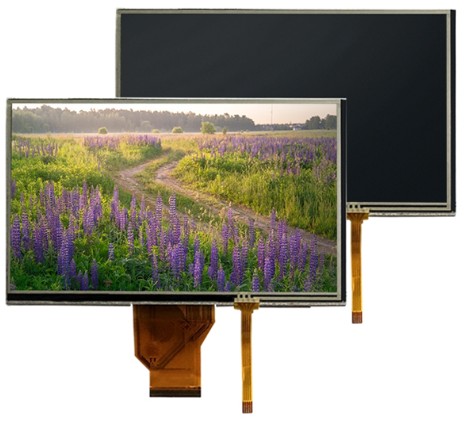
One of the main advantages of working with Chinese manufacturers is the broad range of customization options for Industrial TFT Display products. Common custom parameters include:
- Size and aspect ratio: From round and square displays to ultra‑wide bars for status bars and rack equipment.
- Optical features: High brightness, sunlight readability, anti‑glare coatings, anti‑reflection treatments, and optical bonding with cover glass.
- Touch integration: Projected capacitive touch with glove support, water rejection, and multi‑touch, or resistive touch for legacy systems.
- Mechanical design: Custom brackets, front bezels, and mounting holes to fit existing housings, plus ruggedization against shock and vibration.
- Interface and electronics: Tailored driver boards with RS‑232, RS‑485, CAN, USB, or Ethernet on top of standard LVDS or MIPI, creating a more intelligent Industrial TFT Display module.
By defining these parameters early, industrial buyers can obtain a near‑plug‑and‑play Industrial TFT Display that reduces system design time.
For critical applications, the Industrial TFT Display is not just a cosmetic component; it directly affects system safety and usability. Buyers should therefore evaluate quality and reliability carefully:
- Testing standards: Look for compliance with IEC, EN, automotive, medical, or other relevant standards that verify the Industrial TFT Display's robustness.
- Burn‑in and aging: Many manufacturers run extended burn‑in tests to detect early failures before shipment.
- Environmental tests: Wide‑temperature storage and operation, humidity resistance, vibration and shock tests, and ESD immunity are essential for Industrial TFT Display modules.
- Traceability and production control: Good manufacturers maintain batch traceability and process control, which supports long‑term service.
A reliable Industrial TFT Display reduces maintenance costs, minimizes downtime, and enhances operator confidence in the system.
For international customers, successful cooperation with a Chinese Industrial TFT Display supplier usually follows a structured process:
1. Requirement definition
The buyer prepares a detailed specification, including size, resolution, brightness, interface, operating temperature, and expected lifetime. A clear description of the end‑use environment helps the supplier recommend a suitable Industrial TFT Display solution.
2. Technical proposal and samples
The manufacturer proposes one or more Industrial TFT Display models and provides specification sheets. Samples are then produced or taken from existing stock for evaluation and testing.
3. Engineering optimization
After initial tests, the buyer and supplier refine parameters such as brightness, touch sensitivity, or mechanical design. This phase may involve custom tooling for a fully tailored Industrial TFT Display module.
4. Pilot run and certification
A pilot production batch allows verification of repeatability and yields. At this stage, the Industrial TFT Display may undergo additional compliance or certification procedures.
5. Mass production and long‑term support
Once approved, regular orders begin, and the supplier ensures stable supply and lifecycle management. Many Chinese manufacturers offer last‑time‑buy options and migration plans when a particular Industrial TFT Display series approaches end‑of‑life.
Using this structured approach reduces risk and leads to a more reliable and economical implementation.
Industrial TFT Display products sourced from China offer several advantages for global buyers:
- Cost competitiveness: Large‑scale manufacturing and local supply chains lower the total cost of ownership.
- Wide product range: From entry‑level modules to high‑end, sunlight‑readable Industrial TFT Display solutions, buyers can cover many projects with a single region.
- Fast customization: Engineering teams can quickly adapt standard designs into custom Industrial TFT Display modules for specific projects.
- Global logistics: Many Chinese suppliers have export experience and cooperate with international distributors, reducing lead times and simplifying customs procedures.
These benefits explain why more and more equipment manufacturers in Europe, America, and other regions integrate Chinese Industrial TFT Display modules into their products.
Industrial TFT Display technology has become the backbone of modern human–machine interfaces in automation, medical, transportation, and energy systems. China plays a leading role in this ecosystem, with major panel giants and specialized module makers supplying a broad range of Industrial TFT Display solutions. By understanding key selection criteria—such as size, brightness, temperature range, and lifecycle—and by working closely with reliable Chinese manufacturers, overseas buyers can build long‑lasting, high‑performance display interfaces for demanding industrial environments. Choosing the right Industrial TFT Display partner in China ensures not only competitive pricing but also innovation, customization, and long‑term support for global projects.
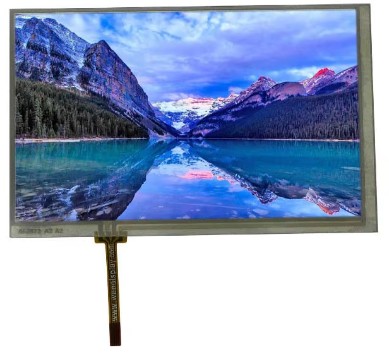
An Industrial TFT Display is designed for harsh environments, continuous operation, and long product lifecycles, whereas consumer displays prioritize cost and aesthetics. Industrial TFT Display modules usually feature wider temperature ranges, stronger mechanical structures, and better protection against dust, moisture, and electrical noise.
The best size and resolution depend on viewing distance, the amount of information shown, and the available panel space in the machine. For close‑range HMIs, a smaller Industrial TFT Display with higher pixel density works well, while distant viewing often requires a larger screen so operators can read data quickly and comfortably.
High‑brightness Industrial TFT Display modules are essential for outdoor or very bright environments, but standard brightness may be adequate indoors. However, in factories with strong overhead lighting or where operators wear protective visors, a brighter Industrial TFT Display can still improve readability and reduce eye fatigue.
The LED backlight in an Industrial TFT Display often has a rated lifetime of 30,000 to 70,000 hours or more, depending on brightness and operating temperature. Running the Industrial TFT Display at slightly reduced brightness and ensuring good thermal management can significantly extend effective service life.
Yes, many Chinese manufacturers and module integrators specialize in customizing Industrial TFT Display solutions, including driver boards, communication interfaces, metal housings, and mounting frames. By sharing mechanical drawings and interface requirements, buyers can receive a turnkey Industrial TFT Display module that fits directly into their equipment.