
Views: 222 Author: Wendy Publish Time: 2025-12-08 Origin: Site


Content Menu
● Why China Leads in TFT Display
● Top 10 TFT Display Manufacturers in China
>> BOE Technology Group Co., Ltd.
>> TCL CSOT (China Star Optoelectronics)
>> HKC
>> Innolux (Mainland Operations)
>> IVO (InfoVision Optoelectronics)
>> Ruixiang Touch Display and Other Module Specialists
>> Shenzhen Mid‑Size TFT Display Manufacturers
● Typical TFT Display Customization Options
● Application Fields of TFT Display
● How to Select a Chinese TFT Display Supplier
● Testing and Quality Control for TFT Display
● Working with TFT Display OEM/ODM Projects
● FAQ
>> 1: What is the difference between a TFT Display and a regular LCD?
>> 2: How do I choose the right size and resolution for a TFT Display?
>> 3: What interfaces are commonly used for TFT Display modules?
>> 4: Can a TFT Display work reliably in outdoor or harsh environments?
>> 5: What information should I provide when requesting a quote for a custom TFT Display?
China has become one of the most important global hubs for TFT Display design and manufacturing, supplying panels and modules for smartphones, industrial devices, automotive dashboards, medical equipment, and smart home products. Understanding the leading Chinese TFT Display manufacturers helps overseas buyers secure reliable, high‑performance, and cost‑effective display solutions for long‑term OEM and ODM projects.
Below is an overview of the Top 10 TFT Display manufacturers in China, together with practical buying tips, typical customization options, and key application fields where a high‑quality TFT Display can dramatically improve end‑product performance. Throughout the article, “TFT Display” is used broadly to include TFT LCD panels, modules, and integrated touch display assemblies.

China's TFT Display industry benefits from a highly integrated supply chain covering glass substrates, driver ICs, backlight units, polarizers, and final display module assembly. This ecosystem reduces cost, shortens lead time, and supports rapid engineering changes for custom TFT Display projects.
Government support for semiconductor and flat‑panel investments has also accelerated the construction of high‑generation TFT LCD production lines, helping Chinese panel makers capture a large share of the global industrial and consumer TFT Display market. Market studies show Chinese manufacturers now dominate industrial TFT Display shipments and are expanding into automotive and advanced HMI applications.
The following section summarizes 10 representative TFT Display manufacturers in China, mixing large panel makers with specialized module suppliers that overseas buyers frequently cooperate with through OEM/ODM projects.
BOE is widely recognized as one of the world's largest TFT Display manufacturers, running high‑generation lines to produce TV, monitor, notebook, tablet, and industrial displays. Its TFT Display portfolio ranges from large‑size TV panels to medium‑size notebook and monitor panels and smaller industrial and automotive products.
BOE's investment in high‑generation TFT LCD production, including Gen 10.5 lines for large‑area panels, demonstrates strong long‑term commitment to the TFT Display business. Many Chinese TFT Display module integrators purchase open‑cell panels from BOE and then add customized backlights, driver boards, touch panels, and housings to deliver complete display assemblies to global customers.
TCL CSOT focuses heavily on TV, monitor, notebook, and smartphone TFT Display panels, including high‑refresh‑rate and wide‑color‑gamut solutions. The company also invests in Mini LED and other advanced backlighting technologies to improve brightness, contrast, and HDR performance in premium TFT Display products.
In the TV segment, TCL CSOT ranks among the leading global panel suppliers, with large‑volume output that helps maintain competitive pricing. For commercial signage and public information systems, many solution providers integrate CSOT's large‑size TFT Display panels into video walls, kiosks, and interactive advertising terminals.
Tianma is a major supplier of small‑ and medium‑size TFT Display products, especially for industrial and automotive markets. Its TFT Display modules cover sizes from tiny wearable screens to medium‑size panels for medical equipment, avionics, and in‑vehicle displays.
Tianma pays special attention to long‑term product availability, which is crucial for industrial and automotive TFT Display applications. Many of its TFT Display lines are designed for long life cycles, controlled component changes, and wide operating temperature ranges, making them suitable for harsh environments and safety‑critical systems.
HKC has expanded rapidly in large‑size TFT Display manufacturing, focusing mainly on TV and monitor panels. With multiple production lines, HKC offers high‑volume capacity and helps meet global demand for cost‑effective TFT Display solutions in the TV and PC monitor segments.
Through cooperation with module integrators and set makers, HKC's TFT Display panels are also used in digital signage, education boards, and commercial displays. Buyers that need large‑format TFT Display solutions often consider HKC as a stable mid‑ to long‑term partner.
Innolux operates advanced TFT Display facilities and provides panels for TVs, monitors, notebooks, and specialty applications. Its vertical integration capabilities—from glass substrate to final module—help maintain stable quality and competitive costs across different TFT Display sizes and resolutions.
For IT and commercial display projects, Innolux TFT Display products are often selected for their balance of performance, reliability, and price. Many downstream manufacturers integrate Innolux panels into all‑in‑one PCs, medical equipment, and professional monitors.
IVO, based in Jiangsu, concentrates on notebook, tablet, smartphone, and automotive TFT Display products. It has built a particularly strong presence in the notebook TFT Display market, serving international brands with slim, energy‑efficient panels.
In the automotive field, IVO offers TFT Display solutions for instrument clusters, center information displays, and rear‑seat entertainment, often featuring high brightness, wide viewing angles, and wide temperature capability that are essential for in‑vehicle environments.
Truly Semiconductor focuses on small‑ and medium‑size TFT Display panels and modules used in smartphones, smart meters, handheld terminals, and industrial devices. It is known for providing both standard and custom TFT Display solutions, including integrated touch panels and cover lenses.
Because Truly actively supports low‑ to medium‑volume production for specialized devices, it is attractive for OEMs that require flexible TFT Display customization but do not have the massive volumes of top consumer‑electronics brands.
Century Technology (CTC) supplies TFT Display panels and modules for PC monitors, TVs, and commercial displays. It offers a wide range of resolutions and sizes, allowing buyers to match different market segments from entry‑level monitors to more premium products.
CTC's TFT Display business emphasizes stable supply and cost‑effective performance, making it popular with brands and system integrators that target value‑oriented market segments. Its products are frequently integrated into desktop monitors, public information systems, and kiosks.
Ruixiang Touch Display and a large number of Shenzhen‑based companies act as TFT Display module specialists, integrating panels from top makers with custom backlights, touch screens, driver boards, housings, and cables. These firms focus on providing one‑stop TFT Display solutions to industrial, medical, and embedded customers.
Such specialists are often more flexible with engineering changes, firmware tuning, and small to medium volumes than large panel fabs. They can quickly develop prototypes, provide mechanical drawings and 3D data, and assist with enclosure design to help overseas buyers create finished products around the TFT Display.
Beyond the named brands, many mid‑size TFT Display suppliers in Shenzhen concentrate on module customization and small‑batch production. They offer TFT Display modules with standard interfaces like HDMI, LVDS, MIPI, and RGB, sometimes with plug‑and‑play driver boards that simplify integration.
For startups and smaller OEMs, these Shenzhen TFT Display manufacturers can be ideal partners because they support diverse configurations, quick sampling, and moderate MOQs, while still leveraging panels from major fabs like BOE or Tianma.

When working with Chinese TFT Display manufacturers, buyers can customize almost every aspect of the display to meet project requirements. Key parameters influence not only visual performance but also reliability, power consumption, and user experience.
Common customization options for a TFT Display project include:
- Size and resolution
TFT Display sizes range from under 2 inches for wearables up to more than 40 inches for TVs and public displays. Resolutions span from basic QVGA or WVGA to Full HD and higher, depending on viewing distance and content density.
- Interface and controller
Buyers can select from RGB, LVDS, MIPI DSI, eDP, SPI, MCU, or fully integrated HDMI/DisplayPort boards. Matching the TFT Display interface to the host CPU, GPU, or industrial controller is critical for stable operation and simplified PCB design.
- Brightness and backlight design
Indoor TFT Display modules may only need 250–400 nits, while outdoor and automotive applications often require 800–1500 nits or more for sunlight readability. Manufacturers can adjust LED backlight structure, driving current, and optical films to reach the required brightness and uniformity.
- Viewing angle and optical performance
Technologies such as IPS or advanced vertical alignment improve viewing angle and color consistency across the screen. Industrial and medical TFT Display applications frequently require wide viewing angles so that data remains legible from any operator position.
- Touch technology
Projected capacitive (PCAP) touch offers multi‑touch and gesture functions for modern user interfaces, while resistive touch can deliver reliable operation with gloves or styluses in very harsh environments. The choice depends on how the TFT Display will be used in the field.
- Mechanical structure and cover glass
Manufacturers can design open‑frame, panel‑mount, or fully enclosed TFT Display modules. Options such as chemically strengthened cover glass, anti‑glare coatings, anti‑fingerprint treatments, and custom logos help align the TFT Display with the final product's industrial design.
- Environmental and reliability options
Wide‑temperature designs, conformal coating, enhanced sealing, and reinforced frames help TFT Display modules survive extreme temperatures, humidity, vibration, and shock. These options are especially important in automotive, marine, mining, and outdoor industrial systems.
TFT Display technology is now indispensable in almost every sector, from consumer gadgets to critical infrastructure. Chinese manufacturers supply specialized TFT Display solutions tailored to each industry's standards and reliability demands.
Key application fields include:
- Consumer electronics
Smartphones, tablets, notebooks, smartwatches, and smart home appliances all rely on high‑resolution, low‑power TFT Display modules. Chinese suppliers deliver huge volumes with sophisticated optical performance.
- Automotive systems
Modern vehicles incorporate multiple TFT Display units: instrument clusters, center information displays, head‑up displays, rear‑seat entertainment, and EV charging interfaces. These automotive‑grade TFT Display products must withstand wide temperature ranges, vibration, and long operating lifetimes.
- Industrial automation and HMIs
Industrial control panels, PLC HMIs, CNC machines, robots, and factory dashboards typically use rugged TFT Display modules. Requirements often include bright screens, wide viewing angles, glove or wet‑hand operation, and long‑term availability.
- Medical and healthcare equipment
Patient monitors, ventilators, portable diagnostic devices, and laboratory equipment all integrate TFT Display modules that must meet high reliability and hygiene standards. High contrast, accurate color reproduction, and stable operation over time are crucial.
- Retail, finance, and public services
POS terminals, ATMs, ticketing machines, kiosks, digital signage, and interactive information boards use TFT Display technology to present user interfaces and advertisements. For these applications, long operating hours and burn‑in resistance are important.
Selecting a TFT Display supplier in China involves balancing technical, commercial, and logistical criteria rather than focusing only on price. A well‑chosen partner can significantly reduce long‑term risk and life‑cycle costs.
When evaluating potential TFT Display partners, consider:
- Technical capabilities
Confirm experience in your target size range, resolution, and interface type. Ask for datasheets, reference designs, and evidence of similar TFT Display projects. Good suppliers can support color calibration, timing optimization, and EMC considerations.
- Quality systems and certifications
Look for ISO 9001 and, when relevant, IATF 16949 for automotive or ISO 13485 for medical. For critical applications, request reliability test reports detailing TFT Display performance under temperature, vibration, humidity, and ESD stress.
- Supply stability and life‑cycle management
Ensure that the supplier can support long‑term availability for the selected TFT Display model, or has a clear procedure for last‑time‑buy and replacement when panels are discontinued. This is essential in industrial and medical equipment.
- Engineering communication and support
Fast responses, detailed drawings, 3D data, and transparent change notifications are signs of a mature TFT Display manufacturer. Efficient engineering communication shortens development cycles and reduces integration issues.
- Commercial terms and logistics
Evaluate minimum order quantities, lead times, payment terms, and shipping solutions. Check how the TFT Display modules are packaged for export and whether the supplier can provide flexible logistics options for different stages of the product life cycle.
Reliable TFT Display modules must pass stringent quality checks during every manufacturing stage. Robust testing helps prevent dead pixels, mura, flicker, and premature failures in the field.
Typical TFT Display quality‑control and validation steps include:
- Incoming inspection of glass, driver ICs, polarizers, backlight LEDs, and other key materials.
- In‑process optical inspection, including AOI and human visual checks, to detect line defects, pixel defects, and uniformity problems.
- Electrical function tests to verify interface timing, power consumption, gray‑level response, and color accuracy.
- Aging tests, where TFT Display modules run continuously at elevated temperature and voltage to screen early‑life failures before shipment.
- Environmental reliability tests, such as temperature cycling, high‑temperature and high‑humidity storage, vibration, mechanical shock, and ESD immunity.
Buyers should request relevant test reports and, for critical projects, may also conduct independent validation in their own labs to confirm TFT Display behavior in real system conditions.
Most overseas brands cooperate with Chinese suppliers through OEM or ODM models. Understanding this typical process helps you manage expectations and timelines for your TFT Display project.
A common TFT Display project flow looks like this:
1. Requirement collection
The buyer shares detailed specifications for the TFT Display, including size, resolution, interface, brightness, viewing angle, touch type, operating environment, mechanical constraints, and certifications.
2. Technical proposal and quotation
The supplier recommends a base panel and overall module architecture, then provides a preliminary drawing, specification sheet, and quotation. At this stage, parameters such as connector type, FPC routing, mounting holes, and cover glass design for the TFT Display are discussed.
3. Sample development and evaluation
Engineering samples are produced and tested inside the buyer's device. Engineers check optical quality, touch performance, EMI behavior, software compatibility, and mechanical fit. Feedback loops refine the TFT Display design.
4. Design freeze and pilot run
After confirming the structure and performance, both sides freeze the TFT Display specification. A pilot batch is manufactured to validate production capability, process stability, and yield.
5. Mass production and continuous improvement
The project moves into regular mass production with forecast‑based planning. Over time, both buyer and supplier monitor field performance and may implement minor improvements or cost optimizations without affecting the core TFT Display specification.
Clear documentation, regular meetings, and transparent change‑management processes are essential to keep TFT Display OEM/ODM projects running smoothly.
Chinese manufacturers now play a decisive role in the global TFT Display market, from large TV and monitor panels to highly specialized industrial, automotive, and medical modules. By understanding the strengths of major panel makers like BOE, TCL CSOT, Tianma, HKC, Innolux, IVO, Truly, and CTC, along with numerous module specialists in Shenzhen and other regions, overseas buyers can access a broad spectrum of TFT Display technologies and customization options.
When selecting a TFT Display partner in China, factors such as technical capability, quality management, supply stability, engineering communication, and total cost of ownership are more important than price alone. Combining clear specifications, structured OEM/ODM cooperation, and rigorous testing will help you build robust, long‑lifecycle products that stand out in competitive markets thanks to reliable and visually impressive TFT Display performance.
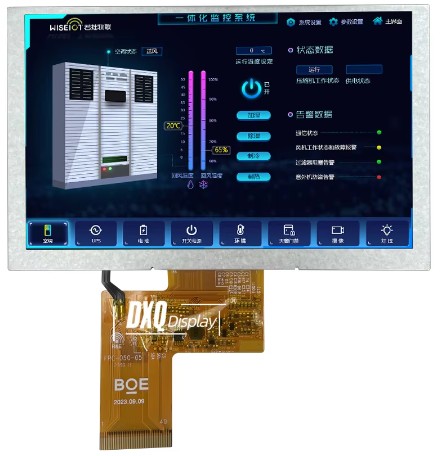
A TFT Display is a type of active‑matrix LCD that uses thin‑film transistors to control each pixel individually, providing faster response time, better contrast, and higher resolution than traditional passive‑matrix LCDs. A regular LCD without TFT technology usually has slower response and lower image quality, so most modern devices now adopt TFT Display modules as the standard.
When selecting a TFT Display, size and resolution should match the viewing distance and the amount of information shown on the screen. For handheld devices, smaller high‑resolution TFT Display modules improve clarity, while large industrial panels or dashboards may use moderate resolutions that balance readability, cost, and GPU load.
Common interfaces for TFT Display modules include RGB, LVDS, MIPI DSI, eDP, SPI, MCU, and HDMI or DisplayPort via an adapter board. The best interface for a given TFT Display depends on the host processor, required bandwidth, cable length, EMC constraints, and whether the system needs long‑distance transmission or simple short‑range connections.
Yes, many manufacturers offer industrial and automotive‑grade TFT Display modules designed for wide temperature ranges, high brightness, and strong mechanical durability. For outdoor or harsh environments, you should specify a sunlight‑readable TFT Display with wide operating temperature, reinforced structure, and proper sealing against dust, moisture, and vibration.
To obtain an accurate quotation, you should share target size, resolution, brightness, viewing angle, interface type, touch (if needed), operating temperature, and expected lifetime of the TFT Display. It is also helpful to include drawings or sketches, mechanical limits, yearly volume, and project schedule so the supplier can quickly evaluate feasibility and propose an optimized TFT Display solution.