
Views: 222 Author: Wendy Publish Time: 2025-12-29 Origin: Site


Content Menu
● How TFT Displays Work in Practice
● Market Overview in Australia
● Key Application Segments for TFT Displays
>> Industrial Automation and Mining
>> Transportation, Marine, and Defense
>> Medical, Lab, and Commercial Devices
>> Maker, Education, and Prototyping
● Major TFT Display Suppliers in Australia
>> 4D Systems: Intelligent TFT Display Modules
>> Manuco Electronics: Custom TFT LCD Modules
>> Tekdis: Industrial‑Grade LCD and TFT Displays
>> Dunfield Displays and APC Technology
>> Maker Store, Pi Australia, and Little Bird
>> Catalog Distributors and Other Local Suppliers
● Choosing the Right TFT Display Supplier in Australia
● Important Technical Considerations for TFT Display Projects
● FAQ
>> 1. What industries in Australia use TFT displays the most?
>> 2. Are there local TFT display manufacturers, or are panels entirely imported?
>> 3. How do I choose between a smart TFT display module and a raw panel?
>> 4. Where can hobbyists or students buy small TFT display modules in Australia?
>> 5. What should OEMs consider regarding life‑cycle and support for TFT display projects?
Australia has developed a strong ecosystem of TFT display manufacturers and suppliers, integrators, and distributors that support everything from hobby electronics to mission‑critical industrial systems. For engineers, OEMs, and project buyers, understanding the key TFT display players in Australia helps shorten development cycles and reduce supply risk while maintaining high visual performance and reliability in demanding environments.[1][2]

Thin Film Transistor (TFT) displays are active‑matrix LCDs in which each pixel is controlled by one or more transistors, delivering higher refresh rates, better contrast, and sharper images than traditional passive‑matrix LCDs used in older devices. A typical TFT display stack includes a backlight, polarizers, color filters, and a TFT array that switches pixels on and off based on an incoming video or graphics signal to render text, icons, and complex images.[3]
Common TFT display sizes range from under 2 inches for wearables and handheld instruments up to over 100 inches for digital signage and large control‑room visual walls. Key parameters include resolution, brightness, viewing angle, contrast ratio, interface type (SPI, RGB, LVDS, HDMI, MIPI DSI), touch technology, and environmental ratings such as operating temperature and ingress protection.[2][4]
In industrial automation, medical devices, mining, and transportation, the TFT display has become the default human–machine interface because it combines robustness, readability, and flexible user interface capabilities. As costs have fallen, TFT display technology has also expanded into smart home devices, consumer electronics, and connected IoT products.[5][2]
At the heart of every TFT display is an active‑matrix array of transistors deposited on a glass substrate, with each pixel connected to one transistor (or a small group) that acts as a switch. When a voltage is applied to a specific row and column line, the transistor at that intersection turns on and charges a tiny capacitor, controlling the liquid crystal's orientation and therefore the pixel's transmitted light level.[3]
A TFT display relies on the combination of this transistor matrix and the backlight system to achieve stable brightness and color reproduction over the entire panel area. Color is typically generated by placing red, green, and blue sub‑pixel filters over each pixel, allowing the display controller to mix intensities and create millions of colors in a full‑color TFT display.[5]
From a system perspective, a TFT display includes not only the LCD glass but also driver ICs, timing controllers, sometimes an integrated scaler, and often a touch panel bonded to the front surface. Designers must carefully match power supplies, signal interfaces, and timing parameters between their main board and the chosen TFT display module to ensure stable operation.[4][1]
Australia's TFT display market is driven by industrial automation, mining equipment, transportation systems, payment terminals, medical electronics, and a growing maker and education sector. Rather than fabricating TFT glass locally, most Australian companies focus on module design, ruggedization, integration, and distribution of globally sourced TFT LCD panels.[1][2]
Specialist distributors maintain stock of TFT display modules and industrial monitors, providing design‑in support, technical documentation, and local warranties for Australian customers. Component resellers and maker‑focused stores concentrate on smaller TFT display modules for Raspberry Pi, Arduino, and embedded development boards, enabling fast prototyping and learning.[1][3]
For OEMs, this structure means both off‑the‑shelf TFT display modules and fully customized industrial display assemblies can be sourced inside Australia, often with local engineering teams assisting from concept through production. This local support is especially valuable where environmental conditions are harsh, such as mining regions, maritime environments, and outdoor transportation hubs that rely heavily on TFT display signage.[6][2]
Industrial automation and mining are among the most demanding environments for TFT display installations in Australia. Control panels, PLC operator stations, and remote monitoring terminals require TFT display modules that can operate across wide temperature ranges, resist vibration, and remain readable under bright ambient lighting.[2][6]
Many industrial systems use panel PCs or embedded controllers with integrated TFT display screens, often featuring capacitive or resistive touch for operator input. Local suppliers provide rugged housings, enhanced backlights, and optical bonding for better outdoor visibility and resistance to dust and moisture, ensuring reliable TFT display performance over long operating lifetimes.[6][2]
Public transportation, marine navigation systems, and defense platforms increasingly rely on TFT display‑based HMIs to present critical information and interactive controls. In these sectors, TFT display modules must support high brightness, wide viewing angles, and compliance with specific standards or certifications for safety and electromagnetic compatibility.[2][6]
Australian integrators often source industrial‑grade TFT display panels from specialist suppliers and package them in custom enclosures with anti‑glare coatings and shock‑mounted frames. Local engineering support helps ensure that the chosen TFT display meets stringent reliability and readability needs in vehicles, vessels, and field equipment.[6][2]
Medical and lab equipment, point‑of‑sale terminals, building control systems, and kiosks all rely heavily on TFT display modules for intuitive user interaction. In these devices, a TFT display must offer clean color reproduction, stable brightness, and often multi‑touch gestures while complying with hygiene and safety requirements.[7]
Australian companies that design and export equipment can work with local TFT display specialists to secure long‑term availability and technical support for exactly matched modules. This reduces the risk of redesigns when specific TFT display panels become obsolete, preserving mechanical compatibility and user experience across product generations.[1]
A vibrant community of makers, educators, and start‑ups in Australia widely adopts compact TFT display modules for learning and rapid prototyping. Small SPI and HDMI TFT display boards plug directly into microcontrollers or single‑board computers and usually include demonstration code and libraries for popular platforms.[8][3]
This ecosystem accelerates proof‑of‑concept development, allowing teams to validate interface concepts on small TFT display modules before transitioning to more specialized industrial displays from higher‑end suppliers. It also helps students understand the fundamentals of graphics programming and embedded system design centered on TFT display technology.[9][3]
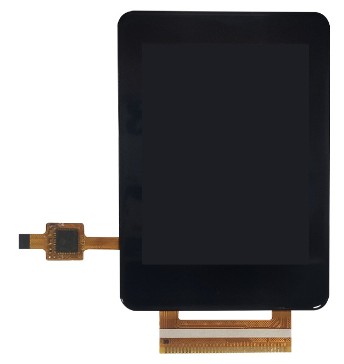
Australia's TFT display landscape includes manufacturers of intelligent modules, rugged industrial display houses, specialist distributors, and catalog resellers that collectively cover almost every application. Among them, several names stand out for their depth of portfolio, engineering capability, and local presence in the TFT display market.[2][1]
4D Systems is one of Australia's best‑known names in intelligent TFT display technology, designing its own smart modules that integrate graphics processors, memory, and sometimes touch controllers on the same board. These intelligent TFT display solutions allow engineers to offload UI rendering, fonts, animations, and input handling from the main microcontroller, greatly simplifying firmware.[10][7]
The product range spans standard TFT LCD and advanced TFT IPS displays from around 1.44 inches to 9 inches, with different resolutions, brightness levels, and onboard capabilities. Designers can choose between raw TFT display modules, “intelligent” displays with integrated processors, and development kits that include cables, evaluation boards, and software tools.[7][10]
4D Systems also offers a dedicated development environment that lets engineers build graphical interfaces visually and then deploy them directly to the TFT display module. This greatly reduces time‑to‑market for projects that require sophisticated GUIs on a compact TFT display, such as medical diagnostics equipment, industrial controls, and consumer devices.[10][7]
Manuco Electronics is a specialist distributor that focuses on engineering‑driven TFT display solutions, working with leading TFT LCD manufacturers to deliver both standard and custom modules. Instead of simply reselling catalog products, Manuco helps customers specify the right TFT display by balancing size, resolution, interface, operating conditions, and long‑term availability.[1]
Manuco's portfolio ranges from small TFT display modules aimed at embedded products to larger industrial LCD panels suitable for control rooms and heavy equipment HMIs. These modules can be supplied with matching driver boards, cabling, and touch overlays to create near turnkey display subsystems for OEMs.[1]
Because many industrial devices have long life‑cycles, Manuco emphasizes stable supply and form‑fit‑function compatible TFT display options, minimizing the need for mechanical changes when a panel revision occurs. This makes Manuco an attractive partner for Australian manufacturers that want confidence in the continuity of their chosen TFT display platform.[1]
Tekdis specializes in industrial‑grade LCD and TFT display solutions designed for harsh environments and continuous 24/7 operation. Its portfolio includes panels from about 3.5 inches up to very large sizes such as 108 inches, with options like ultra‑wide, square, and round TFT display formats for unique applications.[2]
Many Tekdis offerings are aimed at industrial, medical, automotive, and agricultural sectors where a TFT display must withstand shock, vibration, and wide temperatures without sacrificing readability. Panels may feature high brightness, optical bonding, and anti‑glare or anti‑reflective coatings to ensure that TFT display content remains visible in bright sunlight or under strong artificial lighting.[2]
Tekdis also supports complete solution design, bundling TFT display panels with driver electronics, mounting hardware, and often embedded computing platforms. This enables system integrators to adopt a coherent TFT display strategy without individually sourcing and validating each separate component.[2]
Dunfield Displays provides a range of commercial and industrial TFT display panels and monitors to customers across Australia, with particular strength in signage and information displays. The company's portfolio covers smaller TFT display modules through to larger formats suited to public information boards, retail signage, and industrial operator stations.[11]
APC Technology, on the other hand, designs and manufactures industrial flat panel displays locally using TFT LCD technology, delivering rugged systems tailored to sectors like defense, mining, and heavy industry. An example is its 20‑inch flat panel display, which uses a TFT LCD panel integrated into a metal housing designed to withstand demanding environmental conditions.[6]
Both Dunfield Displays and APC Technology address projects where the TFT display must handle continuous use and may be exposed to shock, dust, or moisture. By sourcing from these companies, Australian OEMs can secure tailored TFT display assemblies that align with strict environmental and reliability specifications.[11][6]
For prototyping, learning, and low‑volume applications, Maker Store (MakerBotics), Pi Australia, and Little Bird play an important role in providing compact TFT display modules. These retailers typically carry SPI and HDMI TFT display boards compatible with Arduino, Raspberry Pi, and various microcontroller platforms, including cables and example sketches.[8][3]
Maker Store offers modules such as a 1.8‑inch SPI TFT colour display with 128×160 resolution, based on the ST7735 controller and featuring an SD card slot for storing bitmaps. Pi Australia stocks a range of small and mini TFT display modules including a 3.2‑inch HDMI IPS LCD at 480×800 resolution, which can act as the main screen for a Raspberry Pi‑based HMI.[3][8]
Little Bird distributes Waveshare products, giving the local market access to TFT LCDs, e‑paper, and OLED boards that integrate easily into embedded projects. Together, these vendors lower the barrier to entry for anyone wanting to explore TFT display development and UI prototyping in Australia.[9][3]
In addition to specialist firms, catalog distributors like Mouser Electronics' Australian site provide a broad range of TFT display modules from many manufacturers. This enables engineers to compare multiple TFT display options, reference designs, and evaluation boards from a single sourcing platform.[12]
Local firms such as Crest Technology list TFT LCD products as part of a broader embedded components portfolio, serving OEMs that need reliable TFT display modules alongside other hardware. These suppliers typically focus on small to medium‑sized volumes where close communication and technical support can significantly ease integration challenges.[13]
Selecting the right TFT display partner in Australia depends on your project's technical, commercial, and life‑cycle requirements. For engineers, the choice often begins by clarifying whether a raw panel, intelligent module, or fully integrated industrial monitor best fits the application.[1][2]
If your priority is fast GUI development and minimal firmware complexity, intelligent TFT display modules from vendors like 4D Systems are especially attractive. These modules encapsulate many low‑level tasks such as font rendering, shape drawing, and input handling, allowing your main processor to focus on core application logic rather than TFT display housekeeping.[7][10]
For heavy‑duty industrial or outdoor environments, industrial suppliers such as Tekdis, Dunfield Displays, and APC Technology are better suited because they understand environmental constraints, certifications, and mechanical ruggedization. They can match a TFT display to appropriate enclosures, mountings, and protective layers so it survives harsh conditions without frequent redesigns.[6][2]
When flexibility and customization are critical, specialist distributors like Manuco Electronics help tailor TFT display solutions for unique mechanical constraints, unusual aspect ratios, or specific long‑term availability targets. For early‑stage concepts, maker‑oriented retailers and catalog distributors supply off‑the‑shelf TFT display modules that keep initial investment low and development agile.[3][1]
Successful TFT display sourcing in Australia often involves a staged strategy: prototyping with generic modules from maker channels, moving to engineering‑support distributors as the design stabilizes, and finally partnering with industrial‑grade TFT display suppliers once the application's environment and certification needs are fully understood.[2]
Before locking in a supplier, engineers should define a detailed requirements list for the target TFT display to avoid costly redesigns later. Important aspects typically include size, resolution, interface, brightness, contrast, operating temperature range, touch type, and mechanical constraints such as bezel thickness and mounting method.[1][2]
For outdoor or semi‑outdoor applications, high brightness and good sunlight readability are crucial, often requiring higher‑power backlights and optical bonding techniques. In vehicles and industrial machinery, vibration resistance and secure mounting of the TFT display are equally important to prevent premature failure.[6][2]
Long‑term availability and obsolescence management also matter, especially for industrial and medical devices expected to remain in production for many years. Working with Australian suppliers that understand these life‑cycle issues helps ensure that the chosen TFT display can be replaced or second‑sourced with minimal disruption if a panel is eventually discontinued.[2][1]
Australia's TFT display ecosystem offers comprehensive coverage, from intelligent smart modules created by local innovators to rugged industrial flat panel systems and maker‑friendly SPI and HDMI modules. Whether your project involves a compact handheld controller, a medical diagnostic instrument, a mining truck HMI, or a Raspberry Pi‑based kiosk, there is a suitable TFT display supplier in the Australian market ready to support it.[7][2]
By engaging with specialized companies such as 4D Systems, Manuco Electronics, Tekdis, Dunfield Displays, APC Technology, and supportive maker and catalog channels, OEMs and integrators can streamline development, secure long‑term availability, and optimize performance of their TFT display solutions. Combined with strong local engineering expertise and access to global TFT LCD panel technologies, this ecosystem gives Australian projects a robust foundation for visually rich, reliable human–machine interfaces built around the modern TFT display.[5][1]
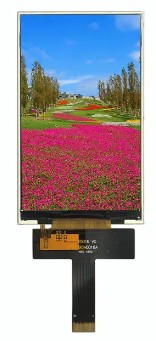
Industrial automation, mining, transportation, medical devices, and defense are among the largest users of TFT display technology in Australia because they require sophisticated HMIs and reliable visual interfaces. Retail, corporate signage, public information systems, and education also use TFT display panels for digital signage, kiosks, and interactive learning tools across the country.[11][2]
Most TFT LCD glass and core panel manufacturing occurs overseas, but Australian companies such as 4D Systems and APC Technology design and assemble complete TFT display modules and industrial monitors locally. Distributors like Manuco, Tekdis, and Dunfield Displays import TFT panels and integrate them into application‑specific assemblies tailored to Australian end‑users.[7][1]
Smart TFT display modules with onboard processors are ideal if you want rapid GUI development, reduced firmware complexity, and minimal work on low‑level graphics drivers. Raw TFT LCD panels are better suited to high‑volume or deeply customized applications where you control the graphics pipeline and can invest engineering resources into driver development and hardware integration.[7][2]
Hobbyists and students can buy small TFT display modules from retailers such as Maker Store (MakerBotics), Pi Australia, and Little Bird, which stock SPI and HDMI TFT LCDs with example code. Catalog distributors like Mouser Electronics' Australian site also carry a wide selection of TFT display modules from brands including 4D Systems for educational and prototyping use.[12][3]
OEMs should verify long‑term availability of the chosen TFT display panel, evaluate environmental ratings, and ensure access to local technical support during integration and maintenance. Partnering with established Australian suppliers helps mitigate obsolescence risk, streamline certification, and simplify after‑sales service for devices that rely heavily on TFT display technology.[1][2]
[1](https://www.manuco.com.au/solutions/tft-lcd-modules/)
[2](https://www.tekdis.com.au/products/digital-signage-displays/tft-displays.html)
[3](https://www.makerstore.com.au/product/mb-elc-disp-tft-1d8/)
[4](https://crystal-display.com/products/industrial-tft-display-solutions/)
[5](https://crystal-display.com/lcd-tft-displays/)
[6](https://apctechnology.com.au/products/20-inch-flat-panel-display/)
[7](https://4dsystems.com.au)
[8](https://piaustralia.com.au/collections/small-mini-lcd-tft-displays)
[9](https://littlebirdelectronics.com.au/collections/waveshare)
[10](https://4dsystems.com.au/product-category/lcd-tft-and-oled-displays/4d-lcd-tft-display/?product_count=24)
[11](https://www.dunfielddisplays.com.au/pages/tft-panels)
[12](https://au.mouser.com/c/embedded-solutions/display-modules/)
[13](https://cresttech.com.au/product-category/tft-lcd/)