
Views: 222 Author: Wendy Publish Time: 2025-12-30 Origin: Site


Content Menu
● Russia's Role in the Global TFT Display Ecosystem
● Main Types of TFT Display Suppliers in Russia
● Auvix – Professional AV and TFT Display Distribution
● Dismart – Digital Signage Integrator Using TFT Display Networks
● METTEM‑M – Vehicle Instrument Clusters with TFT Display
● Kyocera Display Solutions – Supplying Industrial TFT Display Modules
● International TFT Display Manufacturers Supporting Russian Projects
● Typical Applications of TFT Display Technology in Russia
● How to Select the Right TFT Display Partner in Russia
● Working with Russian Integrators as an Overseas Buyer
● Future Trends for TFT Display in Russia
● FAQ – TFT Display Manufacturers and Suppliers in Russia
>> 1. What kinds of TFT Display companies operate in Russia?
>> 2. Are there fully local TFT Display manufacturers in Russia?
>> 3. How can overseas buyers source TFT Display solutions for Russian projects?
>> 4. What are the main technical factors when selecting a TFT Display in Russia?
>> 5. Which industries in Russia are driving demand for TFT Display technology?
Russia's demand for TFT Display technology is expanding rapidly as industries upgrade from analog indicators and printed signage to digital visualization and smart interfaces. TFT Display panels are now widely used in transportation, industrial automation, retail, banking, and public information systems across the country. Russian companies and their international partners combine hardware, software, and engineering services to deliver complete TFT Display solutions that work reliably in challenging local conditions.[1][2]
For global buyers, Russia is not just a market for finished screens, but also a hub where system integrators, AV distributors, and embedded developers can help adapt TFT Display technology to regional needs. These partners source TFT Display modules from leading global manufacturers, design enclosures, integrate touch panels, and provide ongoing technical support. As a result, end‑users can implement advanced TFT Display projects without needing to manage every hardware detail in‑house.[3][1]
For international buyers sourcing from TFT Display manufacturers and suppliers, understanding the local producers, product ranges, and quality standards is the key to successful cooperation.
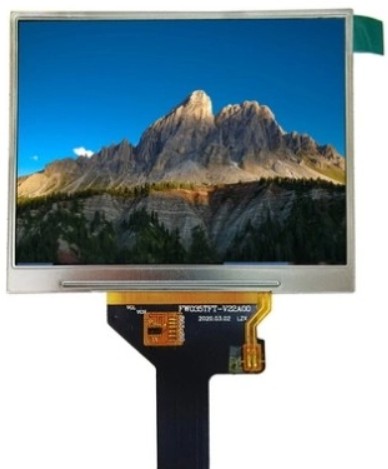
Russia does not yet have the same volume of mass‑production TFT Display panel fabs as East Asian countries, but it plays an important role as a localization and integration market. Many devices deployed in Russia use imported TFT Display modules combined with local electronics, mechanical housings, firmware, and software. This approach allows projects to benefit from mature global TFT Display supply chains while complying with Russian technical standards and documentation requirements.[1]
The embedded display market in Russia is strongly focused on robust, industrial‑grade TFT Display solutions. Devices must work in extreme temperatures, withstand shock and vibration, and remain legible in low‑light winters and bright sunlight. As industries modernize, demand for TFT Display‑based HMIs, dashboards, POS terminals, and digital signage continues to grow, creating opportunities for both domestic and international suppliers.[2][3]
Russia's TFT Display ecosystem can be roughly divided into three groups:
- Large AV/IT distributors that provide professional TFT Display equipment such as video walls, signage screens, and meeting‑room displays.[4]
- Digital signage and system integrators that design complete networks, integrating TFT Display panels, players, software, and connectivity.[5]
- Electronics design and manufacturing companies that develop TFT Display‑based devices for automotive, industrial, and specialized applications.[6]
In addition, Russian companies cooperate with global TFT Display manufacturers and module factories in Asia and Europe. These partners provide standard and customized TFT Display modules, touch screens, and embedded display boards that Russian integrators adapt for local projects. This combination of global hardware and local engineering makes it easier to deploy tailored TFT Display systems acrossss industries.[7][8]
Auvix is recognized as one of the largest Russian distributors of professional AV and IT equipment, servicing corporate clients, public institutions, and commercial projects. Its portfolio spans projectors, LED and LCD displays, signal management, and control systems, with many solutions based on commercial and professional TFT Display technology. Auvix works closely with global brands to bring certified TFT Display products into Russia and the CIS markets.[4]
In TFT Display projects, Auvix typically plays the role of a value‑added distributor and solutions partner. The company provides system design assistance, recommends appropriate TFT Display models for specific tasks, and coordinates logistics and warranty service. Applications range from control rooms and conference centers to retail chains and transportation hubs, where high‑reliability TFT Display video walls and information panels are essential.[5][4]
For international buyers, cooperating with a distributor like Auvix can simplify the process of importing professional TFT Display equipment into Russia. Auvix understands local certification, documentation, and project management requirements, which helps ensure that TFT Display systems are installed correctly and supported over their full life cycle.[4]
Dismart is a major digital signage integrator in Russia and the CIS, with thousands of screens deployed across banks, retail chains, car dealerships, and industrial sites. The company builds end‑to‑end solutions combining TFT Display panels, media players, content management platforms, and network infrastructure. Its installations cover everything from single in‑store TFT Display screens to nationwide digital signage networks.[5]
TFT Display technology lies at the heart of Dismart's projects. The company selects commercial or industrial TFT Display panels according to each application's brightness, resolution, and operating conditions. These TFT Display screens are then paired with software that manages playlists, dynamic content, and real‑time data such as pricing or queue information. With this model, clients receive a complete solution instead of having to source and integrate TFT Display hardware themselves.[5]
Dismart's work illustrates how TFT Display hardware becomes more valuable when combined with services and software. Banks use TFT Display networks to promote products and manage customer flow, retailers highlight promotions and branding, and corporate clients deploy internal communication channels. In each case, TFT Display screens are the main visual interface conveying content to end‑users.[5]
METTEM‑M, based in Moscow, designs and manufactures electronic equipment and has developed an instrument cluster featuring a TFT Display for commercial transport. This solution was officially classified as Russian‑produced, demonstrating local expertise in integrating TFT Display modules into complete automotive devices. The TFT Display cluster replaces traditional analog gauges with a configurable digital interface that can show speed, RPM, fuel level, diagnostics, and route information.[6]
Using a TFT Display for vehicle dashboards offers several advantages. Layouts can be updated through software, enabling manufacturers to customize the interface for different brands or models without changing hardware. Warning messages and adaptive color schemes are easier to implement on a TFT Display, improving driver awareness and safety. In addition, the TFT Display cluster can integrate with the vehicle's onboard systems to show navigation, camera feeds, or maintenance alerts in a single unit.[2][6]
METTEM‑M's product is a good example of how Russian engineering companies add value to imported TFT Display panels. The core TFT Display module can be sourced from global suppliers, while the electronics, mechanical housing, firmware, and compliance documentation are developed locally. This combination provides a domestic product that meets local regulations and supports Russia's automotive and commercial vehicle industries.[6]
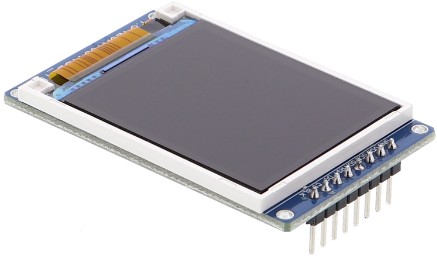
Kyocera has a long track record in LCD and touch solutions, and serves Russian customers through its regionalal presence. Its worldwide portfolio includes industrial‑grade TFT Display modules with wide temperature ranges, high brightness, and long‑term availability. These characteristics are crucial for Russian projects in automation, medical equipment, and outdoor terminals.[3][9]
Russian OEMs and integrators use Kyocera TFT Display products in a variety of ways. For example, a factory HMI panel may rely on a mid‑size TFT Display with high contrast and a resistive or capacitive touch layer, connected to a PLC or embedded controller. Medical devices may use compact TFT Display modules with precise color reproduction and stable performance over many years. Outdoor kiosks and payment terminals often require sunlight‑readable TFT Display screens with reinforced glass and extended temperature support.[9][3]
Kyocera's long‑term supply policies are especially important for industrial projects in Russia. Once a machine or kiosk is designed around a specific TFT Display module, engineers expect the same or compatible TFT Display to be available for many years. Stable sourcing reduces redesign risk and supports maintenance across large fleets of equipment deployed throughout Russia.[3][9]
In parallel with local players, a large number of international TFT Display manufacturers and module factories continue to serve Russian projects through distributors, online sales, and direct cooperation. Many of these companies specialize in small and mid‑size TFT Display modules used in embedded systems, handheld devices, and control panels. Others focus on larger TFT Display screens for kiosks, signage, and industrial consoles.[8][10][7][3]
Typical offerings from these global TFT Display suppliers include:[10][7][8]
- Standard TFT Display modules from 1.3‑inch to over 15‑inch, with various resolutions and aspect ratios.
- Customizable TFT Display options, such as modified FPC layouts, brightness levels, and touch panel integration.
- Smart TFT Display modules that include integrated controllers, memory, and communication interfaces, simplifying development.
Russian clients often import these TFT Display modules and then combine them with local enclosures, control electronics, and software. This model enables fast prototyping and flexible product design while leveraging mature TFT Display manufacturing capabilities abroad.[7][8]
TFT Display technology touches many aspects of daily life and industry in Russia. By converting text, graphics, and video into dynamic visual interfaces, TFT Display solutions make systems more intuitive and responsive. Different sectors highlight different strengths of TFT Display performance, from readability and color accuracy to durability and energy efficiency.[11][2]
Key application areas include:[11][3][6][5]
- Transportation: Passenger information boards at stations, cabin instrument panels, and infotainment screens use TFT Display panels to show schedules, navigation, and entertainment.
- Retail and banking: Branch offices and stores deploy TFT Display signage, self‑service kiosks, queue systems, and promo screens to engage customers and guide them through services.
- Industrial and energy: Control rooms and machine HMIs rely on TFT Display panels to visualize processes, alarms, and historical trends in a compact format.
- Public sector and education: Government centers, universities, and museums use TFT Display screens for wayfinding, event information, and interactive exhibits.
In each environment, choosing the right TFT Display specification is critical. Factors such as brightness, contrast, viewing angle, and operating temperature determine whether a TFT Display remains readable and reliable throughout the device's lifetime.[12][3]
Selecting a TFT Display partner in Russia involves evaluating both the technical capabilities of the hardware and the competence of the local team. Because many projects run for years and involve large geographic coverage, buyers should think beyond price to consider long‑term availability, service, and scalability.[2][5]
Important criteria include:[9][3][4]
- Performance and reliability: Evaluate brightness, resolution, color quality, and the expected lifetime of TFT Display modules.
- Environmental suitability: Confirm that the TFT Display can operate across the temperature range and humidity expected in Russian conditions.
- Interface compatibility: Check support for LVDS, MIPI, RGB, HDMI, DisplayPort, or industrial communication buses, depending on the system architecture.
- Customization options: Ask whether the partner can adjust TFT Display sizes, add custom cover glass, or integrate touch panels and bonding technologies.
- Local service: Ensure that the company can provide technical support, training, documentation in Russian, and timely replacement of TFT Display units or spare parts.
An ideal partner not only sells TFT Display hardware but also advises on mechanical integration, EMC considerations, and software drivers. Integrators and distributors that understand both TFT Display technology and the Russian regulatory landscape can significantly reduce project risk.[4][5]
Overseas companies planning to deploy TFT Display projects in Russia often achieve the best results by cooperating with local integrators rather than attempting to manage everything remotely. Russian integrators are familiar with building codes, local standards, and regional logistics, which helps them design TFT Display systems that are both technically sound and legally compliant.[4][5]
Effective collaboration usually follows these principles:[4][5]
- Detailed specifications: Provide integrators with clear TFT Display requirements, including screen size, resolution, viewing distance, environmental constraints, and expected content types.
- Pilot projects: Start with a small‑scale pilot using a limited number of TFT Display units to validate image quality, reliability, and user feedback before large roll‑outs.
- Service level agreements: Define response times, spare TFT Display stock levels, and maintenance responsibilities to ensure continuity once systems are live.
When both sides share technical documentation and project timelines early, the integrator can select suitable TFT Display hardware and design a support strategy. This approach minimizes unplanned downtime and helps ensure that TFT Display networks perform well over many years.[5][4]
Looking ahead, several trends are likely to shape the TFT Display market in Russia. First, there is a clear movement toward higher resolution and larger format displays in public and commercial environments. As customers become accustomed to high‑definition content, expectations rise for crisp TFT Display images in signage, transport, and entertainment.[3][11]
Second, integration between TFT Display modules and touch technology continues to deepen. Many new devices adopt projected‑capacitive touch (PCAP) panels bonded directly to the TFT Display, creating slimmer, more robust user interfaces. In Russia, this is especially relevant for kiosks, ATMs, and industrial HMIs where smooth and durable touch surfaces are required.[9][3]
Third, smart and embedded TFT Display solutions are gaining traction. Instead of using a separate controller board or PC for every screen, some products integrate microcontrollers or application processors directly with the TFT Display. This trend can reduce system complexity and power consumption, particularly in distributed control panels and IoT devices deployed across remote regions of Russia.[8][2]
Finally, local development efforts—like the TFT Display‑based instrument clusters from METTEM‑M—show that Russian engineers are increasingly comfortable designing complex display electronics and firmware. Over time, this may lead to more domestically designed TFT Display products that combine imported panels with advanced local software and system integration.[2][6]
Russia has developed a diverse ecosystem of TFT Display manufacturers, distributors, and system integrators that collectively support projects in transportation, industry, retail, banking, and the public sector. While most raw TFT Display panels are sourced from global manufacturers, Russian companies add significant value through localization, engineering, and long‑term service. By partnering with experienced players such as AV distributors, digital signage integrators, and embedded electronics developers, international buyers can confidently deploy high‑performance TFT Display solutions tailored to Russian conditions.[6][9][2][4][5]
For organizations planning new projects, the key is to define clear technical and environmental requirements, then choose partners with proven experience in the relevant application segment. When properly specified and supported, modern TFT Display technology can dramatically improve usability, information visibility, and branding impact in Russian installations of all sizes.[3][9][4]
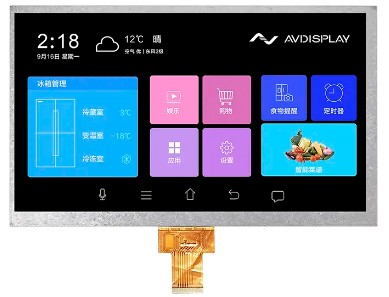
Russia hosts AV distributors, digital signage integrators, and electronics manufacturers that all work with TFT Display technology. Distributors import professional TFT Display equipment, integrators build networks and software, and device makers embed TFT Display modules into dashboards, HMIs, and kiosks.[6][4][5]
While Russia does not yet produce TFT Display glass at the scale of leading Asian countries, it does have companies that design and assemble finished TFT Display‑based products. METTEM‑M's instrument clusters for commercial vehicles are one example of a device recognized as Russian‑produced, combining imported TFT Display modules with locally developed electronics and software.[1][6]
Overseas buyers typically cooperate with Russian distributors and integrators who understand local requirements and can supply compatible TFT Display hardware. Another option is to purchase TFT Display modules directly from global manufacturers and then partner with Russian firms for enclosures, certification, and installation.[7][8][5]
Key factors include operating temperature range, brightness suitable for indoor or outdoor conditions, and interface compatibility with existing electronics. Buyers should also consider long‑term availability of the specific TFT Display model, as industrial and infrastructure projects often run for many years.[9][2][3]
Transportation, retail, banking, industrial automation, and public services are among the largest consumers of TFT Display solutions in Russia. These sectors rely on TFT Display panels for real‑time information, advertising, process control, and user interaction in both indoor and outdoor environments.[11][2][6][5]
[1](https://www.volza.com/p/lcd-display-or-display-lcd-tft-color/import/import-in-russia/)
[2](https://www.linkedin.com/pulse/embedded-display-market-share-type-application-feite)
[3](https://www.data-modul.com/en/products/hardware/displays/tft-displays)
[4](https://www.auvix.ru/about/en/)
[5](https://dismart.ru/content/146-digital_signage_solutions_for_russian_and_international_companies)
[6](https://www1.ru/en/news/2025/05/13/proizvodstvo-tft-displeev-dlia-kommerceskogo-transporta-naladili-v-rossii.html)
[7](https://hys-display.com)
[8](https://viewedisplay.com)
[9](https://russia.kyocera.com/products/lcds_glass_glass_touch_panels/)
[10](https://www.disenelec.com)
[11](https://sostron.com/top-10-led-display-companies-in-russia/)
[12](https://www.data-modul.com/en)
[13](https://www.perplexity.ai/search/fa42b575-886e-423a-b32a-98655bad2f1a)
[14](https://www.perplexity.ai/search/1506221b-604f-4557-9ef2-74d3c92453c6)
[15](https://www.perplexity.ai/search/7696108b-22e2-4a6b-9cd3-9b402b3fe7b4)