
Views: 222 Author: Wendy Publish Time: 2026-01-01 Origin: Site


Content Menu
● Overview of South Korea's TFT Display Industry
● Core TFT Display Technologies in Korea
● Top TFT Display Panel Makers in South Korea
>> LG Display
● Key Korean TFT Display Integrators and Solution Providers
>> Tetradyne – Industrial TFT LCD Monitors
>> Touch and Displays Co., Ltd. – Touch and HMI Systems
>> ICS Components – TFT Display Component Specialist
>> STM Display Co., Ltd. – Multi‑Brand TFT LCD Panel Supply
>> CYNIXTEC – Custom TFT Display Modules
>> GSD Co., Ltd. – Korean TFT‑LCD Panel Manufacturer
● Distributors and B2B Platforms for TFT Display Sourcing
● Industrial and Commercial Applications of Korean TFT Display Solutions
>> Factory Automation and Process Control
>> Marine, Defense, and Transportation
>> Retail, Signage, and Smart City
● Technical Considerations When Choosing a TFT Display
>> Optical and Mechanical Parameters
>> Electrical Interface and System Integration
● Business Models and Cooperation with Korean TFT Display Suppliers
● Practical Steps for Overseas Buyers
● FAQ
>> 1) Why is South Korea strong in TFT Display manufacturing?
>> 2) Are Korean TFT Display suppliers suitable for low‑volume industrial projects?
>> 3) Can Korean TFT Display companies provide complete HMI solutions?
>> 4) How can buyers manage TFT Display lifecycle and obsolescence with Korean partners?
>> 5) What information should be included in an RFQ for a Korean TFT Display project?
South Korea is one of the world's most important hubs for TFT Display technology, led by global giants and supported by a dense ecosystem of specialized industrial TFT Display suppliers and integrators. For overseas OEMs and system integrators, South Korean TFT Display manufacturers and suppliers offer a strong mix of advanced panel technology, stable supply, and high‑value engineering services.[1]

South Korea's TFT Display industry grew around large flat panel producers that pioneered TFT‑LCD and later OLED technologies for TVs, IT, and mobile devices. Over time, this ecosystem expanded to support industrial TFT Display solutions for automation, transportation, medical, and public information systems.
The country combines panel manufacturing, glass and material supply, backlight components, and specialist TFT Display module integrators in one tightly connected value chain. This makes South Korea attractive for buyers who need end‑to‑end TFT Display solutions, from bare panels to complete industrial monitors and panel PCs.
Korean companies started with large‑size TFT Display panels for TVs, monitors, and notebooks, and then developed rich portfolios of small and medium sized TFT Display modules for automotive, industrial, and handheld equipment. These TFT Display products typically feature high resolution, high brightness, and wide viewing angles.
Beyond traditional TFT‑LCD, Korean manufacturers have driven the adoption of OLED and hybrid architectures, where TFT Display backplanes control emissive pixels for higher contrast and lower power consumption. For industrial TFT Display projects, Korean suppliers emphasize extended temperature ranges, robust backlights, and mechanical designs optimized for harsh or outdoor environments.
Samsung Display is a core global player in flat panel production, historically a major producer of TFT‑LCD panels and now a leader in OLED and advanced display technologies. Its TFT Display portfolio covers TV, monitor, notebook, and mobile applications with resolutions from HD to 8K.
For many brands, Samsung Display panels define the benchmark in picture quality, response time, and reliability. Korean integrators and module houses often procure Samsung TFT Display panels and build customized industrial or commercial systems, adding controller boards, touch, and housings.
LG Display is another flagship Korean manufacturer of TFT‑LCD and OLED panels for TVs, monitors, laptops, and commercial signage. Its TFT Display offerings include large‑format panels for digital signage, public information displays, and video walls.
LG Display panels are widely used by system integrators that focus on industrial TFT Display solutions such as control‑room walls, transport information boards, and retail signage. Many Korean distributors specialize in LG Display TFT Display panels, providing cutting, interface adaptation, and long‑term supply services.
Tetradyne has produced TFT LCD monitors for industrial use since the late 1990s, serving marine, military, and factory automation markets. Its product line includes rugged industrial monitors, marine bridge displays, and panel PCs, all based on high‑quality TFT Display panels.[1]
Typical features include sealed front bezels, shock‑resistant housings, and standard industrial interfaces such as VGA, DVI, HDMI, and serial. For overseas buyers, Tetradyne can act as a one‑stop provider of industrial TFT Display monitors and embedded panel PCs tailored to demanding field conditions.
Touch and Displays Co., Ltd. focuses on touch screen monitors, industrial touch panel PCs, kiosks, gaming monitors, and digital signage systems. The company integrates TFT Display panels with P‑CAP or resistive touch, controller boards, and mechanical housings to deliver plug‑and‑play systems.
This approach allows customers to source not just a TFT Display, but a complete HMI platform ready for installation in shopping malls, factories, railway stations, and smart buildings. By bundling hardware, software drivers, and enclosures, Touch and Displays reduces engineering complexity for overseas OEMs.
ICS Components is a display solution company with long‑term expertise in TFT flat panels and related components. It acts as a bridge between TFT Display manufacturers and equipment builders, helping customers select appropriate panels, timing controllers, cables, and power solutions.
Instead of selling only one brand, ICS Components typically offers multiple TFT Display options and proposes the best fit in terms of size, brightness, interface, and lifetime. This makes it easier for foreign buyers to benchmark different TFT Display technologies without managing multiple vendor relationships.
STM Display Co., Ltd. supplies TFT LCD panels from major global brands such as LG Display, AUO, BOE, and Innolux in sizes ranging from small modules to extra‑large signage panels. Its catalog includes standard, high‑brightness, and special‑format TFT Display panels such as bar‑type or ultra‑wide models.
As a display solution provider, STM offers panel sourcing, logistics, and application matching services that help OEMs secure suitable TFT Display panels quickly. Buyers can consolidate diverse panel needs—consumer, industrial, and signage—through a single Korean partner.
CYNIXTEC focuses on custom LCD and TFT LCD modules, including specialized shapes, resolutions, and interfaces. For projects where off‑the‑shelf TFT Display modules do not fit mechanical or optical requirements, the company can design tailor‑made modules.
This typically includes selection of LCD cell, backlight, polarizer, and interface board, plus mechanical integration that matches the customer's enclosure and connector layout. Many instrumentation and handheld device manufacturers use such custom TFT Display modules to differentiate their products.
GSD Co., Ltd. is identified as a TFT‑LCD panel manufacturer in South Korea and contributes to the broader regional supply base. While smaller than major global brands, such companies can support niche or specialized TFT Display needs.
Working with a focused TFT Display manufacturer may provide flexibility in specifications, including unique resolutions, glass sizes, or backlight characteristics. For some OEMs, this can be a way to secure long‑term, application‑specific TFT Display panels.
In addition to direct manufacturer relationships, many buyers discover Korean TFT Display suppliers through B2B directories and trade platforms. These listings typically include exporters of TFT LCD panels, open‑frame monitors, and industrial TFT Display systems.
Export‑oriented Korean companies often stock or source panels from multiple global manufacturers and combine them with local engineering services. For overseas customers, this allows consolidation of multi‑brand TFT Display demand—small, medium, and large panels—via one trading and technical partner.
Such platforms are especially useful for new buyers that are still mapping the Korean TFT Display ecosystem and want to compare price, specification, and minimum order quantity across several suppliers.
Industrial PCs, PLC operator panels, and SCADA terminals in Korea and abroad routinely rely on rugged TFT Display modules. These displays must handle long‑term continuous operation, vibration, and electrical noise without degradation.
Korean integrators typically combine TFT Display panels with reinforced housings, anti‑glare or anti‑reflection coatings, and front protection that reaches IP65 or higher. This makes the TFT Display suitable for dusty, humid, or occasional wash‑down environments commonly found in factories.
Marine bridges, engine control rooms, and navigation consoles require high‑reliability TFT Display systems with wide viewing angles and high brightness. Companies like Tetradyne design marine monitors and panel PCs precisely for these conditions, including dimming capabilities and EMI/EMC compliance.
Similarly, defense control rooms and railway or subway operation centers use multi‑screen TFT Display walls for situational awareness. Korean suppliers deliver both individual TFT Display units and complete multi‑monitor solutions tailored to mission‑critical operation centers.
Medical imaging equipment, patient monitors, and diagnostic devices benefit from high‑contrast, color‑accurate TFT Display panels. Korean manufacturers and integrators supply TFT Display modules with calibrated brightness and color performance suitable for clinical environments.
These medical TFT Display solutions often incorporate easy‑to‑clean front glass, DICOM‑related features, and compatibility with hospital IT networks. Reliability and long‑term availability are especially important in medical projects, making South Korean partners attractive.
Digital signage, interactive kiosks, and wayfinding terminals in retail and smart city projects are a strong application area for Korean TFT Display technology. Touch and Displays and similar companies integrate TFT Display panels into sleek enclosures for malls, airports, stations, and public buildings.
These TFT Display systems frequently support landscape and portrait orientation, 24/7 operation, high brightness for semi‑outdoor use, and cloud‑based content management. As cities upgrade to smart infrastructure, demand for robust, networked TFT Display signage continues to grow.
When selecting a TFT Display from a Korean supplier, buyers must first define size, resolution, brightness, and viewing angle. For outdoor or semi‑outdoor use, higher brightness, anti‑reflection treatment, and wide viewing angles are essential.
Mechanical constraints include bezel dimensions, thickness, mounting points, and cover glass or touch overlay. Korean TFT Display integrators can often customize front frames, bonding methods, and protective layers to match the final equipment design.
Common electrical interfaces for TFT Display modules include LVDS, eDP, HDMI, DisplayPort, and legacy analog connections. The choice impacts compatible controller boards, cable length limits, and EMI performance.
Korean solution providers typically offer controller boards matched to the selected TFT Display, simplifying integration for overseas OEMs. Many can also handle firmware adjustments, backlight control, and on‑screen display menus to fine‑tune image quality.

In direct procurement, an OEM buys TFT Display panels or modules from Korean panel makers or distributors and performs system integration in its own factory. This model suits customers with strong in‑house electronics and mechanical design capability.
Direct sourcing can minimize per‑unit price for high‑volume applications but requires disciplined engineering and supply‑chain management. Buyers must forecast panel demand, manage lifecycle changes, and design the complete TFT Display enclosure and electronics.
Under an OEM model, the Korean partner supplies finished TFT Display modules—sometimes with touch and basic housing—that are incorporated into the buyer's equipment. The customer focuses on the host system while relying on the Korean firm for the display subassembly.
This reduces engineering workload around the TFT Display, accelerates time‑to‑market, and ensures consistent quality across production batches. It is a popular model for industrial, medical, and automotive projects with mid‑range volumes.
In an ODM arrangement, the Korean company designs and manufactures complete TFT Display products—industrial monitors, panel PCs, kiosks, or video‑wall displays—branded for the customer. The ODM manages enclosure, electronics, display selection, and often software integration.
ODM cooperation is suitable for buyers that want to expand into TFT Display‑based solutions quickly without building internal display engineering teams. It can also support regional variants, local certifications, and tailored feature sets for specific markets.
Overseas OEMs seeking Korean TFT Display suppliers can follow a structured process:
- Define application requirements, including environment, lifetime, quantity, and certification needs.
- Shortlist Korean TFT Display manufacturers, integrators, and distributors that already serve similar markets.
- Request technical proposals and reference designs that match the target application.
- Evaluate engineering communication quality, responsiveness, and openness to customization.
- Order samples and carry out functional, environmental, and reliability testing.
- Negotiate long‑term supply, last‑time‑buy policies, and lifecycle management for the TFT Display models.
By following these steps, buyers can reduce technical and supply risks while building a robust TFT Display partnership in South Korea.
South Korea remains a strategic center for TFT Display technology, combining global panel leaders with agile industrial display integrators. From Samsung Display and LG Display to specialized firms like Tetradyne, Touch and Displays, ICS Components, STM Display, CYNIXTEC, and GSD, buyers can find partners for projects ranging from consumer devices to mission‑critical industrial systems.
For overseas OEMs, the key is to align project requirements—volume, environment, customization level, and lifecycle—with the right type of Korean TFT Display partner. Whether sourcing bare panels, custom modules, or complete HMI systems, carefully selected South Korean suppliers can deliver high‑performance, long‑life TFT Display solutions for demanding global markets.
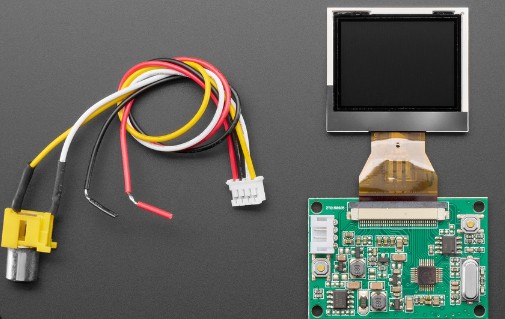
South Korea invested early in flat panel technology and built large‑scale TFT‑LCD and OLED production capacity. This foundation created a mature ecosystem of TFT Display panel makers, component suppliers, and integrators that serves global TV, IT, and industrial markets.[1]
Yes, many Korean integrators and module houses focus specifically on industrial and professional markets, which often involve lower volumes but higher customization. These companies can adapt TFT Display modules, housings, and interfaces to meet strict environmental and reliability requirements.[1]
Several Korean suppliers deliver complete HMI systems, including TFT Display panels, touch screens, embedded computers, and enclosures. This helps OEMs reduce engineering workload and accelerate deployment of industrial panels, kiosks, and operator interfaces.[1]
Buyers should request lifecycle information for each TFT Display model, agree on last‑time‑buy procedures, and clarify substitution policies. Experienced Korean partners usually propose second‑source or next‑generation TFT Display options to minimize redesign work when panels are discontinued.[1]
An effective RFQ should specify size, resolution, brightness, viewing angle, operating temperature, interface type, touch requirements, expected annual volume, and target certifications. Providing clear technical and commercial requirements helps Korean TFT Display suppliers propose accurate solutions and pricing faster.[1]
[1](https://www.perplexity.ai/search/e418aab9-eac8-4f2f-b8ae-3bbfd0fd2f05)