
Views: 222 Author: Wendy Publish Time: 2026-01-05 Origin: Site


Content Menu
● Overview of Japan's TFT LCD Industry
● Key Japanese TFT LCD Manufacturers
>> Panasonic
>> NEC / Sharp NEC Display Solutions
>> Kyocera
>> Ortustech and Other Specialists
● Typical TFT LCD Applications in Japan
>> Industrial and Factory Automation
>> Professional AV, Signage, and Control Rooms
>> Portable and Handheld Devices
● How Overseas Buyers Source TFT LCD from Japan
● Practical Selection Tips for TFT LCD Projects
● FAQ About TFT LCD Manufacturers and Suppliers in Japan
>> 1. What makes Japanese TFT LCD manufacturers attractive for industrial and automotive projects?
>> 2. Can small and mid‑size companies buy TFT LCD panels from Japan without large volumes?
>> 3. Which applications benefit most from Japanese TFT LCD technology?
>> 4. How should buyers manage TFT LCD lifecycle and future availability?
>> 5. Are custom TFT LCD solutions available from Japanese suppliers?
Japan is one of the most influential centers for TFT LCD technology, especially for high‑reliability, high‑precision displays used in industrial, automotive, medical, and professional electronics. For global OEMs, sourcing TFT LCD solutions from Japanese manufacturers means access to advanced R&D, strict quality control, and long‑term supply capabilities.
Japan helped pioneer modern LCD and TFT LCD technologies, with companies like Sharp and the legacy LCD divisions of Sony, Toshiba, and Hitachi at the forefront of early innovation. Today, this tradition continues through brands such as Japan Display Inc. (JDI), Sharp, Panasonic, NEC, Kyocera, and other specialized TFT LCD manufacturers and suppliers that remain highly competitive in high‑value TFT LCD segments.

Japan's TFT LCD ecosystem is built around both large panel fabs and specialized industrial display manufacturers. While mass‑volume commodity TFT LCD production has partly migrated to other Asian regions, Japan retains strong capabilities in advanced process technologies, precision manufacturing, and reliability engineering for TFT LCD panels.
Japanese TFT LCD manufacturers focus on sectors where long lifecycles, functional safety, and consistent performance matter more than lowest unit cost. These include automotive instrument clusters, industrial HMIs, medical imaging, avionics, marine electronics, and professional broadcasting. In these areas, Japanese TFT LCD modules are often qualified under strict standards, with extended temperature ranges, anti‑glare treatments, and robust mechanical designs.
Another characteristic of the Japanese TFT LCD market is the importance of long‑term roadmaps and backward‑compatible product families. Many suppliers offer TFT LCD modules with consistent mechanical and electrical interfaces across generations, simplifying design updates for OEMs. This approach helps customers manage product lifecycles over ten years or more, which is essential for industrial and automotive equipment.
Japan Display Inc. (JDI) was created by consolidating the small and medium‑size LCD businesses of several major Japanese electronics companies, forming a specialist in high‑performance TFT LCD and related technologies. JDI focuses on small and mid‑size TFT LCD panels with high resolution, narrow bezels, and optimized power consumption.
JDI's TFT LCD products are widely used in smartphones, automotive clusters, industrial devices, and wearables. In automotive applications, JDI develops TFT LCD modules that support wide temperature ranges, high contrast, and excellent sunlight readability. In consumer and industrial electronics, JDI provides TFT LCD solutions with advanced pixel architectures and low‑power driving schemes.
For overseas buyers, JDI's strengths lie in advanced TFT LCD technology, strong automotive qualifications, and a track record of supplying leading global brands. Cooperation is often through regional sales offices, distributors, or design partners that help integrate JDI TFT LCD panels into complete systems.
Sharp is historically one of the most famous names in LCD and TFT LCD development. The company has operated advanced fabrication facilities in Japan and has introduced multiple generations of high‑resolution and energy‑efficient TFT LCD panels. Sharp's portfolio spans mobile displays, notebook and tablet TFT LCDs, professional monitors, and TV panels.
In professional markets, Sharp's TFT LCD technology emphasizes high brightness, accurate color reproduction, and uniformity. These TFT LCD panels appear in conference room displays, retail signage, and mission‑critical information displays. Sharp also explores advanced architectures such as IGZO, which improves electron mobility and enables higher resolutions and lower power consumption.
For industrial and commercial customers, Sharp offers TFT LCD modules that can be customized with various interfaces, touch overlays, and optical enhancements. Partner networks, including distributors and integrators, help OEMs select appropriate Sharp TFT LCD modules and manage long‑term supply.
Panasonic's display activities focus on professional‑grade TFT LCD solutions tailored for demanding environments. Rather than competing in high‑volume consumer TFT LCD segments, Panasonic positions its displays for applications such as industrial control, medical visualization, and pro AV systems.
Panasonic TFT LCD modules are typically designed to support 24/7 operation, stable performance over time, and robust mechanical construction. This makes them suitable for control room monitors, diagnostic imaging displays, and industrial terminals. Many TFT LCD products from Panasonic include features like wide viewing angles, calibrated color profiles, and support for various mounting and enclosure standards.
For OEMs, Panasonic offers TFT LCD solutions integrated into complete systems, such as panel PCs, medical monitors, or ruggedized terminals. This system‑level approach reduces integration effort and ensures that the TFT LCD display, electronics, and mechanical structure are validated together.
NEC, in combination with Sharp under the Sharp NEC Display Solutions brand, serves the professional display market with high‑end LCD and TFT LCD monitors. These products are common in corporate environments, broadcast studios, traffic management centers, and digital signage networks.
The focus of NEC's TFT LCD portfolio is on image quality, reliability, color calibration, and networking features. Large‑format TFT LCD panels are used for video walls, control room displays, and mission‑critical visualizations. Many products support precise color management, multiple input types, and remote monitoring, making them suitable for sophisticated AV installations.
For buyers, NEC's TFT LCD solutions are valued where high uptime, serviceability, and professional image performance are required. System integrators often combine NEC TFT LCD displays with mounting systems, media players, and control software to deliver turnkey solutions.
Kyocera is well known for rugged industrial TFT LCD modules, as well as ceramic and electronic components. Its TFT LCD business targets industrial, automotive, and specialized applications where environmental resistance and long lifecycles are crucial.
Kyocera TFT LCD modules frequently support wide operating temperature ranges, robust backlights, and reinforced mechanical structures. They are used in construction machinery displays, marine instruments, factory automation systems, and outdoor terminals. Sunlight readability and anti‑reflection treatments are common, and many Kyocera TFT LCDs are available with integrated touch panels.
From an OEM perspective, Kyocera provides stable long‑term support and documentation, which is essential for projects that must remain in production for many years. The company also works with integrators who add custom cover glass, touch solutions, and bonding technologies to its TFT LCD modules.
Ortustech, with strong Japanese roots, focuses on small, low‑power TFT LCD panels often used in handheld and portable industrial devices. Its Blanview technology targets enhanced readability in bright environments with reduced power usage compared to standard transmissive TFT LCDs.
Such TFT LCD modules are ideal for battery‑powered instruments, POS terminals, and handheld meters that must be readable outdoors. Ortustech and similar specialists differentiate themselves through niche capabilities, such as extreme power efficiency, unique form factors, or special optical treatments.
In addition to these well‑known brands, Japan hosts a network of smaller TFT LCD module makers, design houses, and EMS companies that customize TFT LCD assemblies, integrate touch and electronics, and provide application‑specific designs for global clients.
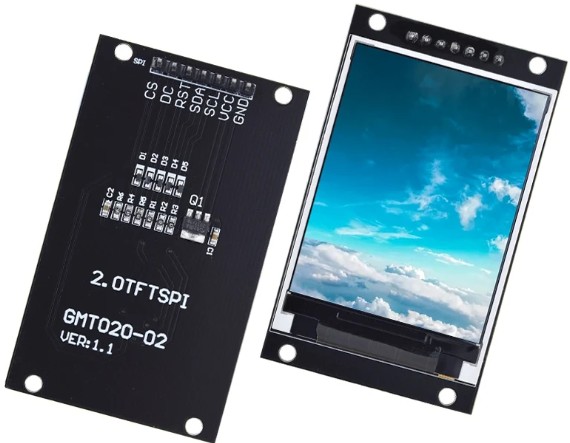
Automotive is one of the most important markets for Japanese TFT LCD manufacturers. Instrument clusters, center stack displays, rear‑seat entertainment, and head‑up display interfaces all rely on high‑quality TFT LCD technology.
Automotive TFT LCD modules must withstand wide temperature ranges, vibration, and continuous daily use. They also need careful optical tuning to remain visible in strong daylight while minimizing reflections at night. Japanese suppliers have developed advanced automotive TFT LCD platforms with curved shapes, high brightness, and integration possibilities for local dimming or augmented reality overlays.
In industrial automation, TFT LCD‑based HMIs serve as the main interface between humans and machines. Japanese TFT LCD modules are widely used in PLC panels, CNC controllers, machine vision systems, and process control stations.
Industrial TFT LCD products emphasize durability, wide temperature operation, resistance to dust and moisture, and long product lifecycles. Many Japanese TFT LCD modules are paired with resistive or projected capacitive touch panels, making them suitable for gloved operation or environments with contaminants. For machine builders, Japanese TFT LCD suppliers offer consistency and stable availability, reducing redesign frequency.
Medical electronics demand high‑precision and stable imaging over many years, making Japanese TFT LCD suppliers attractive partners. TFT LCD monitors for diagnostic imaging, patient monitoring, endoscopy, and surgical visualization require accurate color reproduction and uniform brightness.
Japanese TFT LCD panels for medical applications are engineered to meet stringent regulations and maintain performance after prolonged operation. Some solutions include special calibration functionality, DICOM compliance, or advanced backlight control to ensure reliable imaging. Long‑term availability and service support are crucial, and Japanese suppliers typically provide clear roadmaps and documentation.
Professional AV and signage projects make extensive use of large TFT LCD panels and tiled displays. Japanese brands supply TFT LCD panels and monitors for conference rooms, airports, train stations, shopping malls, and broadcasting studios.
These TFT LCD solutions prioritize uniformity, color accuracy, and low failure rates. Features such as narrow bezels, daisy‑chain connectivity, and remote monitoring are common. In control rooms and network operations centers, Japanese TFT LCD panels are assembled into video walls that must run around the clock, often supported by redundant systems and professional service networks.
Japanese low‑power TFT LCD technology plays a significant role in portable devices, especially where outdoor readability is essential. Handheld terminals for logistics, POS devices, scientific instruments, and measurement tools frequently use small TFT LCD modules from Japanese or Japan‑linked manufacturers.
For these devices, TFT LCD design must balance brightness, battery life, and mechanical robustness. Sunlight‑readable TFT LCDs, transflective or semi‑transflective designs, and specialized technologies like Blanview are common choices. Integrators often combine the TFT LCD with rugged housings, sealed touch panels, and protective cover glass.
Overseas buyers typically interact with Japanese TFT LCD manufacturers through a combination of direct relationships, distributors, and specialized integrators. The route chosen depends on project size, complexity, and required engineering support.
Large OEMs with high volumes may negotiate directly with Japanese TFT LCD makers to secure custom designs, dedicated capacity, and long‑term pricing agreements. These projects often involve joint development, where the TFT LCD specification is tailored to the OEM's brand requirements, mechanical constraints, and system architecture.
Smaller and mid‑size buyers more frequently work with authorized distributors and trading companies. These partners maintain relationships with multiple TFT LCD manufacturers, hold local inventory, and provide multilingual support. They help customers choose TFT LCD modules that match their technical needs, coordinate samples, and manage logistics and documentation.
Global and regional integrators play an additional role by delivering complete TFT LCD assemblies. They may combine a Japanese TFT LCD panel with custom backlight solutions, optical bonding, touch sensors, and enclosure designs. Integrators simplify the process for OEMs by delivering a tested, plug‑and‑play TFT LCD subsystem instead of a bare panel.
Key points buyers typically evaluate include:
- Technical specifications of the TFT LCD (size, resolution, brightness, contrast, viewing angles, interface, and touch options).
- Environmental ratings and reliability data (temperature range, shock, vibration, humidity, and backlight life).
- Product lifecycle and roadmap, ensuring the chosen TFT LCD will remain available for the planned product lifetime.
- Engineering support, documentation quality, and sample availability.
- Total cost of ownership, including integration effort, long‑term service, and replacement policies.
When planning a new product that uses a TFT LCD sourced from Japan, careful upfront planning helps avoid costly redesigns later.
First, define the application environment clearly. For outdoor or high‑brightness conditions, select a TFT LCD with sufficient luminance, anti‑glare coatings, and potentially transflective or other enhanced visibility technologies. For indoor control rooms, prioritize color accuracy, viewing angle, and low eye fatigue.
Second, consider power and thermal constraints. Battery‑powered devices benefit from low‑power TFT LCD architectures, efficient backlights, and dimming control. Systems installed in sealed enclosures must account for heat generated by the TFT LCD backlight and driving electronics.
Third, align the TFT LCD lifecycle with the product's expected lifespan. Request lifecycle statements, end‑of‑life policies, and suggested successors. Choosing TFT LCD families that share common mechanical and electrical interfaces can significantly reduce redesign complexity when upgrades occur.
Fourth, evaluate the level of integration required. If a project needs custom cover glass, special touch performance, or rugged housings, it may be more efficient to work with an integrator experienced in Japanese TFT LCD modules. This partner can manage bonding, sealing, and system testing while the OEM focuses on core functionality.
Finally, ensure that engineering teams have access to comprehensive documentation, reference designs, and technical support. This includes timing diagrams, mechanical drawings, recommended backlight driving, and guidelines for EMC and ESD protection around the TFT LCD.
Japan continues to play a central role in the global TFT LCD market by focusing on advanced, high‑reliability displays for demanding industrial, automotive, medical, and professional applications. Leading Japanese TFT LCD manufacturers such as JDI, Sharp, Panasonic, NEC, Kyocera, and Ortustech combine process expertise, strong engineering culture, and long‑term lifecycle planning to deliver stable and high‑performance solutions.
For overseas buyers, successful TFT LCD sourcing from Japan depends on matching application requirements with each manufacturer's strengths, understanding available customization, and planning lifecycles from the beginning of the design. By cooperating closely with Japanese TFT LCD makers, distributors, and integrators, OEMs can secure displays that enhance product quality, reliability, and user experience over many years.
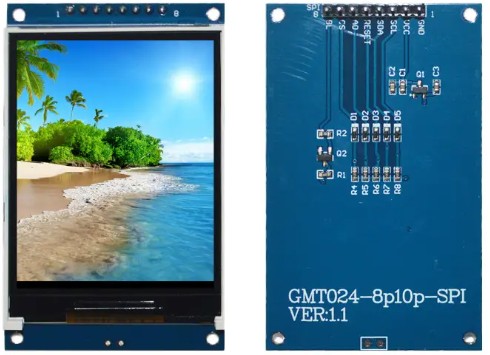
Japanese TFT LCD manufacturers emphasize reliability, long product lifecycles, and strict quality control, which are essential for industrial and automotive applications. Their TFT LCD modules are often qualified to withstand wide temperature ranges, vibration, and continuous operation, reducing field failure risk for OEMs.
Yes, small and mid‑size companies commonly source Japanese TFT LCD modules through distributors, trading companies, or integrators rather than directly from panel fabs. These partners aggregate demand, hold stock, and provide engineering assistance, allowing smaller buyers to access high‑quality Japanese TFT LCD products with reasonable minimum order quantities.
Applications that require long‑term stability, precise color, and robust environmental performance benefit most from Japanese TFT LCD technology. These include automotive clusters, industrial HMIs, medical diagnostic displays, control room video walls, and outdoor or semi‑outdoor information systems where display failure would be costly.
Buyers should request official lifecycle information, product roadmaps, and last‑time‑buy policies for any TFT LCD module under consideration. Choosing TFT LCD families with pin‑compatible successors and wide market adoption helps ensure that replacements or upgraded panels remain available without major hardware redesigns.
Many Japanese suppliers, often together with integrators, offer custom TFT LCD solutions, including unique sizes, special polarizers, tailored brightness, and integrated touch and control electronics. For sufficiently attractive projects, they may co‑develop a bespoke TFT LCD module that fits the customer's exact mechanical, optical, and electrical requirements.