
Views: 222 Author: Wendy Publish Time: 2025-12-21 Origin: Site


Content Menu
● Understanding Multi Touch Capacitive Touchscreen Technology
● Why Global Buyers Choose China for Multi Touch Capacitive Touchscreen
● Top 10 Multi Touch Capacitive Touchscreen Manufacturers in China
>> 1. Ruixiang Touch Display Technology Co., Ltd.
>> 4. Dongguan CJTouch Electronic Co., Ltd.
>> 7. Fannal Electronics Co., Ltd.
>> 8. Xiamen Kingtouch Technology Co., Ltd.
>> 9. Top One Tech (Top One Touch / Top One Tech Ltd.)
>> 10. Shanghai Goodview Electronic Technology Co., Ltd.
● Key Technical Parameters for Multi Touch Capacitive Touchscreen Projects
● Main Application Fields of Multi Touch Capacitive Touchscreen
>> Medical and laboratory equipment
>> Retail, banking, and hospitality
>> Transportation and public information
>> Education, corporate, and entertainment
● How to Cooperate Effectively With Chinese Multi Touch Capacitive Touchscreen Manufacturers
>> 1. Define Requirements Clearly
>> 2. Review Engineering Proposals
>> 4. Finalize Specifications for Mass Production
● Common Challenges and Practical Solutions
>> Thick gloves or stylus requirements
● How Multi Touch Capacitive Touchscreen Enhances Industrial and Smart Manufacturing
● FAQ
>> 1. How many touch points do I really need for a Multi Touch Capacitive Touchscreen?
>> 2. Can a Multi Touch Capacitive Touchscreen be used outdoors?
>> 3. What is the typical lifespan of a Multi Touch Capacitive Touchscreen?
>> 4. Do I need special drivers to use a Multi Touch Capacitive Touchscreen?
>> 5. How can I reduce development time for a new Multi Touch Capacitive Touchscreen product?
China has become a global hub for Multi Touch Capacitive Touchscreen solutions, supplying industrial, medical, commercial, and consumer projects worldwide. Multi Touch Capacitive Touchscreen technology now defines the user experience for smart devices, kiosks, industrial HMIs, and digital signage systems.
Multi Touch Capacitive Touchscreen modules from Chinese suppliers combine advanced projected capacitive (PCAP) sensors, durable cover glass, and high‑performance controllers with competitive pricing and flexible customization. For overseas OEMs and integrators, selecting the right Multi Touch Capacitive Touchscreen manufacturers in China is essential for long‑term reliability, cost control, and timely delivery.

A Multi Touch Capacitive Touchscreen uses changes in electrostatic fields to detect touch rather than physical pressure. The sensor grid, made from transparent conductive materials like ITO, measures tiny capacitance variations when a finger or conductive stylus approaches the surface. This allows smooth multi‑finger gestures such as pinch‑to‑zoom, rotation, and two‑hand operation.
Projected capacitive (PCAP) structures typically use an X–Y matrix of electrodes patterned on one or two glass layers. A controller IC scans the grid at high speed, calculating exact touch coordinates and tracking multiple contact points simultaneously. In a typical Multi Touch Capacitive Touchscreen module, the stack includes a cover lens, sensor glass, optical adhesive, and often an integrated TFT LCD to form a complete touch display.
Because there is no flexible top membrane, a Multi Touch Capacitive Touchscreen offers excellent optical clarity, long mechanical life, and a smooth glass surface that is easy to clean. Compared with resistive technology, Multi Touch Capacitive Touchscreen solutions deliver higher sensitivity, faster response, and support for complex gestures.
China has built a very mature supply chain around displays and touch interfaces, from ITO glass and FPCs to controller ICs, optical bonding lines, and housing fabrication. This ecosystem allows Chinese factories to supply Multi Touch Capacitive Touchscreen products in a wide range of sizes with short lead times and strong price competitiveness.
Many Chinese manufacturers focus on industrial‑grade Multi Touch Capacitive Touchscreen panels for automation, transportation, smart retail, banking, and medical equipment. Standard modules cover sizes from small 3.5″ or 4.3″ panels to 55″ and larger interactive screens, while OEM projects frequently require fully custom mechanics, cover‑lens printing, and bonding to specific TFT panels.
In addition, experienced engineering teams in China can provide design support, firmware tuning, and quick prototyping for new Multi Touch Capacitive Touchscreen applications. This makes it easier for overseas OEMs to move from concept to mass production with stable quality and repeatable performance.
Below is an overview of ten representative Chinese manufacturers active in Multi Touch Capacitive Touchscreen and PCAP touch display solutions. This list is not exhaustive but illustrates the capabilities and strengths commonly found in the Chinese market.
Ruixiang Touch Display Technology focuses on the design and manufacturing of Multi Touch Screen products for retail, education, healthcare, hospitality, and POS applications. Its Multi Touch Capacitive Touchscreen portfolio covers various sizes and form factors for interactive kiosks and information terminals.
The company provides OEM and ODM customization services, including custom cover‑lens designs, logo printing, and different mounting structures for integration into enclosures. Ruixiang positions its Multi Touch Capacitive Touchscreen modules as high‑reliability solutions with stable performance and responsive multi‑finger operation, targeting international buyers that need both flexibility and consistent quality.
Head Sun Co., Ltd. is known as a professional capacitive touch screen manufacturer providing customized PCAP solutions and value‑added services. It offers different structures, such as glass‑glass and glass‑film, to match application and cost targets for Multi Touch Capacitive Touchscreen projects.
Besides new production, Head Sun can support repair and replacement for certain existing branded touchscreens, helping customers maintain legacy systems while upgrading to modern Multi Touch Capacitive Touchscreen performance. Its engineering team can assist with glass design, surface coating, and custom optical printing to meet specific branding and mechanical requirements.
Bunsun Display positions itself as an industrial‑grade PCAP manufacturer, focusing on rugged Multi Touch Capacitive Touchscreen solutions. Its standard product range typically covers 3.5″ to 55″ with G+G structures and support for up to 10 touch points, designed for factory automation, transportation, and heavy‑duty kiosks.
Bunsun emphasizes strong anti‑interference capability, glove support, and stable operation in demanding environments. The company works with well‑known controller ICs and offers firmware tuning to achieve reliable Multi Touch Capacitive Touchscreen behavior in the presence of noise, thick glass, or water droplets. Short sampling times and responsive technical support help overseas buyers accelerate new designs.
CJTouch specializes in projected capacitive touch screens, PCAP touch displays, infrared multi‑touch screens, and projected capacitive monitors. Its Multi Touch Capacitive Touchscreen modules span small to extra‑large sizes and are commonly used in digital signage, education boards, gaming tables, and interactive kiosks.
CJTouch supports mainstream operating systems such as Windows, Linux, Android, and macOS, which simplifies integration for system builders. The company offers open‑frame monitors and complete touch displays alongside bare PCAP sensors, so customers can choose the level of integration that best fits their Multi Touch Capacitive Touchscreen project.
Reshine Display is a Chinese manufacturer that combines touch screens and TFT LCD modules, delivering complete HMI assemblies. Its custom‑designed Capacitive Touch Screen products can be optically bonded to a wide range of TFT panels, providing a seamless Multi Touch Capacitive Touchscreen experience.
Reshine's engineering capability covers interface matching, backlight options, and mechanical design, making it suitable for industrial, medical, and handheld devices. By sourcing both the display and Multi Touch Capacitive Touchscreen from one supplier, OEMs can reduce risk and streamline their supply chain.
DWIN Technology produces surface capacitive and projected capacitive touch products alongside intelligent display modules and embedded controllers. Its Multi Touch Capacitive Touchscreen solutions are often integrated into smart kiosks, advertising machines, and commercial terminals.
Because DWIN also designs its own intelligent display platforms, customers can obtain a combined hardware and software solution, including GUI tools and firmware. This integration can shorten development cycles and improve reliability for Multi Touch Capacitive Touchscreen applications that require both visual and interactive performance.
Fannal Electronics offers capacitive multi‑touch screens and related products to international buyers through export‑oriented channels. Its Multi Touch Capacitive Touchscreen modules are designed for stable quality and straightforward OEM customization, serving sectors such as retail devices and industrial terminals.
The company focuses on repeatable performance and consistent manufacturing standards. For overseas customers without in‑house touch engineering, Fannal can act as a partner helping to select appropriate Multi Touch Capacitive Touchscreen specifications and controller configurations.
Xiamen Kingtouch is dedicated to projected capacitive touch screens for international markets, providing a variety of PCAP models and customized services. Its Multi Touch Capacitive Touchscreen range includes different sizes and aspect ratios suitable for kiosks, vending machines, ATMs, and industrial control panels.
Kingtouch works closely with OEMs on size, glass thickness, interface type, and mounting design. By offering project‑specific engineering support and competitive pricing, the company aims to help customers build reliable Multi Touch Capacitive Touchscreen products for global deployment.
Top One Tech promotes itself as a premier custom touch display manufacturer in China. It offers PCAP touch panels integrated into open‑frame monitors, all‑in‑one terminals, and fully customized housings. Many of its products use Multi Touch Capacitive Touchscreen modules to enable intuitive gesture operation.
The company serves indoor and outdoor applications, including ticketing, fuel stations, wayfinding kiosks, and gaming machines. For outdoor or semi‑outdoor environments, Top One Tech can combine Multi Touch Capacitive Touchscreen sensors with high‑brightness, sunlight‑readable displays and sealed enclosures to meet environmental requirements.
Goodview is widely recognized for digital signage and commercial display products that incorporate PCAP technology. Its interactive displays and kiosks rely on Multi Touch Capacitive Touchscreen modules to provide engaging interfaces for retail, corporate, and public‑space installations.
By offering complete systems—including displays, enclosures, media players, and content management options—Goodview simplifies deployment for users who want a turnkey solution. For such projects, the internal Multi Touch Capacitive Touchscreen is a key component, but buyers benefit from having a single point of responsibility for the entire system.
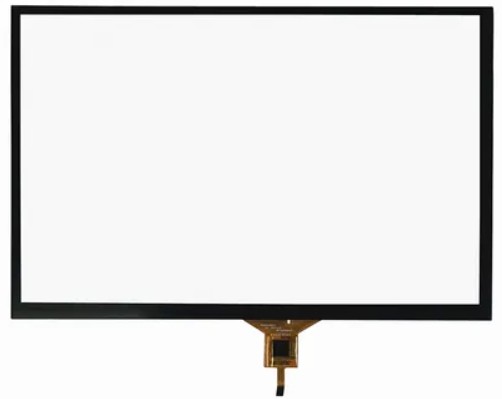
When selecting or specifying a Multi Touch Capacitive Touchscreen, technical parameters directly affect usability, durability, and integration effort. Careful definition at the RFQ stage reduces costly iterations later.
Important parameters include:
- Size and aspect ratio
Define diagonal size, active area, and aspect ratio (e.g., 4:3, 16:9, or custom). Matching the Multi Touch Capacitive Touchscreen to the underlying LCD and mechanical design is essential.
- Touch points and controller
Many standard PCAP modules support 2–10 touch points. Higher touch counts enable richer gestures and multi‑user interaction on large Multi Touch Capacitive Touchscreen surfaces.
- Structure and glass
Common structures include G+G (glass + glass) and G+F/F+F (glass + film). G+G offers superior durability and stability, while film‑based designs can reduce thickness and weight for portable Multi Touch Capacitive Touchscreen devices.
- Cover‑lens thickness and finish
Industrial applications may need 3–6 mm tempered glass, whereas consumer devices may use thinner glass to maintain sensitivity. Surface treatments such as anti‑glare, anti‑fingerprint, or anti‑reflection can improve readability and comfort on any Multi Touch Capacitive Touchscreen.
- Interface and OS support
Typical interfaces are USB, I2C, or SPI, with driver support for Windows, Linux, Android, and other platforms. Confirm compatibility to avoid software integration issues.
Consider operating temperature, storage temperature, humidity, ESD immunity, and EMC behavior. Outdoor or harsh‑environment Multi Touch Capacitive Touchscreen products must withstand vibration, UV exposure, and rapid temperature changes.
Multi Touch Capacitive Touchscreen modules from Chinese manufacturers serve diverse industries:
Panel PCs, HMIs, machine controllers, and SCADA terminals use Multi Touch Capacitive Touchscreen interfaces for intuitive operation and data visualization. Rugged glass and sealed bezels protect against dust and liquids.
Multi Touch Capacitive Touchscreen panels enable compact, cleanable interfaces on analyzers, imaging systems, and patient monitors. Smooth glass surfaces are easy to disinfect and can be engineered for glove use.
POS terminals, self‑service checkouts, ticketing machines, and hotel kiosks commonly use Multi Touch Capacitive Touchscreen fronts. Multi‑finger gestures improve speed and usability for both staff and customers.
Ticket vending machines, passenger information displays, and on‑board terminals benefit from robust Multi Touch Capacitive Touchscreen designs that can handle heavy public usage.
Interactive whiteboards, collaboration displays, gaming tables, and museum exhibits rely on large Multi Touch Capacitive Touchscreen surfaces to support multiple simultaneous users.
In each of these sectors, Chinese suppliers can tailor structures, bonding methods, and controller settings to match the mechanical and environmental conditions of the final product.
To ensure smooth cooperation and successful mass production, overseas buyers should follow a structured process when engaging with Chinese Multi Touch Capacitive Touchscreen suppliers.
Prepare a clear specification including size, aspect ratio, glass thickness, touch points, interface type, and target application. If a specific LCD model is already chosen, share its datasheet and mechanical drawings so the Multi Touch Capacitive Touchscreen can be matched accurately. Define special needs such as glove operation, water rejection, or chemical resistance at the beginning.
Suppliers usually respond with drawings, stack‑up descriptions, and preliminary BOM information. Carefully review dimensions, mounting holes, bezel design, and cable routing. Confirm sensor and cover‑lens outlines to ensure that the Multi Touch Capacitive Touchscreen will fit into your housing or front panel without interference.
Once samples are produced, evaluate electrical performance, touch accuracy, response time, and behavior under ESD or EMI conditions. Check optical quality, including reflections, viewing angles, and any Newton rings or mura that may appear. For industrial Multi Touch Capacitive Touchscreen panels, test in real operating conditions such as high humidity, vibration, or temperature extremes.
After successful validation, confirm the version of drawings and specifications that will be frozen for mass production. Agree on inspection standards, acceptance criteria, packaging methods, and traceability requirements. This control helps keep each production batch of the Multi Touch Capacitive Touchscreen consistent.
Discuss lifecycle expectations, availability of key components, and options for second‑source controllers or alternative materials. This is especially important when designing Multi Touch Capacitive Touchscreen solutions for equipment that must remain in production for many years. Clear planning reduces the risk of sudden obsolescence.
Despite the maturity of Multi Touch Capacitive Touchscreen technology, practical challenges can still appear during product development. Many can be resolved through proper engineering cooperation with Chinese manufacturers.
High‑power motors, inverters, or RF sources near the system may cause unstable touches. Shielding, better grounding, and firmware tuning can significantly improve Multi Touch Capacitive Touchscreen stability.
Water droplets or heavy contamination may trigger false touches. Specialized algorithms and sensor patterns can distinguish between intentional touches and environmental noise, keeping the Multi Touch Capacitive Touchscreen usable.
For some industrial or medical tasks, operators must wear thick gloves, or the system must support a stylus. Adjusting sensitivity, using special controller chips, and changing glass thickness can allow the Multi Touch Capacitive Touchscreen to work reliably in these conditions.
Excessive pressure from a housing or warped mounting can lead to dead zones or ghost touches. Experienced suppliers can advise on bezel design, gasket selection, and mounting torque to protect the Multi Touch Capacitive Touchscreen.
In modern factories and smart manufacturing environments, Multi Touch Capacitive Touchscreen HMIs act as the main interface between operators, machines, and production data. By replacing physical buttons with multi‑touch panels, equipment builders can present complex information clearly while saving panel space and improving flexibility.
Operators can zoom into process diagrams, scroll through trend charts, and quickly switch between screens using gestures, increasing efficiency. Multi Touch Capacitive Touchscreen interfaces also allow dynamic layout changes through software, making it easier to update workflows, add new functions, or support different languages without redesigning the hardware front panel.
For companies that already specialize in materials, components, or process equipment, upgrading control systems with Multi Touch Capacitive Touchscreen HMIs can strengthen overall competitiveness. Chinese touch suppliers, with their experience in industrial projects, can help design robust front panels tailored to harsh environments and continuous operation.
Multi Touch Capacitive Touchscreen technology has become the standard for modern interactive devices in industrial, medical, commercial, and consumer fields. Chinese manufacturers play a central role in this ecosystem by providing a broad range of Multi Touch Capacitive Touchscreen modules, integrated displays, and fully customized solutions.
By understanding the capabilities of key manufacturers, the critical technical parameters, and the typical cooperation process, overseas OEMs and integrators can confidently develop new Multi Touch Capacitive Touchscreen products. A well‑chosen Chinese partner can support rapid prototyping, stable mass production, and long‑term lifecycle management, ensuring that each Multi Touch Capacitive Touchscreen design delivers high performance, durability, and value in real‑world applications.
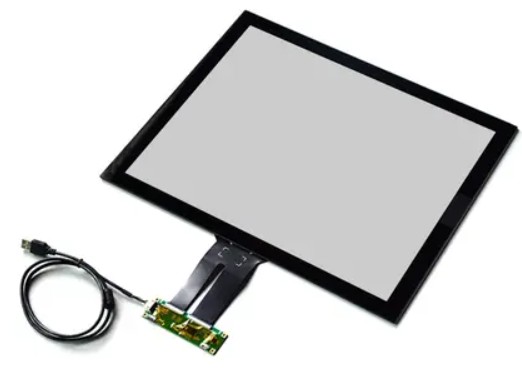
For most industrial and kiosk applications, 2–5 touch points are enough for common gestures like zoom and rotate, while 10 points are often used for large collaborative displays. Higher touch counts enable more complex multi‑user interaction but may not be necessary for simpler Multi Touch Capacitive Touchscreen interfaces.
Yes, but outdoor use requires careful selection of glass thickness, optical coatings, brightness of the underlying display, and environmental sealing. Many Chinese suppliers can design Multi Touch Capacitive Touchscreen modules with UV‑resistant materials, anti‑glare surfaces, and integration options for high‑brightness LCDs to ensure readability in sunlight.
Because there is no flexible top membrane, a Multi Touch Capacitive Touchscreen typically offers a very long mechanical lifespan—often rated in millions of touches. Actual service life depends on glass thickness, mounting design, and environmental conditions, but industrial‑grade modules are intended for many years of continuous operation.
Most USB PCAP controllers follow standard HID protocols and are plug‑and‑play under modern operating systems such as Windows, Linux, and Android. However, for advanced functions or I2C/SPI interfaces, you may need dedicated drivers or firmware support from the Multi Touch Capacitive Touchscreen supplier or controller vendor.
Selecting an existing standard module that closely matches the required size and aspect ratio is often the fastest route. Working closely with a Chinese supplier that can provide evaluation kits, reference designs, and pre‑configured firmware for the Multi Touch Capacitive Touchscreen will further shorten design and testing cycles.