
Views: 222 Author: Wendy Publish Time: 2026-01-04 Origin: Site


Content Menu
● Why Source TFT Touch Screen Solutions from USA?
● Types of TFT Touch Screen Suppliers in USA
● Leading TFT Touch Screen Manufacturers and Suppliers in USA
>> E3 Displays
>> Displaytech (Seacomp Group)
>> EarthLCD
● How to Choose the Right US TFT Touch Screen Partner
● Typical Applications of TFT Touch Screen Solutions in USA
● Design and Integration Considerations for TFT Touch Screen Projects
● Supply Chain and Lifecycle Strategy
● Practical Collaboration Tips with US TFT Touch Screen Suppliers
● FAQ About TFT Touch Screen Manufacturers and Suppliers in USA
>> (1) What is the main difference between a TFT Display and a TFT Touch Screen?
>> (2) Are most TFT Touch Screen modules physically manufactured in the USA?
>> (3) How do I select the right touch technology for my TFT Touch Screen?
>> (4) What information should I prepare before contacting a US TFT Touch Screen supplier?
>> (5) Can US TFT Touch Screen suppliers support long product lifecycles for industrial projects?
The USA has a mature ecosystem of TFT Touch Screen manufacturers, value‑added integrators, and engineering distributors serving industrial, medical, automotive, and commercial projects worldwide. Choosing the right US TFT Touch Screen manufacturers and suppliers helps overseas OEMs reduce development risk, shorten lead time, and secure reliable long‑term supply.[1]

A TFT Touch Screen combines a TFT (Thin Film Transistor) LCD panel with a resistive or capacitive touch layer to create an interactive visual interface. This integrated solution is widely used in industrial HMI terminals, medical devices, automotive dashboards, handheld instruments, POS terminals, and smart appliances.[1]
Key characteristics of a TFT Touch Screen include:[1]
- Color display with active‑matrix pixels for sharp images and high contrast.
- Integrated touch panel (projected capacitive or resistive) for precise user interaction.
- Standard interfaces such as RGB, LVDS, MIPI, HDMI, SPI, or MCU to match different controllers.
- Optional cover glass, optical bonding, high brightness, and wide operating temperature for harsh environments.
US‑based TFT Touch Screen suppliers are especially attractive for high‑reliability and high‑mix, low‑to‑medium volume projects where engineering support and lifecycle management matter more than ultra‑low cost. Instead of operating huge TFT glass fabs, many US companies focus on design, customization, logistics, and technical support around the TFT Touch Screen module.[1]
Key advantages of choosing a US TFT Touch Screen partner include:[1]
- Strong application engineering and design‑in support from concept to mass production.
- Easier communication in English, similar business culture, and clearer contracts for Western buyers.
- Better IP protection, documentation, and traceability, especially for regulated industries.
- Flexible customization of cover glass, touch stack‑up, bonding, coatings, and mechanics.
- Local or regional stocking, shorter shipping times, and a more responsive RMA process.
Different project types benefit from different categories of TFT Touch Screen suppliers in the USA. Understanding these categories helps you narrow down the most suitable partners for each application.[1]
Main categories include:[1]
- Original module manufacturers: design and build TFT LCD and TFT Touch Screen modules.
- Customization specialists: focus on optical bonding, touch integration, ruggedization, and NRE projects.
- Engineering‑driven distributors: provide multi‑brand TFT Touch Screen portfolios plus selection and logistics support.
- HMI system providers: deliver complete HMI terminals with CPU, OS, enclosure, and TFT Touch Screen front panels.
The following US‑based or US‑focused companies are widely recognized in the TFT Touch Screen market for industrial and commercial applications.[1]
Newhaven Display is a US‑headquartered manufacturer and supplier of LCD, OLED, VFD, and TFT Touch Screen solutions serving global OEMs. It offers standard TFT LCD modules, capacitive touch options, and development‑friendly interfaces like HDMI, SPI, and LVDS for quick integration.[1]
Key points:[1]
- Wide catalog of TFT LCDs from small to mid‑size with optional touch.
- Sunlight‑readable and IPS TFT Touch Screen options for industrial and outdoor equipment.
- Engineering support for custom bezels, cables, interface boards, and mechanical integration.
US Micro Products is an American supplier specializing in custom and standard TFT LCD displays for industrial, medical, and gaming applications. It supports a wide range of display sizes with tailored TFT Touch Screen integration for specialized devices.[1]
Key points:[1]
- Tailored TFT Touch Screen designs to meet specific mechanical, optical, and interface needs.
- Support for non‑standard sizes and shapes, including cut‑panel TFT solutions.
- Focus on long‑term OEM partnerships in critical industries.
E3 Displays positions itself as a high‑end custom TFT display supplier in the USA, offering engineering‑heavy solutions for demanding environments. Its portfolio includes TFT Touch Screen modules with optical bonding, high brightness, and rugged construction for harsh field use.[1]
Key points:[1]
- Specialization in fully custom TFT Touch Screen assemblies and front‑panel designs.
- Strong focus on optical enhancements, wide temperature, and environmental durability.
- Ideal for medical, defense, transportation, and industrial HMI projects.
Displaytech is a display module manufacturer with strong operations in the USA through the Seacomp group, offering small to medium‑size LCD and TFT Touch Screen modules. It supports embedded TFT devices, interface boards, and custom LCD design services for OEMs.[1]
Key points:[1]
- Emphasis on small‑to‑mid size TFT Touch Screen modules for compact equipment.
- Tools and engineering resources for rapid LCD and TFT customization.
- Robust quality management with international certifications.
Phoenix Display Technology is a US LCD module manufacturer offering standard, semi‑custom, and fully custom display modules, including TFT Touch Screen solutions. It leverages modern manufacturing technologies to tailor display modules for a broad range of industries.[1]
Key points:[1]
- Strong capabilities in custom and semi‑custom TFT Touch Screen modules.
- Ability to balance cost targets with high performance and reliability.
- Guidance from concept, prototyping, and validation through to mass production.
True Vision Displays (TVD) is a US‑based manufacturer specializing in industrial‑grade TFT Touch Screen solutions for aerospace, defense, medical, and financial sectors. The company offers various resolutions and mechanical formats tailored to special‑purpose equipment.[1]
Key points:[1]
- High‑reliability TFT Touch Screen modules designed for mission‑critical applications.
- Multiple resolution formats and custom mechanical configurations.
- Expertise in harsh environments, vibration, and long program lifetimes.
EarthLCD is an “Assembled in the USA” manufacturer focused on industrial smart LCDs and TFT Touch Screen monitors. Its ezLCD product line combines TFT displays, controllers, and touch in integrated modules designed for embedded systems.[1]
Key points:[1]
- Smart TFT Touch Screen modules with built‑in controller and firmware for fast integration.
- Industrial touch monitors suitable for control panels, kiosks, and test equipment.
- Targeted at embedded OEMs needing quick time‑to‑market and simplified hardware design.
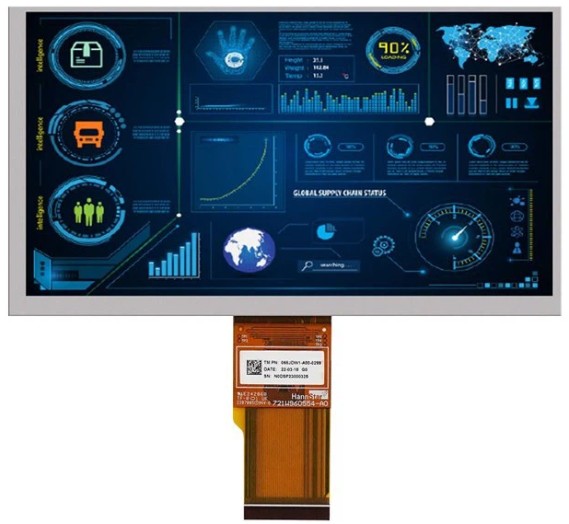
Choosing the right TFT Touch Screen partner in the USA is a strategic decision that impacts overall system cost, reliability, and time‑to‑market. A systematic evaluation process helps avoid expensive redesigns and field failures later in the product lifecycle.[1]
Important factors to consider include:[1]
- Application and environment: indoor vs outdoor, sunlight exposure, vibration, humidity, and temperature range.
- Display size and resolution: match ergonomic and UI requirements, viewing distance, and available panel formats.
- Touch technology: decide between projected capacitive and resistive TFT Touch Screen based on glove use, moisture, EMI, and intended gestures.
- Interface and electronics: ensure the TFT Touch Screen supports your preferred interface (HDMI, LVDS, MIPI, MCU, SPI) and integrates with your CPU/MCU.
- Lifecycle and availability: check panel roadmap, EOL policy, and second‑source strategies to secure long‑term supply.
- Certification and reliability: verify ISO standards and, where relevant, medical, automotive, or aerospace qualifications plus burn‑in and MTBF data.
For global OEMs, combining a US TFT Touch Screen engineering partner with competitive Asian panel manufacturing often yields an optimal balance of cost and technical support.[1]
The US market uses TFT Touch Screen technology across a broad spectrum of industries, from factory floors to hospital operating rooms. Each sector demands custom combinations of brightness, touch performance, ruggedization, and regulatory compliance.[1]
Major application areas include:[1]
- Industrial automation: HMI panels, PLC operator terminals, machine dashboards, control cabinets.
- Medical devices: patient monitors, ventilators, diagnostic devices, portable analyzers.
- Automotive and transportation: in‑vehicle infotainment, digital instrument clusters, EV charging stations, marine consoles.
- Retail and hospitality: POS terminals, kiosks, ticketing systems, vending machines, digital menu boards.
- Smart building and energy: thermostat interfaces, solar inverter screens, smart meters, access control panels.
- Professional electronics: test instruments, fitness equipment, broadcasting gear, laboratory devices.
Each application type requires specific TFT Touch Screen properties such as wide viewing angle, anti‑glare or anti‑reflective glass, water‑resistant touch, glove operation, and high contrast in bright environments.[1]
Engineering teams should treat the TFT Touch Screen as a central part of the user experience, not just a commodity component. Careful early‑stage design reduces development cycles and maximizes long‑term reliability.[1]
Key integration points:[1]
- Mechanical design: ensure that bezels, gaskets, and enclosures do not stress the TFT Touch Screen or interfere with touch detection.
- Optical stack‑up: coordinate polarizers, touch sensor, and cover glass thickness to maintain brightness and viewing angle.
- EMC and ESD: design proper grounding and shielding so the TFT Touch Screen operates reliably near noisy electronics.
- Firmware and UI: adapt fonts, icons, and layout for the exact resolution and aspect ratio of the TFT Touch Screen.
- Thermal management: consider heat from backlight drivers and system electronics near the display cavity.
- Environmental sealing: specify gaskets, O‑rings, and coatings so the TFT Touch Screen survives moisture, dust, and cleaning agents where necessary.
US TFT Touch Screen suppliers can often provide mechanical drawings, 3D models, sample kits, and integration guides to speed up this process.[1]
A well‑planned supply chain strategy around the TFT Touch Screen is essential for industrial and medical devices with long lifecycles. Because TFT panel generations evolve, a lifecycle plan helps avoid unexpected redesigns when components reach EOL.[1]
Best practices include:[1]
- Choosing popular, long‑lived TFT panel families to reduce discontinuation risk.
- Signing agreements or roadmaps with US TFT Touch Screen partners covering EOL notifications and last‑time‑buy policies.
- Maintaining at least one second‑source TFT Touch Screen option with compatible mechanics and interfaces when feasible.
- Keeping configuration control documentation for firmware, cover glass, coatings, and bonding processes.
- Periodically reviewing the TFT Touch Screen BOM for obsolescence risks together with the supplier.
For export‑oriented OEMs, a stable TFT Touch Screen platform reduces global after‑sales cost and protects brand reputation in overseas markets.[1]
Strong collaboration with a US TFT Touch Screen partner can significantly de‑risk international projects, especially when engineering teams are in different time zones. A structured communication approach keeps projects on schedule and within budget.[1]
Recommended collaboration practices:[1]
- Share detailed specifications early, including mechanical drawings, UI mockups, functional requirements, and target certifications.
- Request evaluation kits for the selected TFT Touch Screen to test brightness, touch feel, latency, and viewing angle with your firmware.
- Conduct joint design reviews for mounting, cabling, EMC, and environmental sealing.
- Clarify NRE (non‑recurring engineering) scope for custom TFT Touch Screen designs, including samples and pilot builds.
- Define clear acceptance criteria and test procedures for the TFT Touch Screen during incoming inspection.
- Keep an open channel with the supplier for firmware updates, driver changes, and panel substitutions during the lifecycle.
Global OEMs often run pilot production with a chosen TFT Touch Screen configuration, validate field performance, then freeze the design before high‑volume rollout.[1]
The USA offers a robust ecosystem of TFT Touch Screen manufacturers, custom module providers, and engineering‑driven distributors supporting demanding industrial, medical, automotive, and commercial projects. By understanding supplier categories, carefully defining technical requirements, and collaborating closely with experienced US TFT Touch Screen partners, overseas OEMs can build reliable, user‑friendly HMI solutions with strong lifecycle and supply‑chain support.[1]
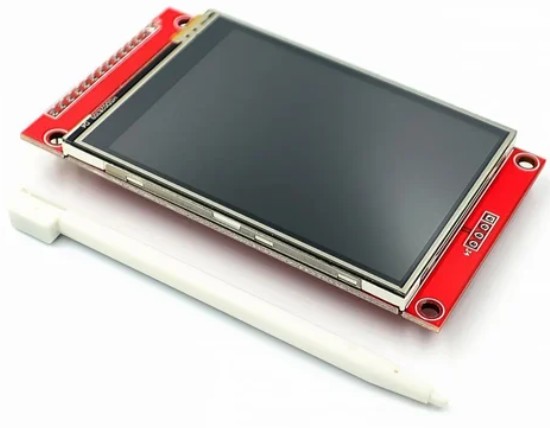
A TFT display is only the visual LCD panel, while a TFT Touch Screen combines the TFT panel with a touch sensor and cover glass to allow direct user interaction. The TFT Touch Screen usually includes a touch controller and sometimes firmware so the host can read accurate touch coordinates.[1]
Most glass TFT cells and many standard TFT modules are fabricated in Asian fabs, while US TFT Touch Screen companies focus on design, customization, bonding, assembly, and distribution. This model lets buyers access global‑scale TFT panel technology with US‑based engineering and logistics support.[1]
Projected capacitive TFT Touch Screen solutions are ideal for modern glass‑front HMIs with multi‑touch and gesture control, while resistive touch is better where users wear heavy gloves or where EMI and contamination are concerns. The choice depends on environment, durability demands, and the desired user experience for the TFT Touch Screen interface.[1]
You should prepare target display size, resolution, brightness, interface type, operating temperature, and desired touch technology for the TFT Touch Screen. Mechanical constraints, expected yearly volume, regulatory requirements, and project timelines also help US suppliers propose suitable TFT Touch Screen options and quotations quickly.[1]
Yes, many US TFT Touch Screen partners specialize in industrial and medical projects where lifecycles often exceed 7–10 years. They manage panel changes, propose compatible replacements, and coordinate last‑time‑buy programs to keep TFT Touch Screen platforms stable over time.[1]
[1](https://www.perplexity.ai/search/3b05a6b6-9616-4b8a-8abf-0ef58ce7698c)