
Views: 222 Author: Wendy Publish Time: 2026-01-04 Origin: Site


Content Menu
● Why Europe Matters for TFT Touch Screen Sourcing
● Overview of TFT Touch Screen Technology
● Leading TFT Touch Screen Players in Europe
>> Texim Europe
>> FORTEC Group
>> Other European TFT Display and Touch Specialists
● Typical Applications for TFT Touch Screen Solutions in Europe
● Key Technical Considerations When Choosing a TFT Touch Screen
● Cooperation Models: European Design, Global TFT Display Manufacturing
● How a Chinese OEM Partner Can Add Value
● Practical Tips for Overseas Buyers of TFT Touch Screen Solutions
● FAQ – TFT Touch Screen Sourcing in Europe
>> 1. What is the difference between a TFT Display and a TFT Touch Screen?
>> 2. Why should OEMs choose European partners for TFT Touch Screen projects?
>> 3. Which industries most frequently use industrial TFT Touch Screen solutions in Europe?
>> 4. How can buyers ensure long-term availability of a chosen TFT Touch Screen?
>> 5. What information should be included in an RFQ for a TFT Touch Screen project?
Europe has become a strategic hub for industrial-grade TFT Touch Screen solutions, combining high-reliability displays, advanced touch technology, and strong engineering support for OEMs worldwide. For overseas buyers, understanding the key TFT Touch Screen manufacturers and suppliers in Europe helps shorten project lead time, reduce technical risk, and secure long-term availability.[1][2]

A TFT Touch Screen combines a thin-film-transistor (TFT) LCD panel with a resistive or capacitive touch sensor and a controller that translates user input into system commands. In industrial and professional applications, TFT Touch Screen modules are optimized for brightness, durability, wide temperature range, and long-term availability rather than just consumer-level visual quality.[3][4]
Typical features of industrial TFT Touch Screen solutions include:[5]
- Wide viewing angles (often IPS or MVA technology) for readability in control rooms and public terminals.
- High brightness and anti-reflection treatments for outdoor or high-ambient light environments.
- Support for PCAP (projected capacitive) or resistive touch, sometimes with glove and water tolerance.
- Extended operating temperature and robust mechanical design for harsh environments.
By combining a stable TFT Display platform with a well-matched touch stack, a TFT Touch Screen can deliver responsive user experience even in demanding industrial conditions.[6]
European TFT Touch Screen partners focus strongly on application engineering, certification, and long-term support, often integrating Asian-manufactured panels into complete display and touch solutions. For international OEMs, this provides a bridge between global TFT Display manufacturing capacity and local project requirements in sectors like medical, transportation, and industrial automation.[2][7]
Key advantages of sourcing TFT Touch Screen solutions in Europe include:[2]
- Deep knowledge of EU standards, EMC requirements, and safety certifications.
- Mature ecosystems of distributors, integrators, and value-added resellers for TFT Touch Screen modules.
- Local language support, optimized logistics, and on-site service for long-life equipment.
As a result, many global brands rely on European design centers and integrators to finalize their TFT Touch Screen solutions for high-value markets.[4]
A modern TFT Touch Screen is a multi-layer system where each layer affects performance and reliability. Understanding these layers helps OEMs and engineers set realistic specifications and compare supplier proposals for TFT Touch Screen projects.[8][3]
Main layers of a typical TFT Touch Screen:
- TFT Display cell: The TFT LCD or TFT-based panel that generates images with defined resolution, brightness, and color gamut.
- Backlight unit: Usually LED-based, defining brightness, uniformity, and power consumption for the TFT Display portion.
- Touch sensor: PCAP or resistive sensor deposited on glass or film that detects user interactions.
- Cover glass or lens: Protective and aesthetic layer that may include printing, logos, and optical coatings.
- Touch controller: Electronics and firmware that interpret touch signals and communicate with the host system.
For industrial TFT Touch Screen applications, engineers pay particular attention to bonding technology between these layers, as optical bonding can minimize internal reflections and improve ruggedness.[9]
Although most TFT panel production capacity is in Asia, several key players provide TFT Display and TFT Touch Screen solutions from European bases, combining global panels with local expertise.[2]
Tianma Europe is the European arm of Tianma, a global display manufacturer offering industrial, medical, and automotive TFT Display solutions that are frequently combined with touch technology. The company focuses on high-reliability TFT Display and TFT Touch Screen modules with wide viewing angles, strong brightness, and long LED lifetime, making them suitable for demanding embedded systems.[3][2]
Typical strengths of Tianma Europe for TFT Touch Screen projects include:[3]
- Broad portfolio of small- to medium-sized TFT Display panels ideal for integrating projected capacitive touch.
- Support for industrial, medical, and automotive qualification and long-term availability.
- Cooperation with European integrators that add custom cover glass, optical bonding, and touch controllers.
For many customers, Tianma panels serve as the core TFT Display building blocks around which complete TFT Touch Screen HMIs are created.[8]
Kyocera offers industrial TFT Display and touch solutions optimized for harsh environments, with high contrast, ultra-high brightness, and wide viewing angles. Many Kyocera TFT modules are available with integrated touch panels or can be paired with capacitive or resistive touch solutions for complete TFT Touch Screen HMIs.[7][5]
Key benefits for OEMs using Kyocera-based TFT Touch Screen modules include:[7]
- Excellent sunlight readability thanks to high brightness options and outdoor-optimized TFT Display designs.
- Long-term supply programs typical of industrial TFT Display manufacturers.
- Broad temperature range and mechanical robustness for outdoor, agricultural, or industrial use.
Kyocera's focus on reliability and lifetime makes its TFT Touch Screen offerings especially attractive for safety-critical systems.[6]
Texim Europe focuses on professional display and touch solutions, including custom TFT Touch Screen systems with optical bonding, UV/IR protection, and ruggedized designs. The company positions itself as an engineering partner that helps select and customize TFT Touch Screen modules rather than just a simple distributor.[4][2]
Typical services around TFT Touch Screen projects include:[2]
- Selection of TFT Display size, resolution, interface, and brightness for each project.
- Integration of PCAP or resistive touch, cover lenses, and bonding technologies.
- Tailored support for customers that cannot find an off-the-shelf TFT Touch Screen matching their exact requirements.
For complex devices, Texim Europe often acts as the “solution architect” for the entire TFT Touch Screen front panel.[4]
FORTEC Group provides industrial monitors, TFT Display modules, and touch display panels, often combining TFT panels from major global manufacturers with custom housings and electronics. Their portfolio includes TFT Touch Screen solutions for kiosks, industrial automation, transportation signage, and control rooms.[6][2]
Advantages of working with FORTEC on TFT Touch Screen hardware include:[2]
- Ability to deliver complete industrial monitors with integrated TFT Touch Screen and tailored electronics.
- Strong experience in bespoke projects, including special mechanical mounting and environmental requirements.
- Capability to design full front-ends with TFT Display, PCAP touch, and control electronics as a single integrated product.
Such capabilities make FORTEC a preferred partner for OEMs who want to outsource much of the TFT Touch Screen system design.[4]
Fenix Imvico offers monitors and TFT Touch Screen solutions, including open-frame and panel PC systems suitable for indoor and outdoor use. Their range covers TFT Touch Screen sizes from small industrial panels to large-format outdoor units for kiosks and signage, often integrated into complete systems.[10][11]
Notable characteristics of Fenix's TFT Touch Screen monitors include:[10]
- Flexible mounting options (horizontal, vertical, front) to fit different installation requirements.
- Indoor and outdoor TFT Touch Screen models, from compact panels to large digital signage displays.
- Integration of panel PCs that combine TFT Display, touch, and computing power in one unit.
These capabilities help integrators deploy TFT Touch Screen systems quickly in transportation hubs, malls, and public spaces.[10]
Several additional companies in Europe provide important TFT Display and TFT Touch Screen products and integration services. These include regional distributors, embedded solution specialists, and system integrators that use global TFT Display brands and add local value with touch integration and mechanics.[5][2]
Typical offerings from these specialists include:[2]
- Industrial TFT Display modules with optional PCAP or resistive touch for control panels.
- Custom-sized cover glass, printed frames, and mechanical interface designs.
- Consultation on EMC, ESD, and environmental testing for complete TFT Touch Screen assemblies.
Together, this network of companies ensures broad coverage of TFT Touch Screen requirements across Europe.[2]
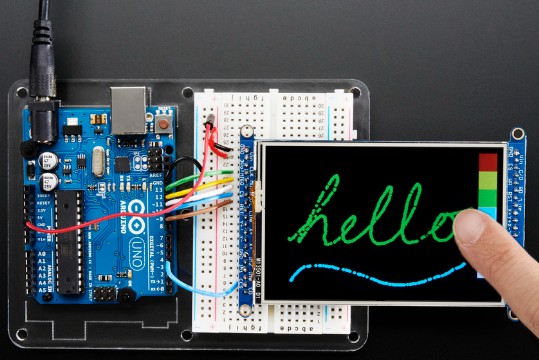
TFT Touch Screen technology is widely used in European industrial automation, healthcare, transportation, and commercial systems.[2]
Common application sectors include:[6]
- Industrial automation HMIs, SCADA terminals, and machine control stations using rugged TFT Touch Screen panels.
- Medical equipment such as patient monitors, diagnostic devices, and laboratory instruments, where TFT Touch Screen interfaces improve workflow.
- Smart retail and kiosks, including self-service checkout, ticketing, and information points with high-brightness TFT Touch Screen displays.
- Transportation systems, from in-vehicle TFT Touch Screen dashboards to station-based passenger information displays.
In each sector, choosing the right TFT Display and matching it with the correct touch technology is critical for usability and reliability over many years.[7]
When selecting a TFT Touch Screen for a new project, OEMs should evaluate both display and touch specifications to ensure long-term success.[3]
Important parameters for the TFT Display part include:[8]
- Size and resolution: Must match UI design, information density, and viewing distance.
- Brightness and contrast: Critical for outdoor TFT Touch Screen and brightly lit environments.
- Viewing angle and technology (TN vs IPS/MVA): Impacts readability and color consistency.
- Interface type (RGB, LVDS, MIPI, eDP, HDMI): Must align with the mainboard or controller.
Important parameters for the touch layer include:[9]
- Touch technology: PCAP for multi-touch and gestures; resistive for some gloved or stylus applications.
- Optical bonding: Reduces reflections and improves impact resistance in TFT Touch Screen assemblies.
- Controller specifications: Sensitivity, noise immunity, water rejection, glove operation, and firmware tuning flexibility.
Considering both sets of parameters ensures that the final TFT Touch Screen is not only visually impressive, but also robust and easy to integrate.[9]
Many TFT Touch Screen projects combine Asian TFT Display manufacturing with European engineering and integration, creating a hybrid supply chain. European partners handle design, interface definition, mechanical integration, and certification, while TFT LCD modules and some touch panels originate from manufacturers in China, Japan, Taiwan, or Korea.[3][2]
For overseas OEMs, this model can provide:[9]
- Access to competitive TFT Display production costs with European-level project management.
- Customized TFT Touch Screen solutions tailored to specific industries and regulations.
- Long-term support, engineering change control, and lifecycle management.
Such cooperation models are particularly effective when end products are sold into Europe but must remain price-competitive globally.[5]
For many European TFT Touch Screen projects, using Chinese OEM partners for metalwork, plastic parts, and assembly around the core TFT Display can significantly reduce cost while maintaining quality. Chinese factories experienced in display assembly and HMI integration can build complete front panels, enclosures, and custom mounting systems around European-approved TFT Touch Screen modules.[1][8]
Typical advantages include:[8]
- Competitive pricing for mechanical and electronic integration around TFT Display and touch modules.
- Ability to scale from prototypes to mass production while preserving the same TFT Touch Screen design.
- Experience with multi-language printing, branding, and packaging for global markets.
A well-structured cooperation where Europe defines the TFT Touch Screen specification and China handles cost-efficient production can offer an excellent balance of quality and price.[12]
When planning a new product or system, buyers should follow a structured process to specify and source the right TFT Touch Screen in Europe.[2]
Recommended steps include:[13]
1. Define application and environment: indoor vs outdoor, brightness, temperature range, and required lifetime.
2. Choose the TFT Display baseline: size, resolution, aspect ratio, interface, and brightness level.
3. Select touch technology and cover glass: PCAP or resistive, thickness, hardness, and coatings such as anti-glare or anti-fingerprint.
4. Clarify electrical interface and OS: HDMI/LVDS/MIPI/eDP, plus Linux/Android/Windows HMI requirements.
5. Request mechanical drawings and 3D models: verify that the TFT Touch Screen fits the enclosure and relevant sealing or IP requirements.
6. Run prototypes and field tests: check durability, readability, EMI performance, and user experience in real conditions.
7. Lock long-term supply and quality agreements: include lifecycle statements, second-source strategies, and formal change notification processes.
Using this approach helps ensure that the selected TFT Touch Screen is technically suitable, manufacturable at scale, and sustainable over the product lifetime.[6]
TFT Touch Screen technology is now a core element of industrial, medical, transport, and commercial systems across Europe, supported by a strong ecosystem of display manufacturers, integrators, and value-added resellers. By working with established European partners such as Tianma Europe, Kyocera, Texim Europe, FORTEC Group, Fenix Imvico, and other specialized distributors, overseas OEMs can secure reliable TFT Display modules, well-engineered touch interfaces, and long-term lifecycle support for their projects. Combining European engineering with Chinese OEM integration creates cost-effective, high-performance TFT Touch Screen solutions that meet demanding technical and regulatory requirements in global markets.[8][2]
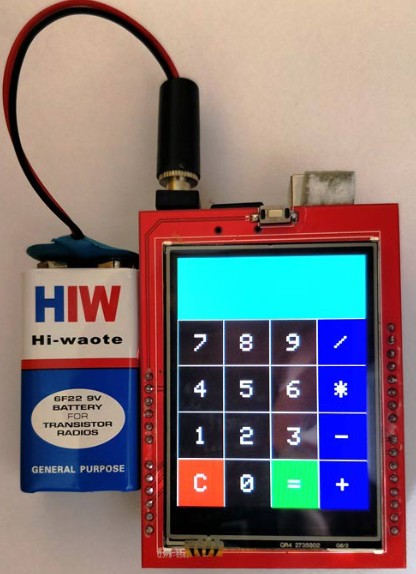
A TFT Display is the underlying thin-film-transistor LCD panel that produces the image, while a TFT Touch Screen combines this display with a touch sensor, cover glass, and touch controller as a single input/output unit. In practice, every TFT Touch Screen contains a TFT Display, but many TFT Displays are supplied without any touch function and are controlled only by keys, knobs, or external input devices.[4][3]
European TFT Touch Screen partners offer strong application engineering, knowledge of local regulations, and long-term support that are crucial for industrial and medical products. They often integrate globally sourced TFT Display panels with local electronics, mechanics, and certifications to deliver turnkey TFT Touch Screen systems aligned with EU norms.[7][2]
Industrial automation, medical equipment, transportation, and smart retail are among the largest users of industrial TFT Touch Screen systems in Europe. These sectors require rugged hardware, excellent readability, and long product life, making industrial TFT Display and touch technologies essential for competitive products.[6][2]
Buyers should request lifecycle information, second-source plans, and formal change-notification processes from their TFT Display and TFT Touch Screen suppliers. Selecting industrial-grade TFT Display lines and working with partners experienced in long-life projects significantly reduces the risk of sudden obsolescence or unplanned redesigns.[5][7]
An effective RFQ should specify TFT Display size, resolution, brightness, interface, operating temperature, touch type, cover glass requirements, and expected lifetime. Providing mechanical constraints, environmental conditions, volume expectations, and certification needs helps European TFT Touch Screen partners quickly propose accurate designs, samples, and quotations.[12][13]
[1](https://www.perplexity.ai/search/dfaf2b82-06bc-498d-9ae7-79a1d7fe7fd9)
[2](https://www.perplexity.ai/search/bd58c367-7bfc-44a9-9b7d-e302fc7b0f18)
[3](https://www.perplexity.ai/search/08e7d390-4b1a-4ec4-8066-0eb8d064cbab)
[4](https://www.perplexity.ai/search/09e95bad-a882-4c9e-b04d-4d74c5db8d48)
[5](https://www.perplexity.ai/search/bafcc7bf-c633-4a85-977e-914d95d01368)
[6](https://www.perplexity.ai/search/71603b6e-61cc-40f0-bdcc-ddd482bfa2b9)
[7](https://www.perplexity.ai/search/0b6b1a77-1dcb-46e8-9bc2-cd3dead3ae2f)
[8](https://www.perplexity.ai/search/2e9f639b-b12c-4887-bb38-80c46aac7dfc)
[9](https://www.perplexity.ai/search/189c4ccc-9683-466b-94ac-8b1d95357527)
[10](https://www.perplexity.ai/search/3af6e9ed-19bb-49b2-8f9c-8aa458a777dd)
[11](https://www.perplexity.ai/search/9374f287-d093-44f1-a748-313041974c04)
[12](https://www.perplexity.ai/search/67390fc1-7e25-4d5b-92a0-a4b3d3be2faf)
[13](https://www.perplexity.ai/search/e69c4b53-d22a-408a-874a-26a765707241)