
Views: 222 Author: Wendy Publish Time: 2025-12-17 Origin: Site


Content Menu
● What Is a Resistive Touch Screen?
● Common Types of Resistive Touch Screen
● Applications of Resistive Touch Screen in USA
● Market Overview: Resistive Touch Screen in North America
● Top Resistive Touch Screen Manufacturers and Suppliers in USA
>> Orient Display (Global with US Presence)
>> Additional Touchscreen Solution Providers
● Visual Content Ideas: Images and Videos
● How to Choose a Resistive Touch Screen Supplier
● Comparison of Selected Resistive Touch Screen Providers
● Design Considerations for Resistive Touch Screen Integration
● Environmental and Reliability Requirements
● Cost and Total Cost of Ownership
● FAQ
>> 1. What is a resistive touch screen and how does it work?
>> 2. What are the main advantages of a resistive touch screen over capacitive?
>> 3. Where are resistive touch screens most commonly used in the USA?
>> 4. How do I choose between 4‑wire and 5‑wire resistive touch screen designs?
Resistive touch screen technology remains a core choice in the USA for industrial, medical, automotive, and outdoor equipment because of its durability, precision, and ability to work with gloves, stylus, or any object. This article explains how resistive touch screen solutions work, where they are used, and which USA and North America–based resistive touch screen manufacturers and suppliers are worth considering when sourcing custom resistive touch screen projects.[1][2][3][4]

A resistive touch screen is a pressure‑sensing touch interface made of two transparent conductive layers separated by a small gap; when pressed, the layers contact, closing a circuit and allowing the controller to detect the touch coordinates. Unlike capacitive screens, a resistive touch screen does not depend on the user's electrical properties and therefore works with gloves, stylus, or any non‑conductive object, which is why it is widely used in harsh industrial and medical environments.[2][5][6][7][8][1]
A typical resistive touch screen stack includes a flexible top layer (often PET film) and a rigid glass or film bottom layer with indium tin oxide (ITO) coatings, plus spacer dots that keep them apart until pressure is applied. Once touched, the controller measures the voltage changes along the X and Y axes to calculate the touch position, enabling precise single‑touch control even on small resistive touch screen displays.[5][6][7][8][2]
The main advantage of a resistive touch screen is its broad input compatibility; it accurately recognizes touch from gloved hands, stylus pens, tools, and even when the operator's hands are dirty, which is critical on production lines and in clinical settings. A resistive touch screen also offers strong noise immunity, stable performance in environments with electromagnetic interference, and generally lower cost compared with projected capacitive solutions.[8][1][2]
In addition, a resistive touch screen provides high accuracy for single‑point operations, making it suitable for HMIs, POS terminals, and user interfaces where operators press relatively small on‑screen buttons. While most resistive touch screen modules are single‑touch, they can be engineered with different wire configurations (4‑wire, 5‑wire, 8‑wire) to improve linearity, life cycle, and stability.[2][5][8]
A resistive touch screen is often categorized by the number of sensing wires and structure; 4‑wire and 5‑wire resistive touch screen panels are the most popular in industrial equipment. A 4‑wire resistive touch screen places the voltage reference on both layers, whereas a 5‑wire resistive touch screen concentrates the sensing on the bottom layer, which generally improves durability and long‑term stability.[5][2]
There are also analog and digital resistive touch screen variants, with analog 4‑wire and 5‑wire designs dominating because of their cost‑effectiveness and wide controller support. Manufacturers in the USA often combine resistive touch screen sensors with LCD or TFT modules, optical bonding, and custom cover lenses to create complete touch display assemblies for OEMs.[3][9][10][11][2][5]
In the USA, resistive touch screen solutions are widely deployed in industrial automation HMIs, factory control panels, programmable logic controller (PLC) terminals, and rugged panel PCs due to their durability and glove‑friendly operation. Public kiosks, ticketing machines, ATMs, and vending systems also rely on resistive touch screen interfaces because of their resistance to dust, moisture, and vandalism‑prone environments.[12][1][8][2]
The medical sector uses resistive touch screen monitors in diagnostic devices, patient monitoring systems, and clinical instruments where users often wear latex or nitrile gloves. Transportation and outdoor equipment manufacturers integrate resistive touch screen displays into marine controls, fleet management terminals, and field service handhelds, where water, sunlight, and temperature extremes can limit capacitive performance.[1][8][2]
North America holds a leading share of the global resistive touchscreen market, driven by high demand for rugged and reliable user interfaces in industrial automation, healthcare, and transportation. Within this region, the U.S. resistive touch screen segment captures the largest revenue share, supported by ongoing investments in infrastructure, smart equipment, and digitalized control systems.[12][1]
Major global brands such as 3M, Fujitsu, and others continue to supply resistive touch screen technologies into the U.S. market, while specialized manufacturers and integrators deliver custom modules for niche requirements. As Industry 4.0, medical device innovation, and public interactive systems expand, demand for resistive touch screen modules that can withstand harsh operating conditions is expected to remain stable.[1][2][12]
Below is an overview of several key companies active in resistive touch screen manufacturing, integration, or supply within the U.S. and North American market. Many offer standard resistive touch screen products as well as fully customized assemblies, giving OEMs options for project‑specific requirements.[4][10][11][13][14][15][3][1]
A D Metro is a North American touch screen sensor manufacturer known for its patented armored resistive touch screen sensor, ULTRA, which is designed for extreme durability and demanding environments. The company provides standard and custom resistive touch screen solutions, including rugged panels for industrial, military, and transportation use cases.[4]
A D Metro's armored resistive touch screen technology helps protect against impact, abrasion, and contamination while maintaining high optical clarity. For buyers seeking long‑life resistive touch screen products for outdoor kiosks or harsh production floors, A D Metro is a strong candidate.[4][1]
RSP Inc., based in the U.S., manufactures both capacitive and resistive touch screen panels and can deliver complete LCD assemblies with controllers and drivers. The company offers a full range of digital and analog resistive touch screen options and works with customers to determine the best technology for their application.[3][5]
RSP provides engineering support, including advice on whether a resistive touch screen or capacitive interface is more suitable for a given environment, as well as integration into plastic, metal, or glass housings. For OEM projects that require tailored resistive touch screen assemblies, RSP's custom manufacturing services are valuable.[3][5]
Orient Display specializes in manufacturing standard and custom resistive touch panel and module solutions and has become a large licensed resistive touch panel manufacturer in the flat‑panel industry. The company offers competitively priced resistive touch screen products that can be paired with LCD modules for industrial and commercial devices.[10]
For U.S. customers, Orient Display provides resistive touch screen modules with various sizes, controllers, and interface options, often combined with value‑added services such as optical bonding. This makes it suitable for OEMs seeking high‑volume resistive touch screen supply with strong engineering support.[10][3]
Xenarc Technologies focuses on rugged industrial touch screen monitors, including a portfolio of industrial resistive touch screen displays from 7‑inch to 24‑inch sizes. The company serves markets such as vehicle systems, industrial automation, and outdoor kiosks, where robust, sunlight‑readable, and vibration‑resistant displays are required.[11]
Xenarc offers OEM and ODM customization services for customers who need specialized industrial resistive touch screen monitors, including unique enclosures, mounting options, and interface configurations. For system integrators who want ready‑to‑deploy resistive touch screen monitors rather than bare sensors, Xenarc is a key option.[11]
Beyond pure resistive touch screen specialists, several broader touchscreen and display companies serve the U.S. market with custom solutions that often include resistive options. Faytech North America, for example, develops and manufactures touchscreen displays and touch monitors, with expertise in industrial and embedded applications.[13][14][15][16]
Some industrial computer suppliers and display integrators listed in North American directories also provide resistive touch screen‑based panel PCs and displays, often designed for rugged use in manufacturing, military, and transportation. When sourcing a resistive touch screen, checking both specialized sensor manufacturers and system‑level integrators can widen the range of available solutions.[13][11][1]
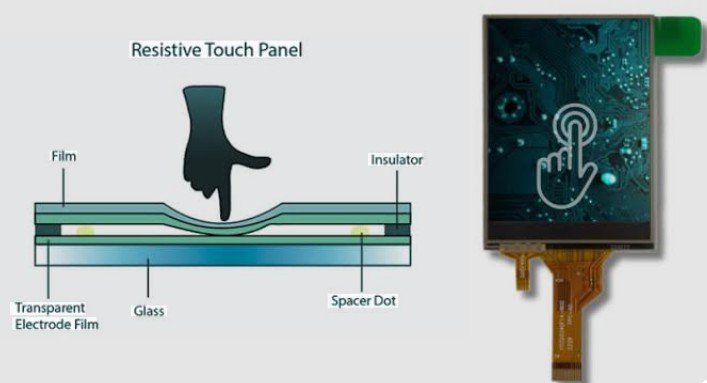
To present resistive touch screen topics effectively on a website or blog, combining technical explanations with rich media is highly effective. The following image and video ideas can help illustrate how a resistive touch screen works and how different manufacturers' solutions are used in real projects.[8][2][5]
Suggested images:
- Close‑up cross‑section diagram showing the two‑layer structure of a resistive touch screen (flexible top layer, rigid bottom layer, spacers, and controller).[7][2][8]
- Photos of industrial control panels, medical devices, and outdoor kiosks that use resistive touch screen interfaces in real‑world environments.[2][8][1]
- Comparison infographic of resistive touch screen vs capacitive touch screen, highlighting touch mechanism, glove operation, and cost differences.[6][7][2]
Suggested videos:
- Short animation demonstrating how pressure on a resistive touch screen causes the conductive layers to make contact and how the controller calculates coordinates.[7][5][2]
- Factory tour clips from resistive touch screen manufacturers showing production lines, cleanroom lamination, and quality inspection of touch panels.[10][3][4]
- Application demos where operators use a resistive touch screen HMI with gloves in an industrial or medical environment, emphasizing practicality and reliability.[1][2]
Embedding multiple images and videos like these around product descriptions from U.S. manufacturers can significantly improve user engagement and SEO for “Resistive Touch Screen”‑related keywords.[5][2][1]
Selecting the right resistive touch screen partner in the USA involves balancing technical, commercial, and logistical considerations. A structured evaluation will help ensure the chosen supplier can meet performance requirements, certification needs, and long‑term supply expectations for resistive touch screen projects.[3][4][1]
Key factors to consider:
- Technical capability: Check whether the supplier offers the required resistive touch screen type (4‑wire or 5‑wire), size range, optical characteristics, and controller compatibility.[11][10][3]
- Environmental performance: Confirm that the resistive touch screen meets IP, IK, temperature, vibration, and EMI standards applicable to the industry.[4][11][1]
- Customization: Evaluate the supplier's ability to deliver custom cover glass, bonding, printing, and integration of the resistive touch screen into the mechanical design.[10][3][4]
- Certifications and quality: Look for ISO‑certified manufacturing, and industry‑specific standards such as medical, transportation, or military approvals where relevant.[14][13][1]
- Supply chain and support: Consider lead times, MOQ, after‑sales support, and regional engineering assistance for ongoing resistive touch screen deployments.[1][3][4]
When properly selected, a resistive touch screen supplier can support both standard and highly customized applications, from compact HMIs to large industrial control stations. This ensures the resistive touch screen performs reliably over millions of actuations in the target environment.[2][5][11][3][1]
| Company | Region / Presence | Core Focus Related to Resistive Touch Screen | Typical Applications | Custom Services |
|---|---|---|---|---|
| A D Metro | North America | Armored resistive touch screen sensors and standard resistive panels. | Industrial, military, transportation, outdoor kiosks. | Custom sizing, ruggedization, and integration. |
| RSP Inc. | USA | Capacitive and resistive touch screen manufacturing and LCD assemblies. | Consumer, industrial, and embedded devices. | Custom touch screen design, controller integration, full display modules. |
| Orient Display | Global (serving USA) | Standard and custom resistive touch panels and modules. | Industrial equipment, instruments, kiosks. | Custom modules, bonding, engineering support. |
| Xenarc Technologies | USA | Rugged industrial resistive touch screen monitors. | Vehicle displays, industrial HMIs, outdoor panels. | OEM/ODM customization of monitors and enclosures. |
| Faytech North America | North America | Touchscreen displays and touch monitors, including industrial solutions. | Industrial PCs, embedded systems, kiosks. | Custom display assemblies and housings. |
This table gives a concise overview so buyers can shortlist resistive touch screen suppliers in the USA and North America based on their project type and integration needs.[14][11][3][4][1]
When integrating a resistive touch screen into an HMI or embedded device, mechanical design is as important as electrical design. Bezel dimensions, gasket compression, and mounting strategy all influence the long‑term stability and optical performance of the resistive touch screen.[11][3][10]
Engineers must reserve sufficient clearance between the resistive touch screen and the LCD to avoid Newton rings or stress points and should specify anti‑glare or anti‑fingerprint surface treatments when needed. Choosing the correct controller interface—such as USB, I²C, or RS‑232—ensures that the resistive touch screen communicates reliably with the host system.[5][3][10][11]
Many resistive touch screen projects are deployed in harsh or demanding environments, which makes durability testing essential. Key parameters include operating and storage temperature ranges, humidity resistance, chemical resistance, and the number of actuations the resistive touch screen can withstand before performance degrades.[4][11][1]
For outdoor kiosks and vehicle systems, sunlight readability and UV stability of the overlay materials are also important. In medical and food‑processing applications, the resistive touch screen surface must withstand frequent cleaning and disinfection with alcohol or other agents without losing optical clarity or touch sensitivity.[8][2][11][1]
Initial unit price is often lower for a resistive touch screen than for an equivalent projected capacitive module, especially in small and mid‑size formats. However, the total cost of ownership depends on lifecycle, failure rates, field replacement costs, and user training, so a carefully specified resistive touch screen can still offer the best long‑term value in many industrial settings.[12][1]
By working closely with manufacturers to define durability targets and testing procedures, OEMs can ensure the resistive touch screen meets service‑life expectations and minimizes downtime. Well‑designed resistive touch screen assemblies can endure millions of actuations, reducing maintenance costs and improving productivity.[2][3][5][4]
Resistive touch screen technology continues to play a critical role in the USA for industrial automation, medical devices, transportation systems, and public kiosks thanks to its pressure‑sensing operation, glove compatibility, and robustness in harsh conditions. By understanding how a resistive touch screen works, the advantages of different wire configurations, and the strengths of leading manufacturers and integrators, buyers can confidently select the right partner for their applications.[8][3][11][1][2][4]
Whether sourcing from U.S.‑based suppliers like A D Metro, RSP Inc., Xenarc Technologies, or engaging with global producers such as Orient Display and other specialized vendors, a well‑designed resistive touch screen solution can deliver reliable performance over millions of cycles. Combining detailed product specifications with rich media such as diagrams, photos, and videos also helps end users better understand the benefits of resistive touch screen interfaces in real‑world use.[3][5][8][10][11][2][4]
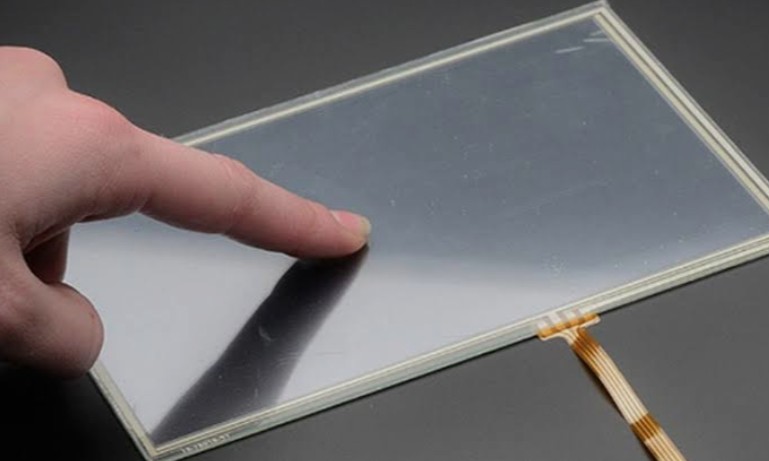
A resistive touch screen is a pressure‑sensitive panel made of two conductive layers separated by a gap; when pressed, the layers touch, changing the electrical resistance and allowing the controller to detect coordinates. Because it senses pressure rather than capacitance, a resistive touch screen can register input from fingers, stylus, gloves, or any solid object.[6][7][5][8][2]
A resistive touch screen works reliably with gloves, stylus, and non‑conductive objects, and often performs better in environments with water, dust, or strong electrical noise. It is generally more cost‑effective for single‑touch industrial and medical applications where multi‑touch gestures and high transparency are less critical.[6][12][8][1][2]
In the USA, resistive touch screen modules are widely used in industrial control panels, HMIs, rugged panel PCs, and outdoor kiosks where durability and glove operation are essential. They are also common in medical devices, ticketing machines, ATMs, and specialized instrumentation that require precise single‑point input.[12][8][1][2]
A 4‑wire resistive touch screen is suitable for many cost‑sensitive applications, but 5‑wire designs typically offer better durability because the bottom layer handles most of the sensing. For mission‑critical or high‑usage industrial and medical systems, a 5‑wire resistive touch screen is often recommended for longer service life and improved linearity.[5][2]
Key factors include required resistive touch screen type and size, environmental ratings (temperature, IP, vibration), certifications, customization capabilities, and long‑term supply stability. Evaluating technical support, integration experience, and after‑sales service is equally important when comparing resistive touch screen manufacturers and suppliers.[11][1][3][4]
[1](https://www.databridgemarketresearch.com/reports/global-resistive-touchscreen-market)
[2](https://trulyusa.com/what-is-a-resistive-touchscreen/)
[3](https://www.rspinc.com/capabilities/touch-screen/)
[4](https://admetro.com)
[5](https://www.rspinc.com/blog/touch-screen/resistive-touch-screen/)
[6](https://www.topwaydisplay.com/en/blog/Capacitive-Touch-vs-Resistive-Touch)
[7](https://newhavendisplay.com/blog/capacitive-vs-resistive-touch/)
[8](https://www.diseaelec.com/lcd-solution/structure-and-working-principle-of-resistive-touch-screens)
[9](https://unisystem.com/catalog/touch-screens/touch-screens-resistive)
[10](https://www.orientdisplay.com/touch-panels/resistive-touch-panel/)
[11](https://www.xenarc.com/industrial-resistive-touchscreen/)
[12](https://www.gminsights.com/industry-analysis/resistive-touchscreen-market)
[13](https://us.metoree.com/categories/touch-panel/)
[14](https://www.faytech.us)
[15](https://www.e3displays.com/touch-panels/)
[16](https://touchwo.com/top-touchscreen-manufacturer/)